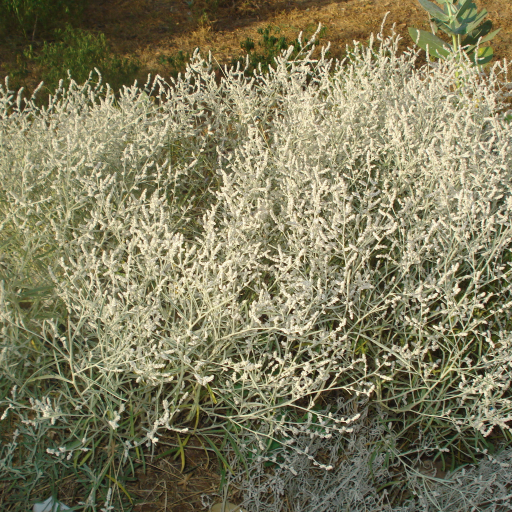
Plant Overview
Known as the Desert Cotton or Kapok Bush, Aerva javanica is a resilient survivor of the world’s harshest arid landscapes. With its silvery-white foliage and woolly flower spikes, it often looks like a dusting of snow has fallen across the desert floor. Historically, nomadic cultures prized this plant not just for its beauty, but for its "wool," which was harvested to stuff saddles and pillows for long journeys across the dunes.
🔍 How to Identify
- ☁️ Woolly Flowers: The most striking feature is the dense, white, cylindrical flower spikes that look like soft tufts of cotton or wool at the tips of the branches.
- 🧤 Velvety Texture: Every part of the plant—stems and leaves alike—is covered in a thick layer of tiny, star-shaped white hairs, giving it a soft, felt-like feel.
- 🌿 Silvery Foliage: The leaves are typically a muted grayish-green, elongated or oval-shaped, and arranged alternately along woody, upright stems.
🏡 In Your Garden
- ☀️ Desert Specialist: This plant is the ultimate "set it and forget it" species for xeriscaping. It thrives in intense heat and poor, sandy soils where most other plants would wither.
- 💧 Drainage is King: Because it is adapted to dry wadis and plains, its biggest enemy is "wet feet." It requires extremely well-draining soil and very little supplemental water once established.
- 🛡️ Soil Stabilizer: In coastal or sandy gardens, it serves as an excellent stabilizer to prevent wind erosion, thanks to its deep and hardy root system.
⚠️ Safety & Toxicity
- ✅ General Safety: Aerva javanica is generally considered non-toxic to humans and is often used in traditional herbal medicine.
- 🐾 Pets & Livestock: While it is sometimes used as emergency fodder for goats and camels, it isn't a primary food source. It is safe to touch, but as with any desert plant, keep it away from curious pets to avoid minor digestive upset if ingested in large quantities.
✨ Fun Fact
In many Middle Eastern cultures, the fluffy "kapok" from the flowers was traditionally used as a natural tinder for starting fires and even as a surgical dressing to help stop bleeding in ancient times!

Detailed Care Instructions
To successfully grow an Aerva Javanica plant, follow these guidelines:
- Climate: Aerva Javanica, also known as Kapok Bush or Mountain Knotgrass, thrives in warm and tropical climates. It is best suited for USDA hardiness zones 10-12.
- Sunlight: Choose a location that receives full sun to partial shade. The plant requires at least 4-6 hours of direct sunlight daily.
- Soil: Aerva Javanica prefers well-draining soil. Amend heavy clay or compacted soil with organic matter such as compost, sand, or perlite to improve drainage.
- Watering: Provide regular watering to keep the soil moist but not soaked. Do not let the soil dry out completely between waterings. During periods of high heat and low rainfall, increase watering frequency.
- Fertilizer: Apply a balanced slow-release fertilizer during the growing season, following the package instructions. Avoid over-fertilizing as it can damage the plant.
- Pruning: Regularly trim back any dead or damaged branches. Pruning also helps maintain a compact and bushy shape.
- Propagation: Aerva Javanica can be propagated through stem cuttings. Take 4-6 inch cuttings from healthy, mature plants and plant them in moist, well-draining soil. Keep them in a warm and humid environment until they develop roots.
- Pests and diseases: Aerva Javanica is generally resistant to pests and diseases. However, monitor for common garden pests like aphids or mealybugs, and treat accordingly if necessary.
- Mulching: Apply a layer of organic mulch around the plant to retain moisture, suppress weed growth, and protect the roots from extreme temperatures.
- Winter care: If you live in a cooler climate, consider growing Aerva Javanica as a container plant. Move it indoors or to a protected area during winter or when temperatures drop below 50°F (10°C).
By following these steps, you should be able to successfully grow and enjoy your Aerva Javanica plant.

Place in a bright room that is sun drenched almost all day. Or directly in a south-facing window.

To water this plant, fill a container with room temperature water. Slowly pour the water over the soil until it starts to drain out the bottom of the pot. Allow the top inch of soil to dry out before watering again. Avoid over-watering as it can lead to root rot. Additionally, ensure that the pot has proper drainage holes to allow excess water to escape.
To fertilize this plant, use a balanced fertilizer with equal parts nitrogen, phosphorus, and potassium. Apply the fertilizer every two weeks during the growing season, which is typically spring and summer. Be sure to follow the manufacturer's instructions for the amount and frequency of application. Additionally, you can add a slow-release fertilizer to the soil at the beginning of the growing season to provide nutrients over a longer period of time. Avoid fertilizing during the winter months when the plant is dormant.
Aerva Javanica can grow well in well-draining soil that is rich in organic matter. The soil should have good water retention properties and be able to maintain a consistent level of moisture without becoming waterlogged. A suitable soil mix for Aerva Javanica could contain a combination of loam, peat moss, and sand. Additionally, the pH level of the soil should range between 6.0 to 7.5, which is slightly acidic to neutral. High-quality potting soil or garden soil can be used as long as it meets the requirements mentioned above. It is also recommended to add some compost or organic fertilizer to the soil to provide the plant with the necessary nutrients for healthy growth.
To propagate this plant, you will need to follow these steps:
- Choose a healthy stem: Look for a stem that is healthy and has a few leaves on it.
- Cut the stem: First, take a cutting from the stem. It should be about 6 inches long and have at least two or three leaves on it.
- Remove the lower leaves: Remove the leaves from the bottom of the stem. This will help the plant direct more energy toward growing roots.
- Dip the stem in rooting hormone: Dip the cut end of the stem in rooting hormone. This will help the plant grow roots more quickly.
- Plant the stem in soil: Plant the stem in a container with well-draining soil. Keep the soil moist, but not too wet.
- Provide indirect light: Place the container in an area that receives indirect light. The plant will need light to grow, but direct sunlight can be harmful.
- Wait for roots to develop: After a few weeks, the plant should begin to grow roots. Once the roots are well-established, you can transplant the plant into a larger container or outdoors in a suitable area.








