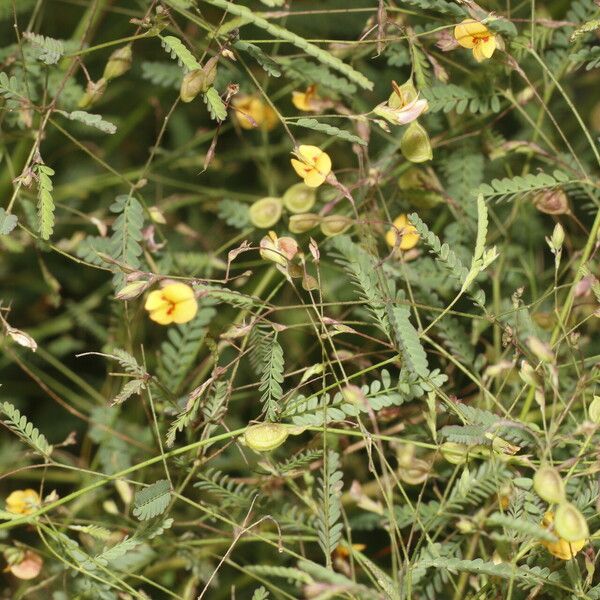
Plant Overview
Known affectionately as the Fern-leaf Sensitive Plant, Aeschynomene filosa is a dainty, moisture-loving member of the pea family. Often found dancing along the edges of marshes and wetlands, this plant is celebrated for its incredibly fine, feathery foliage that looks like a miniature fern. It carries a touch of magic in its leaves, which perform a "sleep movement" by folding up at night or when the weather turns harsh.
🔍 How to Identify
- 🌿 The Foliage: The leaves are "pinnate," meaning they consist of many tiny, narrow leaflets arranged along a central stem. They are exceptionally delicate and thread-like, giving the plant a misty, airy appearance.
- 🟡 The Flowers: It produces small, classic pea-shaped blossoms, usually in shades of pale yellow. Look closely, and you might see fine reddish-purple veins etched into the petals.
- 🫛 The Seed Pods: After flowering, it develops "jointed" pods. These pods are unique because they are flat and constricted between each seed, eventually breaking apart into individual segments.
🏡 In Your Garden
- 💧 Wet Feet Welcome: Unlike most houseplants that fear root rot, Aeschynomene filosa thrives in boggy conditions. It is a perfect candidate for the "marginal" zone of a backyard pond or a consistently damp spot in the garden.
- 🌱 Soil Improver: As a legume, this plant has a secret superpower—it works with soil bacteria to "fix" nitrogen. This means it actually improves the quality of the soil it grows in, making it a great companion for nutrient-hungry neighbors.
- ☀️ Light Needs: While it loves water, it also craves the sun. To keep its stems from becoming too "leggy" or floppy, ensure it receives bright, direct light for most of the day.
⚠️ Safety & Toxicity
- 🟢 Status: Generally considered non-toxic.
- 🐾 Details: There are no widespread reports of toxicity toward cats, dogs, or humans. However, because it is often found in wild wetland areas, it can sometimes accumulate minerals or run-off from its environment, so it’s best kept as an ornamental rather than a snack.
✨ Fun Fact
The genus name Aeschynomene comes from the Greek word "aischynomene," which means "being ashamed." This refers to the way the leaves of many species in this family shyly droop or fold when they are touched!

Detailed Care Instructions








