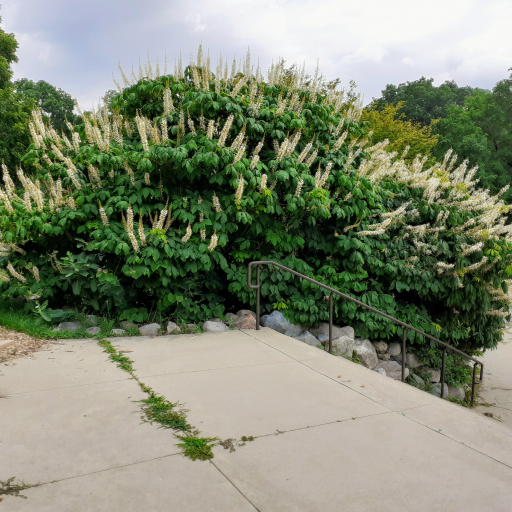
Plant Overview
Often called the Bottlebrush Buckeye, this stunning shrub is a master of the summer shade. Native to the southeastern United States, it is widely beloved for its dramatic, "bottlebrush" flower spikes that appear when most other spring-blooming shrubs have already faded. Its architectural form and lush, tropical-looking foliage make it a sophisticated choice for woodland gardens and large landscapes.
🔍 How to Identify
- ☁️ The Bloom: Its most famous feature is the 8-to-12-inch long, upright white flower spikes. These fuzzy wands are tipped with pinkish-red anthers, giving the entire plant a misty, glowing appearance in July.
- 🖐️ The Leaves: Features large, palm-like (palmate) leaves typically composed of 5 to 7 leaflets. They emerge a bronze-green in spring before maturing into a deep, rich emerald.
- 🌳 The Form: It grows as a multi-stemmed, mounding shrub that is often much wider than it is tall, creating a graceful, undulating "wall" of green.
🏡 In Your Garden
- 🌱 Shade Superstar: While many flowering shrubs refuse to bloom without direct sun, the Bottlebrush Buckeye excels in part-shade to full-shade environments. It is the perfect solution for brightening up the dark corners of a property.
- ↔️ Space to Stretch: This plant spreads slowly through underground suckers. Because it can grow up to 15 feet wide, it shouldn't be crowded. It hates being moved once established because of its deep root system, so choose its "forever home" carefully.
⚠️ Safety & Toxicity
- 🚫 Status: Toxic to humans and pets.
- 🐾 Details: Like all members of the Aesculus genus, the seeds (buckeyes) and foliage contain saponins and glycosides. If ingested, they can cause severe stomach upset, lethargy, or coordination issues in dogs, cats, and horses. Fortunately, its bitter taste usually prevents curious nibblers from eating much.
✨ Fun Fact
The Bottlebrush Buckeye is a "butterfly magnet," specifically for the Eastern Tiger Swallowtail. While many flowers are too shallow for large butterflies, the long, tubular shape of these blossoms is perfectly designed for their long tongues, making your garden a literal runway for pollinators in mid-summer.

Detailed Care Instructions
To grow Aesculus Parviflora, also known as the Bottlebrush buckeye plant, follow these steps:
- Choose the right location: Select a spot that receives partial to full shade. The soil should be moist, well-drained, and rich in organic matter.
- Prepare the soil: Before planting, work compost or well-rotted manure into the soil to improve its fertility and drainage. Ensure the soil pH is slightly acidic to neutral (around 6.0 to 7.0).
- Plant the sapling: Dig a hole that is slightly wider and deeper than the root ball of the sapling. Place the plant in the hole, making sure the crown (where the roots meet the stem) is level with or slightly above the soil surface. Backfill the hole with soil, gently firming it around the roots.
- Water thoroughly: After planting, water the plant thoroughly to settle the soil and remove any air pockets. Keep the soil consistently moist but avoid overwatering, as excessively wet soil can lead to root rot.
- Mulch: Apply a layer of organic mulch, such as wood chips or shredded bark, around the base of the plant. This helps retain moisture, regulate soil temperature, and suppress weed growth. Leave a small gap around the stem to prevent rotting.
- Prune as needed: Aesculus Parviflora generally requires minimal pruning. However, if desired, you can remove any dead or damaged branches during the dormant season (late winter to early spring) to maintain a neat appearance.
- Fertilize sparingly: Unless the soil is severely deficient, Bottlebrush buckeyes generally do not require heavy fertilization. If needed, apply a balanced slow-release fertilizer in early spring according to the product's instructions.
- Monitor for pests and diseases: Watch out for common pests like aphids or leafhoppers. Treat infestations with organic insecticidal soap or other suitable methods. Additionally, keep an eye out for leaf spot diseases or powdery mildew, which can be managed with proper sanitation and, if necessary, fungicides.
- Provide regular water: Once established, Aesculus Parviflora is generally drought-tolerant. However, during the first year, ensure the plant receives regular watering, especially during dry periods, to help it establish a strong root system.
- Divide and propagate: As the plant matures, it may develop clumps. If desired, you can divide these clumps in late winter or early spring to create new plants. Dig up the clump, carefully separate sections with roots, and replant them in suitable locations.
Remember to check your local gardening guidelines and consider the specific climate and growing conditions of your area to ensure the best possible care for your Aesculus Parviflora plant.

Place in a bright room that is sun drenched almost all day. Or directly in a south-facing window.

To water this plant, it is important to first check the soil moisture level. Insert your finger into the soil up to the second knuckle to feel for moisture. If the soil feels dry, it's time to water. When watering, make sure to evenly saturate the soil around the plant, avoiding the leaves or stem. Slowly pour water at the base of the plant until the soil is moist, but not waterlogged. Allow the top inch of soil to dry out before watering again. It is also important to avoid overwatering, as this can lead to root rot.
To fertilize this plant, apply a balanced fertilizer with equal parts nitrogen, phosphorus, and potassium in the spring before new growth appears. Use a slow-release fertilizer to avoid over-fertilizing and apply according to package instructions. Avoid applying fertilizer during the fall or winter months. Water the plant thoroughly after fertilizing to help the nutrients absorb into the soil.
When planting Aesculus parviflora, it is recommended to use a well-draining soil mixture that is rich in organic matter. The soil should have a slightly acidic to neutral pH level, between 6.0 and 7.0. The ideal soil type for this plant is loamy soil that provides good drainage while retaining moisture. The soil should be moist but not waterlogged, as the plant does not tolerate overly wet conditions. Aesculus parviflora can also benefit from a layer of mulch to help retain moisture and control soil temperature. Overall, it is important to maintain consistent moisture levels while avoiding extreme wet or dry conditions.
Aesculus Parviflora can be propagated through several methods such as seeds, cuttings, and division.
Propagation through seeds involves collecting ripe seeds in the fall and planting them in a container with well-draining soil. The container should be kept moist but not soggy and placed in a cool area until germination occurs.
Propagation through cuttings involves taking a 4-6 inch cutting from a healthy parent plant in the spring or fall. The cutting should be dipped in rooting hormone and then planted in a container with well-draining soil. The container should be kept moist but not soggy and placed in a warm and humid area until roots develop.
Propagation through division involves separating a healthy parent plant into smaller sections in the spring or fall. The sections should have healthy roots and shoots and can be planted in containers or directly into the ground. The newly planted sections should be kept moist and protected from direct sunlight until they establish themselves in their new environment.
Regardless of the method used, it is important to provide the newly propagated plants with the proper care and maintenance to ensure their survival and growth.








