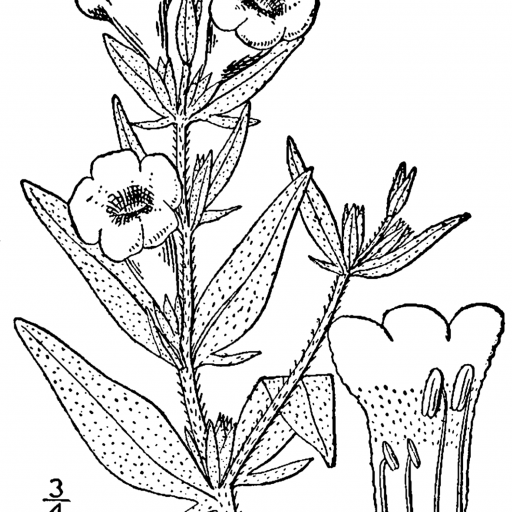
Plant Overview
Skinner’s False Foxglove is a delicate, rare wildflower that dances through the tallgrass prairies of North America. Often called a "ghost of the prairie," this elusive annual is a sign of a healthy, undisturbed ecosystem. It is as resilient as it is beautiful, appearing in late summer to offer a final burst of color before the frost.
🔍 How to Identify
- 🌸 Blushing Blooms: The flowers are tiny, trumpet-shaped, and usually a pale, ghostly white or a very soft, blushing pink. They often have faint yellow or purple spots deep inside the "throat."
- 🌿 Wiry Stems: The plant looks incredibly fragile, with slender, stiff, square-shaped stems that branch out near the top.
- 🍃 Needle-like Leaves: Unlike many garden plants, its leaves are narrow and thread-like, often appearing almost like green needles scattered along the stem.
🏡 In Your Garden
- 🧛 The "Vampire" Lifestyle: This plant is hemiparasitic, meaning it is a "partial vampire." While it can produce its own food, it survives best by attaching its roots to nearby grasses and stealing their water and minerals. This makes it very difficult to move or grow in a standard garden pot.
- 🏜️ Tough Love Soil: In the wild, it seeks out "barrens"—areas with poor, sandy, or rocky soil where more aggressive plants can't survive. If you are lucky enough to have it on your property, leave the soil lean and unfertilized.
⚠️ Safety & Toxicity
- ✅ Non-Toxic: Skinner’s False Foxglove is generally considered safe and is not known to be poisonous to humans or common household pets.
- 🦋 A Butterfly Buffet: While safe for us, it is a critical resource for native pollinators. It is a larval host for several specialized moths and a favorite stop for long-tongued bees.
✨ Fun Fact
Because it is a "hemiparasite," it acts like a natural regulator in the prairie. By "leeching" off dominant grasses, it prevents them from growing too large, which allows other smaller, rare flowers to find space and sunlight to grow!

Detailed Care Instructions








