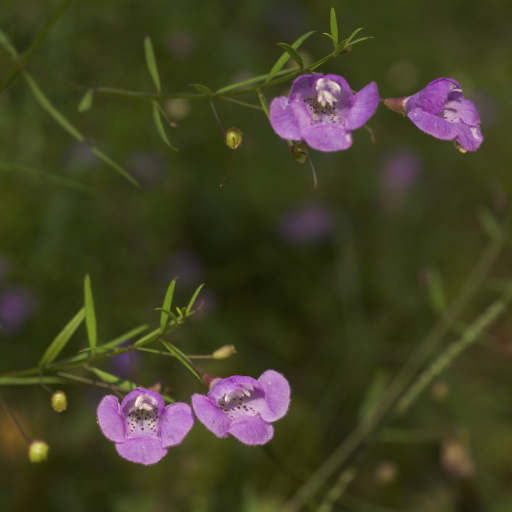
Plant Overview
Known affectionately as the Slender-leaf False Foxglove, this delicate wildflower is a hidden gem of North American prairies and open woodlands. While it shares a name and a bell-like shape with the common garden Foxglove (Digitalis), it is actually a distant relative with a much more mysterious lifestyle. Often appearing in late summer, its fleeting purple blooms look like tiny jewels scattered across the tall grass.
🔍 How to Identify
- 🌸 The Bloom: Small, bell-shaped flowers ranging from pale pink to deep lavender. If you peek inside the "throat," you’ll often find dark purple spots and delicate yellow hairs.
- 🌿 The Foliage: True to its name, the leaves are exceptionally slender and needle-like (linear), staying green throughout the season and growing in opposite pairs along the stem.
- 📏 The Growth: It has a wiry, branched structure that gives it a "see-through" appearance, allowing it to blend seamlessly into surrounding grasses until it blooms.
🏡 In Your Garden
- 🤝 The Secret Neighbor: This plant is "hemiparasitic," meaning it behaves like a polite thief. While it creates its own energy through photosynthesis, it also attaches its roots to nearby grasses or woody plants to steal a bit of extra water and minerals.
- ☀️ Sun & Soil: It thrives in meadows and open spots where it can soak up the sun. Because of its parasitic nature, it is difficult to grow in a pot alone—it prefers the company of a diverse native plant community.
- 🦋 Pollinator Magnet: It is a high-value plant for native bees and serves as a vital host plant for the Common Buckeye butterfly caterpillars.
⚠️ Safety & Toxicity
- ✅ Safe Status: Unlike the "True" Foxglove (Digitalis), which is highly toxic to the heart, the Agalinis tenuifolia is generally considered non-toxic.
- 🐾 Pet & Human Safety: There are no recorded major toxicity concerns for curious pets or children. However, as with any wild plant not grown for food, it should not be ingested, as wild plants can cause mild stomach upset.
✨ Fun Fact
The Slender-leaf False Foxglove is a master of timing. Its individual flowers often only last for a single day—opening in the morning and dropping by the afternoon—making a field in full bloom a truly "blink-and-you'll-miss-it" natural spectacle!

Detailed Care Instructions
To grow Agalinis tenuifolia plants, also known as slender false foxglove or slender Gerardia, follow these steps:
- Choose the right location: These plants do well in full sun to partial shade. Select a location that receives at least 6 hours of sunlight each day.
- Prepare the soil: Agalinis tenuifolia prefers well-draining soil with a pH level between 6.0 and 7.0. If the soil is heavy or clay-like, amend it with organic matter, such as compost or peat moss, to improve drainage.
- Plant the seeds or seedlings: You can start with either seeds or seedlings. If using seeds, sow them directly into the garden bed in spring after the last frost date, gently pressing them into the soil. If using seedlings, transplant them into the prepared bed, ensuring they are planted at the same depth as they were in their containers.
- Watering: Keep the soil consistently moist but not waterlogged. Water the plants deeply once or twice a week, depending on the weather and soil moisture levels. Be careful not to overwater as these plants can be sensitive to fungal diseases caused by excessive moisture.
- Mulch: Apply a layer of organic mulch, such as wood chips or straw, around the plants to help conserve moisture, suppress weeds, and regulate soil temperature.
- Fertilization: Agalinis tenuifolia usually does not require regular fertilization. However, if your soil lacks nutrients, you can apply a balanced slow-release fertilizer once in early spring.
- Pruning: Trim off any spent flowers to promote more blooms and prevent self-seeding. Pruning can also help shape the plant and prevent it from becoming too leggy.
- Protection: Protect young plants from strong winds and extreme weather conditions, as they may be susceptible to damage. Consider staking taller plants if needed.
- Pests and diseases: Agalinis tenuifolia is typically resistant to common pests and diseases. However, keep an eye out for any signs of trouble, such as aphids or powdery mildew, and address them promptly using organic pest control methods if necessary.
- Mulching and winter care: Apply a thick layer of mulch around the base of the plants in late fall to help insulate the soil and protect the roots during winter. In colder regions, these plants may die back in winter, but they usually regrow from their root systems in spring.
By following these guidelines, you should be able to successfully grow Agalinis tenuifolia plants and enjoy their lovely flowers.

Place in a bright room that is sun drenched almost all day. Or directly in a south-facing window.

Agalinis Tenuifolia is a type of flowering plant that requires adequate watering to thrive. When watering this plant, it is important to avoid getting water on the leaves, as this can cause fungal growth and damage to the plant.
To water Agalinis Tenuifolia, first, ensure that the soil surface is dry to the touch before watering. This will prevent over-watering and the buildup of excess moisture in the soil. Then, use a watering can or a hose with a gentle spray nozzle to water the soil around the base of the plant. Slowly pour water onto the soil, taking care not to splash water onto the leaves or stems.
Be sure to water the plant in the morning or evening, when temperatures are cool, to prevent the plant from losing water to evaporation. Water the plant thoroughly, but avoid leaving water standing in the soil or allowing the soil to become waterlogged.
In general, Agalinis Tenuifolia prefers a moist but well-draining soil. Water the plant more frequently during hot, dry weather, and reduce watering during periods of high humidity or rainfall. With proper watering and care, Agalinis Tenuifolia should thrive and produce beautiful blooms throughout the growing season.
To fertilize this plant, use a balanced fertilizer with equal amounts of nitrogen, phosphorus, and potassium. Apply the fertilizer in the spring just before new growth appears and again in the summer. Follow the instructions on the package for the amount to use. Be sure to water the plant well after fertilizing. Avoid fertilizing in the fall as it can encourage new growth that may not have enough time to harden off before winter.
Agalinis Tenuifolia plant prefers a well-draining soil that is not too rich in nutrients. A mix of sand and loam soil is ideal for this plant. It does not prefer heavy or clay soils that can cause waterlogging and root rot. The soil should be slightly acidic with a pH of 6.0-6.5. Adding organic matter like compost or well-rotted manure can improve the soil quality but should be done in moderation. It is important to not over-fertilize this plant as it can lead to excessive foliage growth and fewer flowers. Therefore, a balanced fertilizer such as a 10-10-10 or 20-20-20 with micronutrients can be applied once per month during the growing season.
- Choose a healthy Agalinis Tenuifolia plant to propagate. Look for a stem with a few leaves that is at least 4 inches long.
- Cut the stem just below a node using a sharp, sterile pair of scissors or pruning shears. A node is where a leaf joins the stem.
- Remove the two lower leaves from the stem, leaving only the top few leaves.
- Dip the cut end of the stem into rooting hormone to encourage the growth of roots.
- Plant the stem in a soilless potting mix that is moist but not too wet. Place the pot in a bright spot but out of direct sunlight.
- Cover the pot with a plastic bag or dome to maintain humidity and moisture. This will help the stem to root.
- Check on the plant frequently and keep the soil moist but not waterlogged. After a few weeks, new growth should appear, and roots should have formed.
- Once the plant has a few sets of new leaves and is well-rooted, it can be repotted into a larger pot or planted outside in a suitable location.








