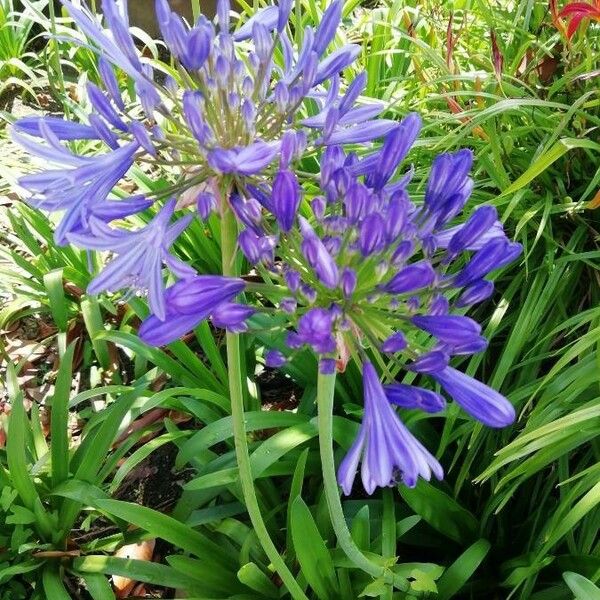
Plant Overview
Known as the Bell Agapanthus, this elegant perennial is the hardy mountaineer of the African Lily family. Hailing from the high-altitude grasslands of South Africa, it is a "sleeping beauty" that retreats underground during the winter, making it a favorite for gardeners in cooler climates who want that Mediterranean aesthetic without the fear of frost damage.
🔍 How to Identify
- 🔔 Bell-Shaped Blooms: Unlike the spherical clusters of other species, these flowers have a distinct drooping, bell-like shape (hence the name campanulatus).
- 🍃 Deciduous Foliage: It features narrow, strap-like grayish-green leaves that emerge in a neat clump in spring and die back completely when the first frost hits.
- 📏 Stature: A more modest grower than the giant hybrids, typically standing about 2 feet tall with slender, graceful flowering stems.
🏡 In Your Garden
- 🏔️ Cold Weather Specialist: Because it goes dormant in winter, it is much hardier than its evergreen cousins. It can survive colder winters provided the soil is well-drained and not a "frozen swamp."
- ☀️ Sun Seeker: To get the best floral display, it needs a position in full sun. In too much shade, the plant will produce plenty of leaves but fail to launch its signature blue fireworks.
- 🏺 The "Snug" Factor: These plants actually bloom better when their roots feel slightly crowded. If planting in a pot, don't rush to move it to a larger container too soon!
⚠️ Safety & Toxicity
- 🚫 Mildly Toxic: The entire plant contains saponins, which can cause mouth irritation and stomach upset if chewed on by pets or curious children.
- 🧤 Skin Irritant: The clear sap inside the leaves and stems can cause a localized rash or "phytophototoxicity" in some people. It is always a good idea to wear gloves when dividing the clumps.
✨ Fun Fact
- 🇿🇦 In South African Xhosa culture, the Agapanthus is known as a plant of fertility and protection. Traditional medicine sometimes involves wearing a necklace made of Agapanthus roots to ensure a healthy pregnancy and a safe delivery.

Detailed Care Instructions
| Humidity | Normal |
| Lighting | Full Sun |
| Difficulty | Medium |
| Hibernation | Cold Period |
| Hardiness Zones | 6 - 9 |
To grow Agapanthus campanulatus, also known as African lily or lily of the Nile, follow these steps:
- Choose a suitable location: Agapanthus prefer full sun to partial shade, although they can tolerate some shade. They also prefer well-draining soil.
- Planting: Dig a hole that is about twice the diameter of the plant's root ball and deep enough to accommodate it. Place the plant in the hole, making sure the top of the root ball is level with or slightly above the soil surface.
- Soil preparation: Before planting, improve the soil drainage by adding organic matter, such as compost or well-rotted manure. This will help prevent the plant's roots from sitting in wet soil, which can cause root rot.
- Watering: Water the plant thoroughly after planting to settle the soil and provide moisture. Afterward, Agapanthus generally do not require frequent watering, as they are drought-tolerant. However, they will benefit from a deep watering during prolonged dry periods.
- Mulching: Apply a layer of organic mulch, such as wood chips or straw, around the base of the plant to help conserve moisture, suppress weeds, and regulate soil temperature.
- Fertilizing: Agapanthus plants generally do not require heavy fertilization. However, you can apply a balanced slow-release fertilizer in spring to provide some additional nutrients.
- Pruning: Prune off spent flower heads after they have finished blooming to prevent the plant from producing seeds and to maintain a tidy appearance. You can also cut back any yellowed or damaged leaves.
- Division: After a few years, Agapanthus can become crowded, leading to reduced blooming. To rejuvenate the plant, you can divide it in spring or early autumn by carefully separating the clumps into smaller sections and replanting them.
- Pests and diseases: Agapanthus is generally resistant to pests and diseases, although occasional issues with snails, slugs, and aphids may arise. Monitor the plants regularly, and treat accordingly if any pests or diseases are observed.
By following these guidelines, you should be able to successfully grow Agapanthus campanulatus and enjoy their beautiful flowers.

Place in a window with dappled sun or a spot in the middle of a room. Or directly in a window facing west or east.

To water this particular plant, you should first determine the moisture level of the soil. This can be done by sticking your finger into the soil up to your second knuckle. If the soil feels dry, it is time to water.
When it comes to watering, it is best to use a watering can with a narrow spout to avoid getting water on the leaves of the plant. Water gently and slowly until the soil is visibly damp, but not soaking wet.
It is important to avoid overwatering, as this can lead to root rot and other problems. In general, it is better to underwater than overwater, as the plant can tolerate some drought conditions.
During the summer months, when the plant is actively growing, it may need more frequent watering. In the winter, when growth slows down, it will require less water.
You should also be mindful of the plant's location. If it is in a hot, sunny spot, it may need more water than if it is in a cooler, shadier location.
Finally, be sure to allow excess water to drain away from the plant, as sitting in standing water can also cause issues for the plant.
To promote healthy growth and blooming of this plant, fertilize it during the growing season with a balanced fertilizer containing equal amounts of nitrogen, phosphorous, and potassium. Apply the fertilizer around the base of the plant according to the manufacturer's instructions, and water it in well after application. Avoid over-fertilizing, as it may cause the plant to produce fewer blooms. Additionally, consider adding organic compost or well-rotted manure to the soil in the fall to improve soil fertility and overall plant health.
Agapanthus campanulatus requires a soil that is well-draining, rich in nutrients, and slightly acidic. The soil should be a loamy or sandy loam texture, with a pH level between 5.5 and 6.5. It is recommended to mix in organic matter, such as compost or well-rotted manure, to improve soil structure and provide additional nutrients. The plant prefers a moist but not waterlogged soil, so be sure not to overwater. It is also important to avoid planting in areas with heavy clay soils or poor drainage, as this can lead to root rot.
Agapanthus Campanulatus can be propagated through division of its rhizomes. This can be done by digging up the plant and carefully separating the clumps of rhizomes using a sharp knife or garden spade. Each clump should have several healthy roots and shoots. These can then be replanted in well-draining soil, spaced apart according to the size of the mature plants.
Another method of propagation is through seed, which can be collected from the dried seed heads of the plant. The seeds should be sown in a propagation tray or pot filled with a well-draining soil mix. They should be kept moist and warm, and can take several weeks to germinate. Once the seedlings are large enough, they can be transplanted into individual pots and grown until they are large enough to be planted in the garden.
Occasionally, Agapanthus Campanulatus can also produce offsets or small plantlets at the base of the plant. These can be divided and transplanted just like the rhizomes, ensuring that each plantlet has its own roots and enough foliage to sustain it.








