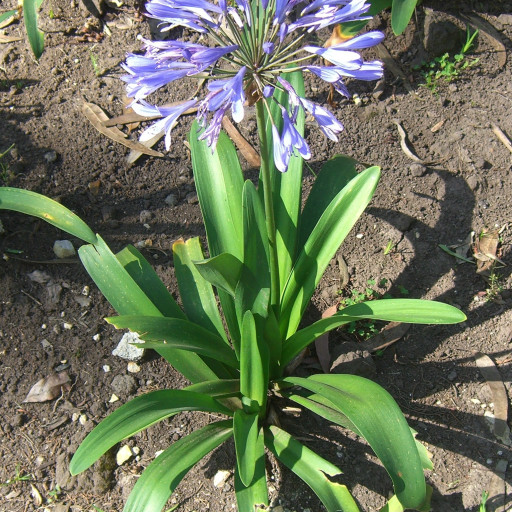
Plant Overview
Often called the "Lily of the Nile," the Agapanthus praecox is a South African icon known for its "firework" blooms. Its name translates beautifully from Greek as the "Flower of Love," symbolizing fertility and purity in many cultures. It is the quintessential summer plant, offering structural elegance and a cool splash of blue or white to sun-drenched landscapes.
🔍 How to Identify
- 🍃 The Foliage: Rich green, strap-like leaves that form dense, fountain-like clumps. Unlike many other lilies, these usually stay lush and evergreen throughout the year in mild climates.
- 🎆 The Bloom: Dozens of trumpet-shaped flowers radiate from a single point, forming a large, spherical cluster (umbel) that looks like a slow-motion explosion of color.
- 🦒 The Scape: Tall, leafless, and incredibly sturdy stalks that hold the heavy flower heads high above the foliage, making them visible from across the garden.
🏡 In Your Garden
- ☀️ Sun Seeker: While they survive in partial shade, they "stretch" and flower poorly without at least 6 hours of direct sun. Think of them as solar-powered bloomers!
- 🧱 Root Strength: These plants have thick, fleshy rhizomes that store water, making them incredibly drought-resistant. However, they hate being moved once settled, as their roots prefer to be slightly "pot-bound" or crowded to trigger the best flowering.
- 🌊 Coastal Warrior: They are remarkably resilient to salt spray and heavy winds, making them a top choice for seaside gardeners who need a plant that won't wilt in the salty air.
⚠️ Safety & Toxicity
- 🚫 Moderate Risk: All parts of the plant, especially the sap in the leaves and the thick roots, contain saponins which are toxic if eaten.
- 🐾 Skin & Pet Safety: The sap can cause a stinging skin rash (dermatitis) for some people, so it’s best to wear gloves when pruning. If ingested by curious pets or children, it can cause mouth irritation and digestive upset.
✨ Fun Fact
🏺 A Geographical Myth: Despite the common name "Lily of the Nile," these plants are actually native to the southern tip of Africa—nearly 3,000 miles away from the Nile River! The name was likely a romanticized title given by early European plant hunters.

Detailed Care Instructions
| Humidity | Normal |
| Invasive | Weed |
| Lighting | Full Sun |
| Difficulty | Easy |
| Hibernation | Cold Period |
| Temperature | 11°C - 21°C |
| Hardiness Zones | 6 - 22 |
To grow Agapanthus Praecox plants, follow these steps:
- Choose the right location: Agapanthus plants prefer full sun to partial shade. Select a location in your garden that receives at least 6 hours of direct sunlight each day.
- Prepare the soil: Agapanthus prefers well-draining soil with a pH between 6 and 7. If your soil is heavy or clayey, amend it with organic matter such as compost or well-rotted manure to improve drainage.
- Planting: Dig a hole slightly larger than the root ball of the plant, and place the plant in the hole, ensuring that the crown is level with the soil surface. Space individual plants about 18-24 inches apart to allow for their spreading habit.
- Watering: Water the plant thoroughly after planting and keep the soil consistently moist during the first growing season. Once established, Agapanthus plants are drought-tolerant and require less frequent watering.
- Mulching: Add a layer of organic mulch around the base of the plant, such as wood chips or shredded bark. Mulch helps retain moisture, suppresses weed growth, and protects the plant's roots from temperature extremes.
- Fertilizing: Apply a balanced, slow-release fertilizer in spring to promote healthy growth and abundant blooms. Follow the manufacturer's instructions for application rates.
- Pruning: Deadhead faded flowers regularly to encourage continuous blooming and prevent seed formation. After the flowering season, you can trim back any yellow or brown leaves to maintain neatness.
- Dividing: Agapanthus plants tend to become overcrowded after a few years, leading to reduced flowering. Divide the plant every 3-5 years by carefully lifting the clump and separating it into smaller sections. Replant them in well-prepared soil, and water them thoroughly.
- Winter protection: In regions with cold winters, Agapanthus may need some protection. Mulch around the plant's base with a layer of straw or leaves to insulate the roots from freezing temperatures.
Remember to monitor for pests such as snails and slugs, which may feed on Agapanthus foliage. Regularly inspect the plants and take appropriate measures if any infestation is detected.

Place in a bright room that is sun drenched almost all day. Or directly in a south-facing window.

The plant in question is a perennial herbaceous plant with narrow, strap-like leaves that grow in a rosette formation. The plant produces clusters of large spherical flowers on tall, erect stems that can reach up to 2 feet tall.
When it comes to watering, it is important to avoid overwatering as it can lead to root rot and other fungal diseases. The plant should be watered deeply once a week, allowing the soil to dry out slightly between waterings. It is important to water the soil around the plant, avoiding getting water on the leaves and flowers as this can lead to fungal diseases.
If the soil is particularly dry, the plant can be watered twice a week during the hottest months of the year. However, it is important to monitor the soil and avoid watering if it is already moist.
During the winter months, the plant should be watered sparingly as it enters a dormant period. It is important to allow the soil to dry out between waterings to prevent the plant from rotting.
In summary, Agapanthus Praecox should be watered deeply once a week, allowing the soil to dry out slightly between waterings. Avoid getting water on the leaves and flowers and monitor the soil for moisture levels to prevent overwatering. During the winter, water sparingly and allow the soil to dry out between waterings.
To fertilize this plant, you should use a balanced fertilizer with equal amounts of nitrogen, phosphorus, and potassium. Apply the fertilizer around the base of the plant, being careful not to get any on the leaves or flowers. Water the plant well after applying the fertilizer to help it absorb the nutrients. Fertilize the plant once every two weeks during the growing season, which is typically from spring to fall. Avoid fertilizing during the winter months when the plant is dormant.
Agapanthus Praecox plant requires well-draining and nutrient-rich soil for its healthy growth. The ideal soil for this plant should be loamy or sandy loam soil with a pH level ranging from slightly acidic to neutral. It is essential to avoid heavy and clayey soils for this plant as they retain excessive moisture, which may result in root rot.
A suitable potting mix for Agapanthus Praecox plant should consist of peat moss, perlite, vermiculite, and coarse sand in equal amounts. This mixture ensures excellent drainage and aeration for the plant's root system and helps prevent soil compaction.
Additionally, adding organic matter such as compost, aged manure, or leaf litter to the soil can enhance its nutrient content and texture. This addition promotes the growth and flowering of Agapanthus Praecox plant.
In summary, the ideal soil for Agapanthus Praecox plant is well-draining, nutrient-rich, and loamy or sandy loam with a pH level ranging from slightly acidic to neutral. It is important to avoid heavy and clayey soils and to add organic matter to enhance the soil's nutrient content.
To propagate this plant, select a healthy mother plant with strong roots. Take a sharp, clean cutting implement and cut a healthy stem from the plant, ensuring that it has several leaves and a good portion of stem with a node. Choose a location with well-draining soil and good light, but not direct sunlight. Fill a pot with potting soil and insert the cutting, ensuring that the node is buried in the soil. Water the cutting thoroughly and cover it with a plastic bag to create a humid environment. Keep the soil moist and allow time for the cutting to develop roots. Once roots have developed, remove the plastic covering and continue to water the new plant regularly. After a few weeks, the new plant can be transplanted to a larger container or into the garden.
Common pests of the african-lily include Mealybugs, spider mites, thrips, snails. Make a habit of checking your african-lily frequently for pests so that any infestations can be caught and managed early.








