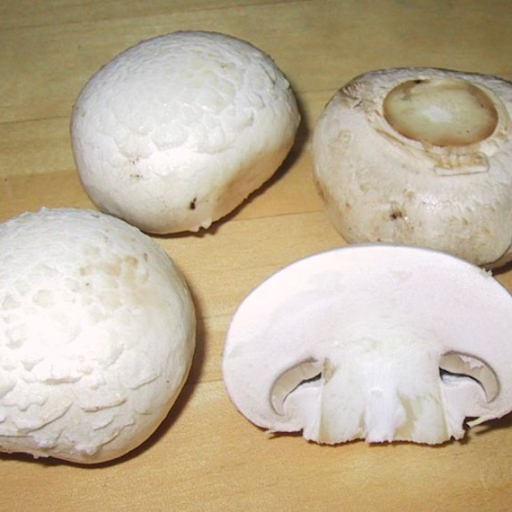
Plant Overview
Known as the "Supermarket Superstar," Agaricus bisporus is the most widely cultivated and consumed mushroom in the world. Whether you know it as a White Button, a Cremini, or a meaty Portobello, you are actually looking at the same species at different stages of its life. In culinary folklore, it is the quintessential "champignon" that brought mushroom foraging from the wild forests into the global kitchen.
🔍 How to Identify
- 🍄 The Cap: In its youth, the cap is a smooth, rounded "button" (white or brown). As it matures, it flattens out into a broad disk that can reach up to 6 inches in diameter.
- 🍫 The Gills: This is the best way to tell them apart from dangerous look-alikes. The gills are "free" (not attached to the stem). They start out pale pink in youth and turn a deep, chocolatey brown as the spores mature.
- 💍 The Stem & Ring: The stem is thick and sturdy. It features a delicate, papery ring (called an annulus) about halfway up, which is the leftover "veil" that protected the gills when the mushroom was a baby.
🌲 Habitat & Ecology
- 💩 Nature’s Recycler: This fungus is a "secondary decomposer." It doesn't grow on living trees; instead, it thrives in nitrogen-rich environments like compost heaps, manured grasslands, and garden waste.
- 🌑 The Dark Side: While they grow in the wild during spring and autumn, most Agaricus bisporus are grown commercially in total darkness or very low light to maintain their pristine white color and moisture levels.
⚠️ Safety & Toxicity
- ⚠️ WARNING: While store-bought versions are safe, wild identification is high-risk.
- 💀 The Deadly Double: Beginners often mistake the deadly Amanita bisporigera (Destroying Angel) for a wild Button mushroom. The key difference? The deadly Amanita always has pure white gills and a "cup" at the base of the stem, whereas Agaricus has pink/brown gills and no cup.
- 🐶 Pets: Plain, cooked mushrooms are generally safe for pets, but raw wild mushrooms can cause severe gastrointestinal distress or worse.
✨ Fun Fact
- ✨ The Master of Disguise: Before 1925, all Agaricus bisporus were brown! A mushroom farmer in Pennsylvania found a cluster of pure white mushrooms growing in his beds, cloned them, and marketed them as a "premium" product. This accidental mutation is why our grocery stores are filled with white mushrooms today.

Detailed Care Instructions
| Humidity | Normal |
| Lighting | Part Sun |
| Difficulty | Medium |
| Hibernation | Cold Period |
| Hardiness Zones | 3 - 8 |
To grow Agaricus bisporus, also known as the white button mushroom, you can follow these general steps:
- Prepare the growing substrate: Agaricus bisporus grows best in a substrate of composted organic materials. Pre-mix a substrate using a combination of compost, animal manure, and straw. It should be well-composted, free from contaminants, and have a pH level of around 7.
- Sterilize the substrate: To eliminate any potential contaminants, sterilize the substrate by placing it in a large pot or container and heating it to around 160°F (71°C) for at least one hour.
- Cool and moisten the substrate: After sterilization, allow the substrate to cool down. Once it reaches room temperature, add water to moisten it thoroughly. The substrate should be moist enough to clump together when squeezed but should not release excess water when pressed.
- Prepare mushroom spawn: Obtain mushroom spawn, which consists of mycelium-infected substrate. This can be purchased from a supplier or obtained from previously grown mushrooms. Break the spawn into small pieces (around the size of a marble) and mix it evenly into the prepared substrate.
- Fill the growing containers: Clean and sanitize your growing containers, such as plastic trays or pots, and fill them with the prepared substrate. Pack the substrate tightly to minimize air pockets.
- Maintain optimal temperature and humidity: Place the containers in a dark, cool area with a temperature range of around 60-70°F (15-21°C). Maintain high humidity levels by misting the containers with water regularly or using a humidifier.
- Provide proper airflow: While the mushrooms require high humidity, they also need good air exchange. Provide fresh air periodically by opening the containers or using a fan to circulate the air.
- Monitor and control the moisture: Check the moisture level regularly to ensure the substrate remains moist but not overly saturated. Sprinkle water if it becomes dry, but avoid creating standing water.
- Harvest the mushrooms: After approximately 3-4 weeks of growth, small pins will form on the substrate surface. As the pins grow, the caps will open, exposing the gills and spores. Harvest the mushrooms when the caps are fully expanded but before they start to turn brown, as they become more flavorful at this stage.
Repeat the process with fresh substrate and spawn to grow subsequent batches of Agaricus bisporus.

Place in a window with dappled sun or a spot in the middle of a room. Or directly in a window facing west or east.
To water this plant, make sure to avoid pouring water directly onto the cap of the mushroom. Instead, aim to water around the base of the stem, being careful not to flood the surrounding soil. Water once the top of the soil feels slightly dry to the touch. Avoid overwatering, as this can lead to root rot. Additionally, ensure proper drainage to prevent water from pooling around the roots.
To fertilize this mushroom variety, you will need to use a nitrogen-rich organic fertilizer. You want to avoid excess phosphorus in the soil, as this can affect the growth and development of the fruiting bodies. Apply the fertilizer to the substrate before inoculating with spawn, following the manufacturer's instructions for application rates. Avoid over-fertilization, as this can lead to contamination issues and poor fruiting. Monitor the growth of your mushrooms carefully, adjusting your fertilization practices as necessary to achieve optimal yields.
Agaricus Bisporus is a mushroom species that requires a specific type of soil to grow. The soil must be rich in organic matter and have a pH between 6 and 7.5. It should also be well-draining to prevent waterlogging and facilitate proper aeration.
It is important to use a soil that has not been previously used to grow other mushrooms as it may contain fungal spores or diseases that can harm the Agaricus Bisporus plant. The soil should be mixed with a substrate such as peat moss or compost to enhance its nutritional value and provide adequate moisture retention.
In addition to the soil, the planting site should be chosen carefully. The location must have sufficient light, good air circulation, and should be protected from extreme temperatures or weather conditions.
Overall, providing the right soil and growing conditions is essential for the healthy growth and yield of the Agaricus Bisporus plant.
To propagate this plant, you will need to obtain a mature fruiting body or a tissue culture. The tissue culture can be obtained from the stem or gills of the fruiting body. Once you have obtained the tissue culture or fruiting body, you will need to prepare a sterile growth medium for it.
The growth medium should contain a mix of grains, such as rye or wheat, as well as various nutrients and minerals. You will also need to sterilize the medium to eliminate any potential contaminants. Once the medium is prepared and sterilized, you can then inoculate it with the tissue culture or fruiting body.
The inoculated medium should be kept in a clean, cool, and humid environment, such as a laboratory or greenhouse. The mycelium in the medium will eventually form a dense mass, which can then be transferred to a new growth medium or used to inoculate a substrate for fruiting. With proper care and attention to sterile procedures, you should be able to successfully propagate this plant.







