Plant Overview
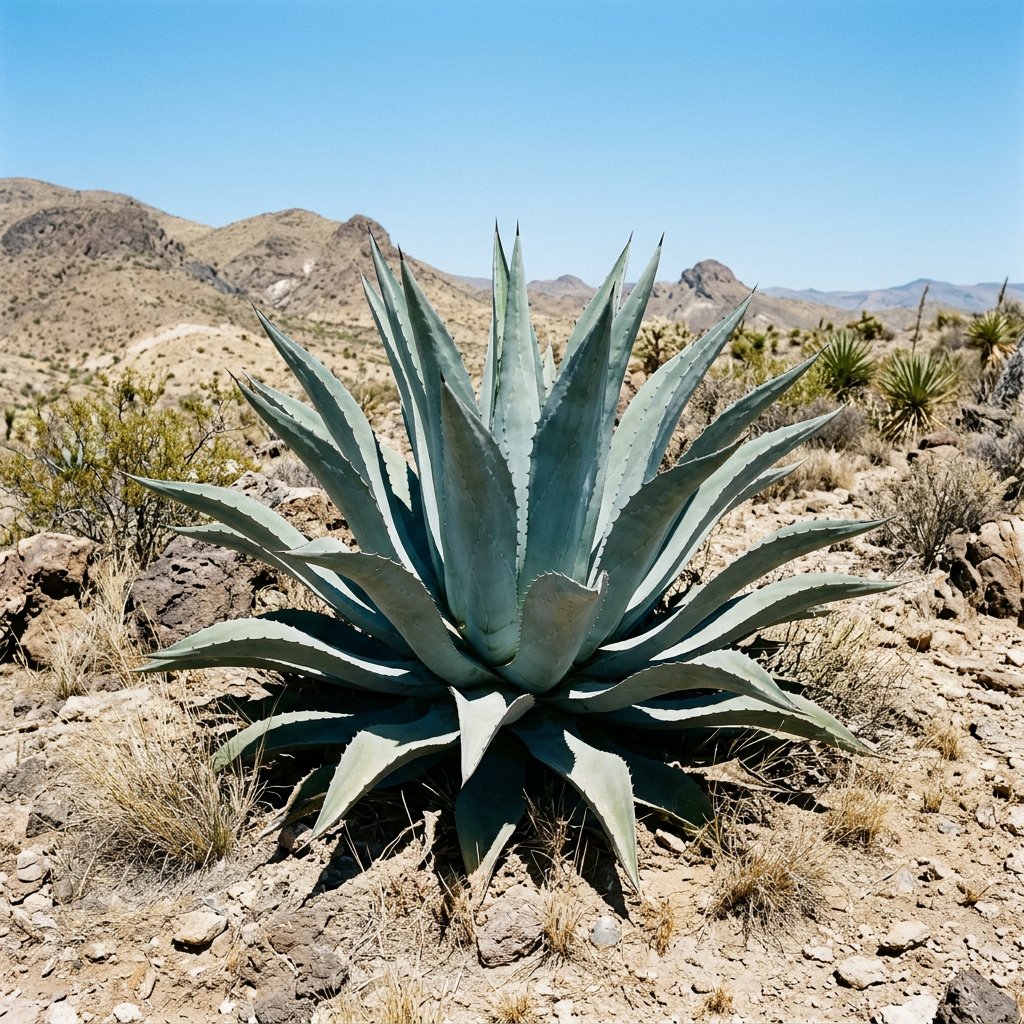
Commonly known as the Century Plant, the Agave americana is a titan of the succulent world. Despite its name, it doesn’t take a hundred years to bloom, but its once-in-a-lifetime flowering event is so spectacular that it has become the stuff of botanical legend. Originating from Mexico and the American Southwest, this rugged survivor brings a dramatic, architectural flair to any landscape it inhabits.
🔍 How to Identify
- 📏 The Rosette: It grows in a massive, symmetrical rosette shape that can reach up to 10 feet wide. The leaves are thick, fleshy, and gracefully recurved.
- 🎨 Color and Texture: The foliage is typically a powdery blue-green or glaucous gray, often featuring a waxy coating that helps the plant retain moisture in blistering heat.
- ⚔️ Armored Edges: Each leaf is lined with sharp, recurved teeth along the margins and tipped with a formidable, needle-like terminal spine that can grow over an inch long.
🏡 In Your Garden
- ☀️ The Sun Worshipper: This plant thrives in the most intense sunlight. If planted in shade, it tends to stretch and lose its iconic compact shape.
- 🏜️ Strategic Placement: Because of its immense size and sharp spines, it is often used as a "living fence" or security barrier. Avoid planting it near walkways or areas where children and pets play.
- 💧 Drainage is King: It is practically immortal in the face of drought, but it will rot quickly if its "feet" stay wet. It prefers gritty, sandy soil and requires almost no supplemental watering once established.
- 🌱 The Legacy of Pups: While the main plant (the "mother") will die after it finally blooms, it leaves behind numerous offsets or "pups" at its base, ensuring the cycle continues in your garden.
⚠️ Safety & Toxicity
- 🌵 Physical Hazard: The spines are incredibly sharp and can cause deep puncture wounds. Many gardeners clip the very tips of the spines to make maintenance safer.
- 🧪 Irritating Sap: The sap contains calcium oxalate crystals and acrid oils. If the leaves are cut, the leaking fluid can cause painful skin rashes or "agave dermatitis" upon contact.
- 🐾 Pet Safety: It is considered mildly toxic to cats and dogs if ingested, leading to stomach upset and mouth irritation.
✨ Fun Fact
When the Century Plant finally decides to bloom (usually after 10 to 25 years), it sends up a massive flowering stalk that resembles a giant stick of asparagus, reaching heights of up to 30 feet in just a few weeks! This "death bloom" consumes all the plant's energy, leading to its eventual demise.

Detailed Care Instructions
| Color | Leaves Are Grey-Green In Color, Although Different Varieties Are Available, Including Those With Yellow-Edged Leaves. Flowers Are Yellowish-Green |
| Soil Ph | 5-7 |
| Humidity | Normal |
| Invasive | Weed |
| Lighting | Full Sun |
| Toxicity | Poisonous |
| Soil Type | Very Free-Draining, Sandy Or Gritty Soil |
| Bloom Time | Summer |
| Difficulty | Medium |
| Plant Type | Perennial Succulent |
| Mature Size | 6 Foot By 10 Foot |
| Native Area | Southern Usa, Mexico |
| Temperature | 20°C - 28°C |
| Sun Exposure | Full Sun |
| Hardiness Zones | 8-11 |
To grow Agave Americana, commonly known as the century plant, follow these steps:
- Choose a suitable location: Agave Americana requires full sun or partial shade. Ensure the area has well-draining soil as soggy soil can rot the roots. The plant is drought-tolerant once established, making it ideal for arid climates.
- Prepare the soil: Agave Americana prefers sandy or loamy soil. Mix organic matter, like compost or well-rotted manure, into the soil to improve drainage and fertility.
- Planting: Dig a hole at least twice as wide and deep as the root ball. Place the plant in the hole, ensuring the top of the root ball is level with or slightly above the ground surface. Backfill the hole with soil, gently firming it around the roots.
- Watering: Water the plant thoroughly after planting to settle the soil and encourage root establishment. Afterward, water sparingly, allowing the soil to dry out between waterings. Agave Americana is adapted to dry conditions and excessive watering can cause root rot.
- Fertilization: Agave Americana generally requires minimal fertilization. If desired, feed the plant with a balanced fertilizer in early spring, following the manufacturer's instructions. Avoid over-fertilizing, as it can lead to lanky growth.
- Pruning: Agave Americana does not need regular pruning. However, you can remove dry or dead leaves by gently pulling them away from the base. Be cautious of the spines along the leaf margins while pruning.
- Protecting from frost: Agave Americana is hardy up to USDA Zone 7. In colder regions, protect the plant during freezing temperatures by covering it with a frost cloth or moving potted plants indoors.
- Propagation: Agave Americana can be propagated through offsets, which are small clones that grow around the base of the mature plant. Remove the offsets when they are about one-third the size of the parent plant and plant them in well-draining soil.
Remember that Agave Americana is a large plant that can spread and grow up to 6-10 feet tall and wide. Give it plenty of space to grow and avoid planting it near structures or other plants that may be crowded out.

Place in a bright room that is sun drenched almost all day. Or directly in a south-facing window.

First, it is important to observe the plant and determine when it needs watering. This can be done by checking the soil: if it is dry to the touch, it is time to water.
When watering, make sure to soak the soil thoroughly, allowing the water to penetrate deeply. This promotes root growth and helps the plant tolerate periods of drought.
However, it is important not to over-water the plant, as this can lead to root rot. Allow the soil to dry out between waterings.
If the plant is mature and established, it may require less frequent watering than a young or recently transplanted plant.
Finally, it is important to water early in the day to reduce the likelihood of fungal infections.
To fertilize this plant, use a fertilizer with a balanced N-P-K ratio and a slow-release formula. Apply the fertilizer during the growing season, typically in the spring and summer months. Be sure to follow the manufacturer's instructions for the amount and application method. Avoid over-fertilizing, as this can cause damage to the plant.
The ideal type of soil for an Agave Americana plant is a well-draining soil mixture that is a blend of sand, gravel, and loamy soil. The pH level should be between 6.5 and 7.5. The soil should be slightly acidic and rich in nutrients, but not too dense or compact. A mix of sea sand, coarse perlite, and peat moss can be used to create a soil blend that provides adequate drainage while retaining enough moisture for the plant's needs. It is important to avoid using heavy or dense soils that may trap water and cause root rot in the plant.
Agave Americana is a plant species that can be propagated through several methods such as rhizome division, offsets, and through seeds.
Rhizome division involves dividing the plant's underground stem or root system into smaller parts, each of which can grow into a new plant with proper care. This method is best used for mature plants that have developed a large root system.
Offsets are small plantlets that grow at the base of the parent plant and can be removed and replanted to produce a new plant. This method is best used for younger plants that have not yet developed a significant root system.
A third way to propagate Agave Americana is through seed germination. Seeds can be harvested from the parent plant and planted in well-draining soil, kept moist and warm until they sprout. This method requires patience as it may take several years before the plant reaches maturity.
Regardless of the method used, it is important to plant the new Agave Americana plant in well-draining soil, in a location with plenty of sunlight and protection from extreme weather conditions. Additionally, the new plant should be watered sparingly to avoid root rot and other related problems.
Common pests of the century plant include Scale insect, mealybugs. Make a habit of checking your century plant frequently for pests so that any infestations can be caught and managed early.








