Plant Overview
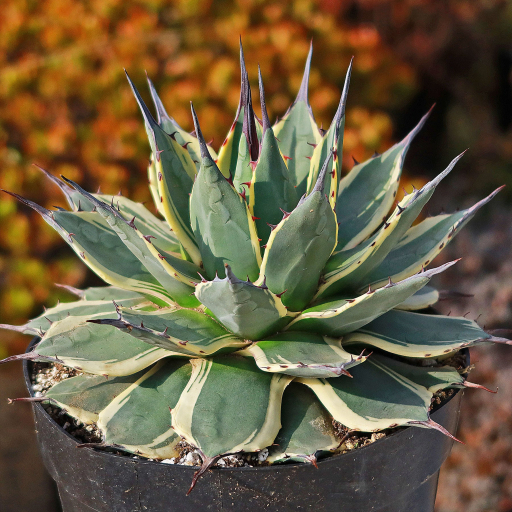
Known for its stunning, almost sculptural symmetry, Agave applanata—often called the Gray Agave—is a centerpiece plant that looks as though it were carved from stone. Native to the high-altitude mountainous regions of Mexico, it brings a touch of the desert's rugged elegance to any collection. Its rigid, architectural form makes it a favorite for modern landscape designers and succulent enthusiasts alike.
🔍 How to Identify
- 🎨 Symmetrical Rosette: It grows in a very tight, circular pattern, with leaves overlapping closely to create a dense, rose-like shape that can reach up to 3 feet wide.
- 🌫️ Glaucous Foliage: The leaves are exceptionally thick and rigid, displaying a sophisticated powdery blue-gray or silvery-green color.
- ⚔️ Dark Accents: Each leaf edge is lined with small, dark teeth, and the tips feature a long, sharp, reddish-brown spine that eventually fades to a weathered gray.
🏡 In Your Garden
- 🏜️ The Need for Drainage: Because this species evolved in rocky, thin soils, its roots are highly sensitive to moisture. It "breathes" through its roots, so using a gritty, mineral-heavy soil is essential to prevent rot.
- ❄️ Mountain Hardiness: Unlike many of its desert cousins, Agave applanata is surprisingly cold-tolerant. Its high-altitude heritage allows it to survive temperatures that would damage more tropical succulents, provided the soil remains bone-dry during the winter.
⚠️ Safety & Toxicity
- 🛡️ Physical Warning: The most immediate danger is the sharp terminal spine at the tip of each leaf. These can cause painful puncture wounds; many gardeners "tip" them (clipping the very point off) if the plant is near a walkway.
- 🧪 Sap Sensitivity: The internal sap contains calcium oxalate crystals. If a leaf is broken, the juice can cause skin irritation or a burning sensation, especially for those with sensitive skin or for curious pets.
✨ Fun Fact
The most famous version of this plant is the cultivar 'Cream Spike.' It is a dwarf, variegated form of Agave applanata that stays tiny and features beautiful cream-colored leaf margins, making it one of the most sought-after "boutique" agaves in the world.

Detailed Care Instructions
Here are some steps to help you grow Agave Applanata:
- Choose the right location: Agave Applanata thrives in full sun to partial shade. Ensure that the location you choose has well-draining soil.
- Prepare the soil: Agave Applanata prefers sandy or loamy soil. If your soil is heavy or clay-like, amend it with sand or organic matter to improve drainage.
- Watering: Agave Applanata is drought-tolerant but requires regular watering during its establishment phase. Water deeply and thoroughly but allow the soil to dry out between waterings to prevent root rot. Once established, reduce watering frequency.
- Mulching: Apply a layer of organic mulch around the plant to help retain moisture, control weeds, and protect the roots from temperature fluctuations. Make sure to keep the mulch away from the base of the plant.
- Fertilization: Agave Applanata does not require regular fertilization. However, you can apply a slow-release, balanced fertilizer in the spring if desired. Follow the package instructions for proper application amounts.
- Propagation: Agave Applanata can be propagated through offsets, which are small plantlets that grow around the base of the mother plant. Gently separate the offsets from the main plant and plant them in a well-draining soil mixture.
- Pruning: Agave Applanata typically does not require pruning, but you can remove any dead or damaged leaves if necessary. Use clean, sharp pruning shears to avoid transmitting diseases.
- Winter care: Agave Applanata is generally cold-hardy but may require protection in extremely cold regions. Cover the plant with a frost cloth or move potted plants indoors during frosty periods.
- Pests and diseases: Agave Applanata is generally resistant to pests and diseases. However, keep an eye out for common succulent pests like mealybugs, aphids, or scale insects. Treat any infestations promptly using appropriate insecticides or natural remedies.
Remember to research your specific variety of Agave Applanata for any additional care requirements.

Place in a bright room that is sun drenched almost all day. Or directly in a south-facing window.

To water this particular plant, one should ensure that the soil is completely dry before watering. Once the soil has dried out, water thoroughly until water begins to drain out of the bottom of the pot. Avoid overwatering as this can lead to root rot and ultimately kill the plant. Additionally, water less frequently during the plant's dormant period or during the winter months. It is important to note that this plant is drought-tolerant and can survive extended periods without being watered.
To fertilize this plant, mix a balanced fertilizer (10-10-10 or 20-20-20) at half strength and apply it to the soil once every two months during the growing season (spring and summer). Do not fertilize during the dormant season (fall and winter). Water the plant well before and after fertilization to prevent root burn. Avoid getting fertilizer on the leaves or stem of the plant.
When planting Agave Applanata, it is important to choose a suitable soil type. The soil should be well-drained, with good water retention capacity and nutrient availability. A mixture of organic and inorganic matter with a pH range from 6 to 8 works well. Additionally, the soil should be free from any pests or pathogens that may harm the plant. It is recommended to use soil that is specific to succulent plants such as cactus soil mix. This type of soil will provide the appropriate drainage and moisture balance for the plant's needs. Furthermore, it is important to avoid using heavy clay soils or soils that are too dense, as they can hold on to water for too long, causing root rot. A combination of sand, peat moss, perlite, and coarse gravel can be used to create an ideal soil mixture for the Agave Applanata plant.
To propagate this plant, you can use both seeds and offsets. If using seeds, start by soaking them in warm water for several hours to soften the tough exterior. Then, plant them in a well-draining soil mixture and water lightly. Keep the soil moist and place the container in a warm location with indirect sunlight. Once the seedlings have grown large enough, they can be transplanted into their own pots.
If using offsets, look for small plants growing from the base of the parent plant. Carefully remove them from the soil and separate them from the parent plant by gently pulling them apart. Plant the offsets in their own containers with well-draining soil and water lightly. Place them in a warm location with indirect sunlight and keep the soil moist until they become established.
Whether using seeds or offsets, it’s important to avoid overwatering and to use a well-draining soil mixture to prevent root rot. With proper care, your new plants will thrive and grow over time.








