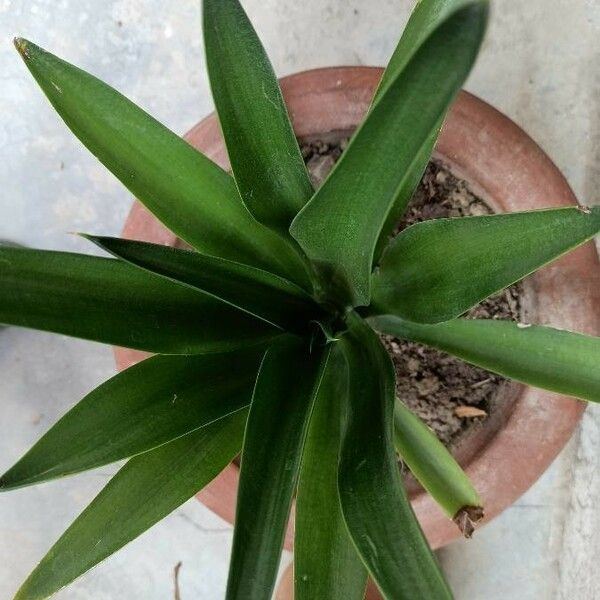
Plant Overview
Known as the "Smooth Agave" for its remarkably soft, spine-free leaf edges, Agave desmettiana is a favorite for Mediterranean and xeriscape gardens. Native to Mexico, this succulent forms a perfect, symmetrical rosette that looks like a frozen green fountain. It is often called the "gentle agave" because it lacks the treacherous teeth found on its more aggressive relatives, making it a safe yet striking choice for high-traffic areas.
🔍 How to Identify
- 🍃 Curvaceous Leaves: The leaves are long, narrow, and gracefully curved inward and upward, creating a distinct "urn" shape (urceolate) rather than a flat star.
- 🚫 Smooth Margins: Unlike most agaves, the edges of the leaves are almost entirely smooth to the touch, though they do feature a single, sharp reddish-brown terminal spine at the very tip.
- 🎨 Color Palette: The foliage is typically a soft, matte apple-green, though the popular 'Variegata' variety boasts bright yellow borders that glow in the sunlight.
🏡 In Your Garden
- 🌱 Growth & Pacing: This species is relatively fast-growing for a succulent. Because it has a shallow root system, it is highly successful in large decorative pots, but it dislikes being moved once it reaches maturity.
- ☀️ Sun Sensitivities: While it loves the sun, in extremely hot desert climates, the leaves can "scorch" or turn yellow-brown. It appreciates a little afternoon shade to keep its color vibrant.
- 🌵 The Life Cycle: Like all agaves, this is a "monocarpic" plant. It spends 8 to 15 years growing toward a single, spectacular blooming event, after which the main plant will die, leaving behind "pups" (offsets) at the base to take its place.
⚠️ Safety & Toxicity
- 🧪 Status: Mildly toxic and potentially irritating.
- 🧴 Details: The sap contains calcium oxalate crystals, which can cause painful skin rashes or "agave dermatitis" if you get it on your skin while pruning. Keep it away from curious pets and toddlers, as ingestion can lead to mouth irritation and stomach upset.
✨ Fun Fact
When this agave finally decides to bloom, it sends up a massive flower spike that can reach 10 feet tall! Instead of just seeds, the stalk often produces hundreds of "bulbils"—tiny, fully-formed baby plants that hang from the stalk like living ornaments.

Detailed Care Instructions
| Humidity | Dry |
| Lighting | Full Sun |
| Difficulty | Easy |
| Temperature | 21°C - 32°C |
| Hardiness Zones | 9 - 11 |
To grow Agave Desmettiana, also known as the smooth agave or variegated century plant, follow these steps:
- Choose the right location: Agave Desmettiana thrives in full sun but can tolerate partial shade. Ensure the location has well-draining soil, as waterlogged soil can lead to root rot. If you live in a region with cold winters, it is best to grow it in a container that you can move indoors during extreme cold spells.
- Prepare the soil: Before planting, loosen the soil in the planting area and mix in some organic matter, such as compost, to improve drainage.
- Planting: Dig a hole that is slightly larger than the root ball of the agave. Place the plant in the hole, ensuring that the top of the root ball is level with the soil. It's essential not to bury the crown of the plant, as this can cause rotting. Gently firm the soil around the root ball.
- Watering: Agave Desmettiana has low water needs, making it drought-tolerant. After planting, water thoroughly to settle the soil around the roots. Subsequently, water sparingly, allowing the soil to dry out between watering sessions. Overwatering can cause root rot, so moderation is key.
- Mulching and weed control: Apply a layer of organic mulch around the plant to help retain moisture in the soil and suppress weed growth. Ensure the mulch doesn't touch the stem or crown of the plant.
- Maintenance: Agave Desmettiana is a low-maintenance plant but will benefit from some care. Remove any dead leaves or spent flower stalks. Keep an eye out for pests, such as scale insects or mealybugs. In case of infestation, treat with insecticidal soap or a specific pesticide recommended for agaves.
- Propagation: Agave Desmettiana can be propagated through offsets, which are smaller plants that grow from the main plant's base. Carefully separate these offsets from the main plant, ensuring they have some root attached, and transplant them into their own pots or new locations in the garden.
Remember that Agave Desmettiana is known for its sharp spines, so handle the plant with care and consider wearing gloves when working around it.

Place in a window with dappled sun or a spot in the middle of a room. Or directly in a window facing west or east.

1. Determine the watering needs of your particular plant: The watering requirements of Agave Desmettiana may vary depending on the climate, season, and individual plant characteristics. Researching the specific needs of your plant can help you avoid over or under-watering.
2. Use a well-draining soil: Agave Desmettiana prefers well-draining soil that allows for excess water to drain away. A heavy, clay-based soil can cause water to pool and lead to root rot.
3. Water deeply but infrequently: When you water, ensure that the soil is deeply saturated all the way to the roots. However, it is crucial not to over-water and allow the soil to become waterlogged, which can lead to root rot.
4. Allow the soil to dry out: In between watering, allow the soil to dry out completely before watering again. This can help prevent root rot and other fungal diseases caused by excess moisture.
5. Adjust watering frequency based on environmental factors: Humidity, temperature, and season can all impact the watering needs of Agave Desmettiana. Adjust the frequency of watering accordingly, taking into account the weather and climate.
6. Avoid getting water on the leaves: Agave Desmettiana is susceptible to fungal diseases when water is allowed to pool on the leaves. To prevent this, water directly at the base of the plant and avoid getting water on the foliage.
To fertilize this plant, use a slow-release fertilizer specifically formulated for succulents. Apply the fertilizer in the soil around the plant during the growing season, which is typically in the spring and summer months. Be sure to follow the manufacturer's instructions for application rates and frequency. Avoid fertilizing during the winter months as the plant is in a dormant phase and does not require additional nutrients.
The ideal soil for Agave Desmettiana plant is a well-draining soil that is slightly acidic, with a pH range of 6.5 to 7.5. The soil should be composed of a mix of sand, gravel, and organic matter such as peat moss or compost. The soil should be loose and porous, allowing for proper air circulation and water drainage. The plant prefers a sandy loam soil, although it can also tolerate rocky soils. It is important to ensure that the soil is not excessively moist, as Agave Desmettiana plants do not tolerate standing water. Regularly mixing in a slow-release fertilizer can also benefit the plant's growth and health.
Agave Desmettiana is a type of succulent plant that can be propagated easily through division. To propagate the plant, first, select a mature plant with at least a few offsets emerging from the base. Then, dig up the parent plant and the offsets, making sure to keep the root system intact.
Separate the offsets from the parent plant by gently pulling them away, using a sharp knife if necessary. Make sure to leave some roots attached to the offsets. Once separated, replant the offsets in a well-draining soil mix. Water the soil well and place the new plants in a bright, but not direct, sunlight.
It is important to note that Agave plants are known for their sharp leaves so be sure to wear gloves and protective clothing while handling and propagating them. Additionally, the Agave plant requires a lot of space and a lot of time to mature, so it is best to propagate them only when necessary or if you have adequate space to plant them.
Common pests of the spineless jade agave include Scale insect, mealybugs. Make a habit of checking your spineless jade agave frequently for pests so that any infestations can be caught and managed early.







