Plant Overview
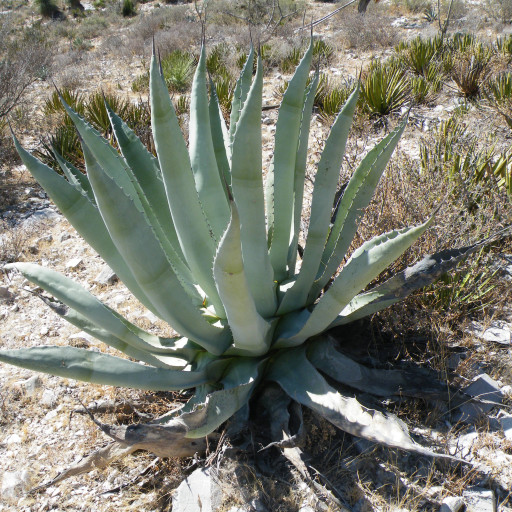
Often called the Rough-leaved Agave or Maguey Cenizo, this plant is a rugged architectural masterpiece of the desert. Native to the rocky slopes of Northern Mexico and Texas, it looks like a sculpture carved from dusty blue stone. It is a favorite for xeriscaping because it thrives in harsh conditions that would wither most other garden plants.
🔍 How to Identify
- 🌵 Foliage Texture: The leaves feel like coarse sandpaper or a shark's skin, which is exactly where its species name scabra (meaning "rough") comes from.
- 🎨 Dusty Hue: The wide, stiff leaves have a thick glaucous (waxy) coating that gives them a beautiful, powdery blue-grey color designed to reflect intense sunlight.
- ⚔️ Formidable Spines: The leaf edges are lined with dark, prominent, and very sharp teeth, ending in a stout terminal spine at the tip that can easily pierce thick clothing.
🏡 In Your Garden
- 🪨 The Drainage Expert: Because it naturally grows on limestone hills, this Agave cannot tolerate "wet feet." In home landscapes, it is best planted on a slight mound or in very gravelly soil to ensure water flows away from the crown immediately.
- ☀️ Sun Worshiper: It requires full, direct sun to maintain its tight, symmetrical rosette shape. If grown in too much shade, the plant will stretch out and lose its signature "dusty" blue coloration.
- 📐 Space Conscious: While slow-growing, it can eventually reach 4 feet wide. Its stiff, unyielding leaves mean it should be given plenty of "breathing room" where it won't be bumped into.
⚠️ Safety & Toxicity
- 🚩 Physical Hazard: The primary safety concern is the needle-sharp tips and serrated edges. It is often referred to as a "sentinel plant" because it acts as a natural barbed-wire fence.
- 🐾 Pet & Skin Irritation: The sap contains calcium oxalate crystals and saponins. If a pet chews the leaves, it can cause mouth swelling and drooling. For humans, the sap can cause a persistent, itchy skin rash (dermatitis), so always wear heavy gloves when pruning.
✨ Fun Fact
- 💀 The Grand Finale: The Agave Scabra is "monocarpic," meaning it spends its entire life (10–20 years) storing energy for a single reproductive event. It sends up a massive, tree-like flower stalk that can reach 15 feet high, blooms once, and then the mother plant dies, leaving behind small "pups" (offsets) at the base to start the cycle over.

Detailed Care Instructions
To successfully grow an Agave Scabra plant, follow these steps:
- Choose the right location: Agave Scabra plants prefer full sun to partial shade. Pick a spot that receives at least six hours of direct sunlight per day. Ensure the location has well-draining soil, as wet or waterlogged soil can lead to root rot.
- Prepare the soil: Agave Scabra plants thrive in sandy, loamy soil with a slightly acidic to neutral pH (6.0-7.0). If your soil is heavy or clay-like, amend it with sand, perlite, or compost to improve drainage.
- Planting: Dig a hole that is as deep as the root ball and two to three times wider. Place the Agave Scabra plant in the hole, ensuring the top of the root ball is level with or slightly above the soil surface. Backfill the hole with soil, gently firming it around the plant.
- Watering: Water the newly planted Agave Scabra deeply to help the roots establish. After that, water sparingly, allowing the soil to dry out between waterings. Agave plants are drought-tolerant and can withstand periods of dryness. Overwatering can be detrimental to the plant's health.
- Fertilization: Agave Scabra plants do not require frequent fertilization. However, you can apply a slow-release, balanced fertilizer in early spring to provide nutrients. Follow the instructions on the fertilizer packaging for application rates.
- Maintenance: Agave Scabra plants are relatively low maintenance. Remove any dead or damaged leaves as needed. Protect the plant from extreme cold or frost by covering it or moving it indoors if necessary. Agave Scabra can tolerate temperatures down to 20°F (-6°C) but may need protection in colder regions.
- Propagation: Agave Scabra plants can be propagated by offsets or pups that grow around the base of the mother plant. Wait until the pups are approximately one-third the size of the parent plant before separating them. Gently remove them from the mother plant and plant them in a separate pot or location.
By following these guidelines and providing proper care, you should be able to successfully grow an Agave Scabra plant.

Place in a bright room that is sun drenched almost all day. Or directly in a south-facing window.

To properly water this plant, remember that it prefers well-draining soil. Allow the soil to become almost completely dry before watering thoroughly. Ensure that the soil has proper drainage to prevent root rot. In the winter, water sparingly and avoid wetting the foliage to prevent rotting. This plant is drought-tolerant, so be careful not to overwater.
To properly fertilize the Agave Scabra plant, follow these instructions:
- Choose a well-draining soil mix suitable for succulents and cacti. You can purchase a commercial mix or create your own by combining sand, perlite, and potting soil in equal parts.
- Select a balanced, water-soluble fertilizer with an NPK ratio of around 10-10-10 or 20-20-20. This balanced ratio ensures that the plant receives equal amounts of nitrogen, phosphorus, and potassium, promoting overall growth and health.
- Dilute the fertilizer according to the package instructions. Typically, a dilution ratio of 1 teaspoon of fertilizer per gallon of water is appropriate. Adjust the amount depending on the size of your plant and container.
- Apply the diluted fertilizer to the soil around the base of the Agave Scabra plant. Avoid pouring the fertilizer directly onto the leaves or stem, as this can potentially cause burns or damage.
- Only fertilize during the active growing season, which is generally from spring to fall. Refrain from fertilizing during the winter months when the plant is dormant.
- Fertilize the Agave Scabra plant once every 2-4 weeks during the growing season. Remember, this plant is generally low-maintenance and does not require excessive feeding.
- Water the plant generously after fertilizing to ensure the nutrients are adequately absorbed into the soil. However, ensure the soil is well-draining and not left soggy, as this can lead to root rot.
Remember to monitor the plant's health and adjust the fertilizing frequency and concentration accordingly. It's always better to under-fertilize than to over-fertilize, as excessive nutrients can be harmful to the plant.
Agave Scabra plant requires well-draining soil with a pH level between 6 and 7. It needs soil that is well aerated, rich in nutrients, and has good drainage to prevent waterlogging. The soil must be able to hold moisture but also allow for excess water to drain away from the roots. Agave Scabra plant prefers soil that is mildly acidic to neutral and sandy loam or rocky soil is ideal. It should be planted in a location that receives bright and indirect sunlight. The soil should be amended with organic matter like compost, peat moss, or aged manure to promote healthy growth and ensure proper drainage. It is essential to avoid using soil that is too heavy, as this will suffocate the roots and cause poor growth and development.
Agave Scabra, also known as the "plant with spiky leaves," is a succulent plant native to certain regions. Propagating this plant involves a few simple steps:
- Select a healthy parent plant: Choose a mature Agave Scabra plant that is free from diseases or damage. This will ensure the successful propagation of the new plant.
- Check for offshoots: Observe the base of the parent plant for offshoots, which are smaller plants growing from the main one. These offshoots are readily available for propagation and serve as clones of the parent plant.
- Prepare the tools: Get a clean and sharp gardening knife or shears. Sterilizing the tools by wiping them with rubbing alcohol or dipping in a sterilizing solution will prevent the spread of diseases or infections.
- Separate the offshoots: Carefully cut off the offshoot from the parent plant, ensuring you get a portion with roots attached. Make the cut as close to the parent plant as possible without damaging the main roots.
- Allow proper callus formation: Leave the separated offshoot in a well-ventilated area or a dry spot indoors to dry and form a callus. This callus helps prevent rotting when the offshoot is replanted.
- Select a suitable pot: Choose a pot with drainage holes to prevent waterlogging. It should be large enough to accommodate the offshoot's roots comfortably. Fill the pot with well-draining soil or a mix designed specifically for succulents.
- Plant the offshoot: Create a small hole in the soil and gently place the offshoot in it. Ensure the roots are properly spread out and covered with soil. Press the soil firmly around the base of the offshoot to provide stability.
- Water and care: Water the newly propagated plant sparingly, allowing the soil to become slightly dry between waterings. Agave Scabra prefers bright sunlight, so place it in an area that receives adequate light. Protect the young plant from extreme temperatures until it establishes itself.
- Monitor growth: Regularly observe the propagated plant for signs of growth and overall health. Keep an eye out for any pests or diseases that may affect the plant's well-being.
By following these steps, you can successfully propagate Agave Scabra, allowing you to expand your collection or share these intriguing plants with others.








