Plant Overview
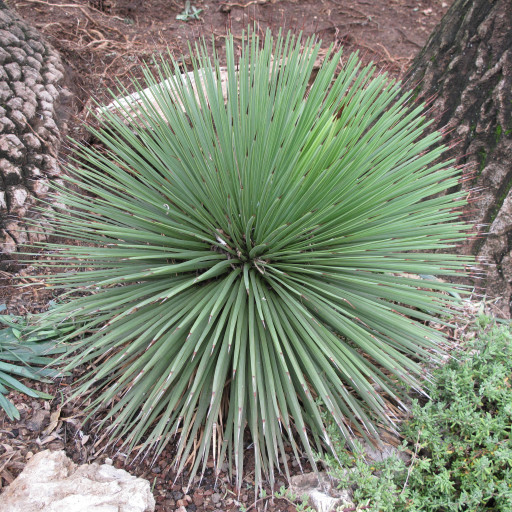
Often called the "Hedgehog Agave," this stunning succulent looks more like a frozen explosion of green needles than a traditional desert plant. Hailing from the arid valleys of Puebla and Oaxaca, Mexico, it forms perfectly symmetrical globes that bring a futuristic, architectural vibe to any collection. Unlike its broader-leaved cousins, this agave stays compact and maintains its sharp, geometric precision year-round.
🔍 How to Identify
- 🌵 Leaf Shape: Hundreds of very narrow, stiff, needle-like leaves that radiate outward in a dense, spherical rosette.
- 🟢 Color & Texture: The leaves are pale green to glaucous blue-green and are uniquely rounded (terete) on both sides rather than flat.
- 📍 The Tip: Each leaf is armed with a very sharp, terminal spine that can range from dark brown to a striking reddish-black.
🏡 In Your Garden
- ☀️ Sun Worship: This plant is a true sun-seeker. If grown indoors, it requires the brightest window available; without enough light, it will lose its signature "hedgehog" ball shape and stretch out.
- 🏜️ The "Lean" Diet: It thrives in poor, rocky soil with excellent drainage. It is highly drought-tolerant and actually prefers to be ignored rather than over-pampered with water.
- 🪴 Transplant Sensitivity: Agave stricta develops a specialized root system that dislikes being disturbed. It is best to choose a permanent "forever home" for it, as frequent repotting can cause the plant to sulk or stall its growth for an entire season.
⚠️ Safety & Toxicity
- 🚫 Physical Danger: The primary risk is its sharp spines. Because of its low-growing, spherical shape, it is a significant tripping hazard for children and a "poking" hazard for curious pets.
- 🧪 Sap Irritant: Like many succulents, the sap contains calcium oxalate crystals. If a leaf is broken, the sap can cause skin rashes or "agave dermatitis" on contact. Always wear gloves when pruning or moving this plant.
✨ Fun Fact
🧬 A Rare Exception: Most Agaves are "monocarpic," meaning they bloom once and then die. However, Agave stricta is a rebel! It is one of the few species that can survive after flowering, often branching out or producing "pups" from the base to continue its legacy for decades.

Detailed Care Instructions
To grow Agave stricta, you can follow these steps:
- Choose the right location: Agave stricta requires full sunlight, so find a sunny spot in your garden or a well-lit indoor area.
- Prepare the soil: The soil should be well-draining to prevent root rot. If your soil is heavy, clay-like, or compacted, add sand, perlite, or pumice to improve drainage.
- Planting: Dig a hole that is slightly larger than the size of the plant's root ball. Place the Agave stricta in the hole, making sure it sits at the same depth it was in the nursery pot. Fill the hole with soil and gently firm it around the plant.
- Watering: After planting, water the Agave stricta thoroughly. Afterwards, water sparingly, allowing the soil to dry out between watering sessions. Agave plants are drought-tolerant and prefer dry conditions.
- Fertilization: Agave stricta does not require frequent fertilization. You can apply a balanced, slow-release fertilizer once or twice a year during the growing season. Avoid using excessive amounts of nitrogen, as this may cause leggy growth.
- Pruning: Agave stricta does not require regular pruning. Simply remove any dead or damaged leaves as needed.
- Protection: In colder climates, protect your Agave stricta from frost or freezing temperatures. Move potted plants indoors or cover them with a frost blanket during frosty nights.
- Propagation: Agave stricta can be propagated from offsets that grow around the base of mature plants. Wait until the offsets reach about one-third the size of the parent plant before carefully removing them. Plant the offsets in their own pots or directly in the ground, using well-drained soil.
Remember, Agave stricta is a slow-growing perennial plant that can take several years to reach maturity. Patience and proper care will result in a healthy and beautiful plant.

Place in a bright room that is sun drenched almost all day. Or directly in a south-facing window.

Agave Stricta is a type of plant that requires very little water. It is important to allow the soil to completely dry out between each watering. When watering, it is recommended to fully saturate the soil to ensure that the plant's roots are receiving enough moisture. However, be cautious not to overwater as this can lead to root rot. Watering once a week is often sufficient, but the frequency may vary depending on the climate and location of the plant. Be sure to monitor the soil moisture levels regularly to ensure proper care of the plant.
To fertilize this plant, use a balanced fertilizer with equal amounts of nitrogen, phosphorus, and potassium. Apply the fertilizer every four to six weeks during the growing season, which is typically spring and summer. Mix the fertilizer with water according to the package instructions and apply it to the soil around the base of the plant. Be careful not to get any fertilizer on the leaves or stem, as this can cause damage. Water the plant thoroughly after fertilizing to help the nutrients reach the roots.
Agave Stricta plant prefers well-draining soil that is sandy or loamy. The soil should have good drainage capacity to prevent waterlogging, as this can cause root rot and damage to the plant. It is recommended to use a mix of coarse sand, perlite, and potting soil to ensure proper drainage and allow the roots to access the necessary nutrients and minerals. The pH of the soil should be between 6.0 and 7.5 for optimal growth. Additionally, it is important to avoid overwatering the plant, as this can lead to fungal growth or rot of the roots. A well-draining soil will prevent water from accumulating around the roots and cause these problems. Overall, it is important to choose a soil that provides good drainage and allows the Agave Stricta plant to thrive in its environment.
Agave Stricta can be propagated through several methods, including by separating offsets or pups from the main plant, dividing the rhizomes, or by planting seeds.
To propagate Agave Stricta through offsets, remove the pups that have emerged from the base of the plant using a sharp, clean knife or shears. Allow the cuttings to dry for a few days before planting them in a container with well-draining soil. Water the new plants sparingly until they have established roots.
Dividing the rhizomes involves digging up the entire plant and separating the sections of the underground stem that have developed roots and leaves. These sections can be planted in a new location or in containers.
Propagating through seed requires collecting ripe fruits from the plant and breaking them open. Remove the seeds and allow them to dry out before planting them in a mixture of sand and peat moss. Keep the soil moist and warm until the seeds germinate.
Regardless of the method used, it is important to ensure that the new plants receive adequate sunlight, water, and well-draining soil to thrive.
Common pests of the hedgehog agave include Scale insect, mealybugs. Make a habit of checking your hedgehog agave frequently for pests so that any infestations can be caught and managed early.








