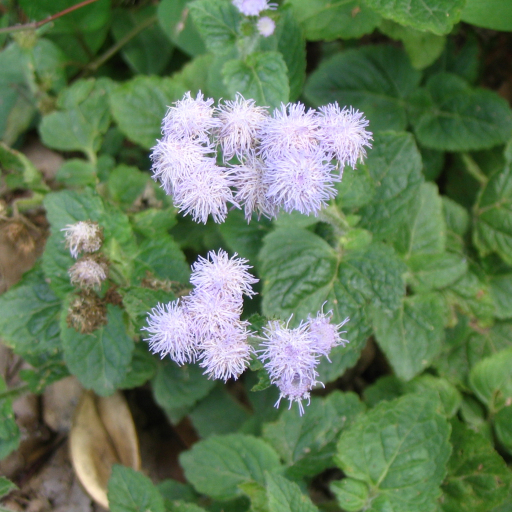
Plant Overview
Known as the Billygoat-weed or Whiteweed, this tropical native has traveled from the Americas to gardens and fields across the globe. While its fluffy, button-like flowers look soft and inviting, it earned its "Billygoat" nickname because of the pungent, musk-like odor released when the leaves are crushed. It is often seen as a hardy wildflower or a persistent garden visitor that thrives where other plants struggle.
🔍 How to Identify
- 🌸 Fluffy Blooms: The flowers are small, fuzzy clusters (capitula) that lack traditional petals, appearing in soft shades of pale blue, lavender, or snowy white.
- 🌿 Velvety Texture: The stems and leaves are covered in fine, soft white hairs, giving the plant a "dusty" or matte appearance that feels slightly rough to the touch.
- 🍃 Toothed Leaves: The leaves are heart-shaped or egg-shaped with distinctively serrated (toothed) edges, growing in an opposite pattern along the hairy stems.
🏡 In Your Garden
- ☀️ Sun-Loving Pioneer: This plant is an "opportunist." It thrives in disturbed soil, garden edges, and sunny spots. It is particularly fond of nitrogen-rich soil, often popping up in vegetable patches or freshly mulched beds.
- 🌱 Prolific Seeder: One of the reasons it is so successful is its reproductive speed. A single plant can produce thousands of tiny seeds that are easily carried by the wind. If you want to prevent it from taking over your garden, it’s best to pull it before the "fluff" turns into dry seeds.
⚠️ Safety & Toxicity
- 🚫 Liver Warning: Ageratum conyzoides contains pyrrolizidine alkaloids. These compounds are toxic to humans and animals if ingested, as they cause cumulative and often irreversible liver damage (hepatotoxicity).
- 🐾 Pet & Livestock Risk: This plant is particularly dangerous for grazing livestock like horses or cattle. Ensure that curious pets do not chew on the foliage. While skin contact is generally safe, always wash your hands after weeding to avoid accidental ingestion.
✨ Fun Fact
Despite its toxicity when eaten, this plant is a "medicinal powerhouse" in traditional folklore. In parts of Africa and Asia, the crushed leaves have been used for centuries as a natural bandage to stop bleeding and prevent wound infections due to its potent antimicrobial properties!

Detailed Care Instructions
| Humidity | Normal |
| Lighting | Part Sun |
| Difficulty | Easy |
| Hibernation | Cold Period |
| Hardiness Zones | 5 - 8 |
To grow Ageratum Conyzoides, also known as the Billygoat Weed or Goat Weed, follow these steps:
- Start with high-quality seeds: Buy seeds from a reputable source or collect them from mature plants. Billygoat Weed is a self-seeding annual, so you can collect seeds from your own plants.
- Choose the right location: Ageratum Conyzoides prefers full sun, but it can tolerate partial shade. Ensure that the soil is well-draining, as the plant is prone to root rot in waterlogged conditions.
- Prepare the soil: Clear the area of weeds and debris. Amend the soil with organic matter like compost to improve its fertility and drainage. It prefers slightly acidic soil with pH ranging from 5.5 to 6.5.
- Sowing the seeds: Sprinkle the seeds directly on the soil surface and lightly press them. The seeds are small and do not require deep planting. Keep them around 12-18 inches apart.
- Watering: Keep the soil consistently moist, but avoid overwatering. Water the plants when the top inch of soil feels dry to the touch. As the plants grow, deep watering once a week is usually sufficient.
- Fertilization: Apply a balanced, slow-release fertilizer according to the package instructions. This will provide the necessary nutrients for healthy growth. You can also use compost or organic fertilizers.
- Mulching and weed control: Apply mulch around the plants to suppress weeds and conserve moisture. Regularly inspect the area and manually remove any weeds that appear.
- Pruning: Billygoat Weed has a sprawling growth habit, so it might benefit from occasional pruning to maintain a more compact shape. Prune any damaged or dead parts of the plant throughout the growing season.
- Pests and diseases: Ageratum Conyzoides is generally resistant to pests and diseases, but occasional issues like aphids or powdery mildew can occur. Monitor regularly and address any issues promptly using organic pest control methods if necessary.
- Harvesting: Billygoat Weed produces purple or white flowers. You can harvest the flowers for ornamental purposes or allow them to self-seed for the next growing season.
Remember to check if Ageratum Conyzoides is suitable and allowed in your specific region, as it can be considered an invasive species in certain areas.

Place in a window with dappled sun or a spot in the middle of a room. Or directly in a window facing west or east.

To properly water this plant, you should first understand its water requirements. Ageratum Conyzoides plants prefer to be kept moderately moist, but never saturated. It's important not to over-water as this can lead to root rot and other fungal issues.
One way to determine if the plant needs water is to touch the surface of the soil. If it feels dry to the touch, it's time to water. Another method is to insert your finger about an inch into the soil. If it feels dry to the touch, it's time to water.
When watering, make sure to water at the base of the plant, ensuring that the soil absorbs the water. Avoid watering the leaves or flowers, as this can encourage the growth of fungal diseases.
The frequency of watering will depend on several factors such as the size of the plant, its growing location and environment, and the time of year. In general, Ageratum Conyzoides plants should be watered once or twice a week. However, during hot and dry weather, or during the plant's growing cycle, it may require more frequent watering.
Overall, it's important to monitor the plant's water needs and adjust accordingly to ensure healthy growth and vibrant blooms.
To fertilize this plant, you should use a balanced fertilizer with an N-P-K ratio of 10-10-10 or similar. Dilute the fertilizer according to the instructions on the package, and apply it to the soil around the base of the plant. Be careful not to get any fertilizer on the leaves or stem, as this can cause damage. Water the plant well after fertilizing to help the nutrients soak into the soil. Fertilize the plant every four to six weeks during the growing season.
Ageratum Conyzoides plant requires a well-draining soil mix that is rich in nutrients. It forms an ideal match when grown in loamy soil with a pH range of 5.5 to 7.5. The modular soil must have a good water retention capacity but, at the same time, should be capable of drying out in time to avoid waterlogging. Ageratum Conyzoides prefers soil that is moist but never soggy. Adding organic compost to the soil mix is recommended to provide the plant with the necessary nutrients to thrive.
To propagate the plant known by the scientific name Ageratum Conyzoides, one can take stem cuttings and root them in water or moist soil. The stem cutting should be several inches long and taken from a healthy, mature plant.
Before planting, remove the lower leaves on the cutting and dip the cut end in rooting hormone powder. Then, either place the cutting in a jar of water, making sure the bottom end is submerged, or plant it in moist soil or a rooting medium.
Keep the cutting in a warm and bright location but out of direct sunlight. Make sure to keep the soil or water moist and change the water frequently to prevent bacteria from growing.
After a few weeks, the cutting should start to develop roots. Once the roots are several inches long, the young plant can be transplanted into a larger pot or directly into the ground.
It's important to note that while Ageratum Conyzoides can be a beautiful addition to a garden or landscape, it can also be invasive in some regions and may not be suitable for all areas. Always check with local authorities or gardening experts before planting any new species.








