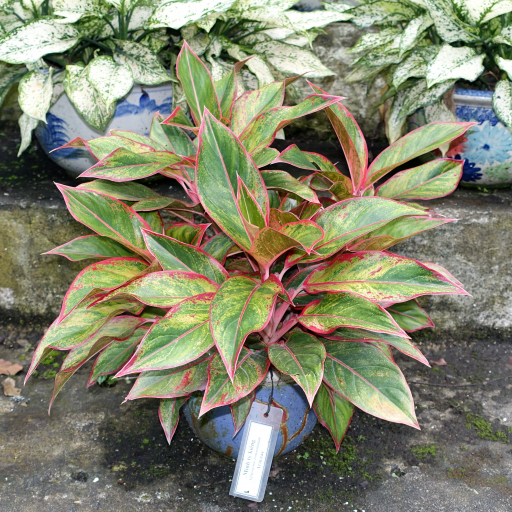
Plant Overview
Often called the "Lady’s Fortune" or simply the Chinese Evergreen, Aglaonema commutatum is the ultimate companion for those who claim to have a "black thumb." This Philippine native is a staple of interior design, praised for its ability to thrive in the dark corners where most plants would fail. It carries an aura of calm and resilience, making it a favorite for busy offices and cozy living rooms alike.
🔍 How to Identify
- 🍃 Painted Foliage: The broad, lance-shaped leaves are famous for their intricate, variegated look. Most varieties feature elegant splashes of silver, cream, or pale green against a deep emerald background.
- 🌿 Clumping Habit: Rather than growing from a single tall trunk, this plant grows in lush, dense clumps that emerge directly from the soil, creating a full and bushy appearance.
- 🍦 Subtle Blooms: While rare indoors, mature plants may produce a small, white "spathe and spadix" flower—a tiny, hood-like structure that resembles a miniature Peace Lily.
🏡 In Your Garden
- ☁️ The Shadow Dweller: This is one of the few plants that genuinely appreciates a darker corner. While it can handle bright, indirect light, its silver patterns often "pop" more when kept away from direct, scorching sun.
- 💧 Thirst Cues: It is quite communicative; if the soil stays bone-dry for too long, the stems will begin to droop dramatically. However, it prefers a "sip" rather than a "soak," as its fleshy roots are prone to rot if kept in soggy, heavy soil.
- 🌡️ Tropical Roots: Because it hails from the tropics, it hates cold drafts. To keep it happy, ensure it stays away from AC vents or chilly windows during the winter to prevent the leaves from turning yellow and dropping.
⚠️ Safety & Toxicity
- 🚫 Toxic to Pets & Humans: This plant contains calcium oxalate crystals, which act like tiny needles if chewed or swallowed.
- 🐶 Pet Warning: Keep it out of reach of curious cats and dogs. Ingestion causes intense mouth irritation, swelling of the throat, and excessive drooling.
- 🧤 Sap Sensitivity: The sap can cause mild skin irritation for some people. It is a good idea to wear gloves or wash your hands immediately after pruning or repotting.
✨ Fun Fact
🚀 Space-Age Purifier: The Chinese Evergreen was featured in NASA’s famous Clean Air Study! It is scientifically proven to help filter out common household toxins like formaldehyde and benzene, literally cleaning the air while you sleep.

Detailed Care Instructions
They are very easy houseplants to grow. Best of all, they don't like full sun, so they're perfect for almost any room in your home, especially if window light is a commodity.
How fast does Chinese evergreen grow?
Chinese evergreen is a slow-growing plant, which means repotting is necessary only every two to three years.
What is the difference between Chinese evergreen and dieffenbachia?
Chinese evergreen and dieffenbachia are often confused because their leaves look alike though there are subtle differences. Chinese evergreens will have more of a silvery look to their variegated leaves. But the dieffenbachia's leaves may be much larger and wider than a Chinese evergreen's smaller and more oval leaves.
| Color | White |
| Soil Ph | Lightly Acidic |
| Humidity | Normal |
| Lighting | Shade |
| Toxicity | Poisonous |
| Soil Type | Well-Draining Potting Soil |
| Bloom Time | Spring, Summer |
| Difficulty | Easy |
| Plant Type | Houseplant |
| Hibernation | Cold Period |
| Mature Size | 10–48 Inches |
| Native Area | Asia, New Guinea |
| Temperature | 18°C - 25°C |
| Sun Exposure | Low To Bright Light, Depending On Variety |
| Hardiness Zones | 10–11 |
To grow Aglaonema commutatum (also known as Chinese evergreen), follow these basic steps:
- Light: Aglaonema prefers bright, indirect light, but can tolerate low light conditions. Avoid direct sunlight, as it can scorch the leaves.
- Temperature: The plant thrives in temperatures between 65-80°F (18-27°C). Keep it away from drafts and maintain a consistent temperature.
- Watering: Water the plant when the top inch of soil feels dry. Avoid overwatering, as it can lead to root rot. Ensure proper drainage by using a well-draining soil mix and a pot with drainage holes.
- Humidity: Aglaonema prefers high humidity. You can increase humidity by placing the plant on a pebble tray filled with water or by using a humidifier.
- Fertilizer: Feed the plant every 2-4 weeks during the growing season (spring and summer) with a balanced, water-soluble fertilizer. Follow the instructions on the fertilizer packaging for proper dosage.
- Pruning: Remove any dead or damaged foliage regularly. Prune the plant to maintain its desired shape or size.
- Propagation: Aglaonema can be propagated through stem cuttings. Take a 4-6 inch cutting below a node, remove any lower leaves, and place it in a container with moist potting soil. Keep the soil slightly damp and provide indirect light until the cutting roots.
- Repotting: Repot the plant when it becomes root-bound or every 1-2 years. Use a slightly larger pot and fresh potting soil appropriate for houseplants.
- Pest control: Monitor the plant for common pests like spider mites, mealybugs, and scale insects. Treat infestations with insecticidal soap or a neem oil solution.
By following these guidelines, you can successfully grow Aglaonema commutatum and enjoy its attractive, tropical foliage.

Place in a window with dappled sun or a spot in the middle of a room. Or directly in a window facing west or east.

To water this particular plant correctly, ensure that you only give it water when the top layer of soil is dry to the touch. In watering, avoid pouring water directly into the center of the plant, instead, pour the water on the soil around its roots. It's crucial not to over-water the plant, as it can cause root rot or other issues, which can be harmful to the plant's health. Additionally, ensure that the drainage on your pot is adequate enough to ensure that excess water flows out quickly, leaving the soil moist but not water-saturated.
- Choose a balanced, water-soluble fertilizer.
- Dilute the fertilizer according to the package instructions.
- Apply the fertilizer to moist soil every two weeks during the growing season.
- Water the plant thoroughly after fertilizing to ensure the roots absorb the nutrients.
- Do not fertilize during the plant's dormant period or during periods of stress, such as after repotting.
- Monitor the plant for signs of over-fertilization, such as burnt or yellowing leaves, and adjust the fertilizing schedule accordingly.
Aglaonema Commutatum is a tropical evergreen plant that is commonly grown as a houseplant. When it comes to selecting soil for this plant, it is important to choose a well-draining and nutrient-rich soil mix that is slightly acidic in nature. A good soil mix for Aglaonema Commutatum is one that consists of a blend of peat moss, perlite, and coarse sand.
Peat moss is an excellent soil amendment that adds organic matter and helps to retain moisture in the soil. Perlite, on the other hand, is a lightweight material that improves soil aeration and drainage. It also helps to prevent soil compaction and root rot. Coarse sand is added to the soil mix to improve drainage and prevent waterlogging.
In addition to the soil mix, it is important to ensure that the pot in which the Aglaonema Commutatum plant is growing has adequate drainage holes at the bottom. This will allow excess water to drain away from the roots and prevent waterlogging. It is also recommended to add a layer of gravel or small stones at the bottom of the pot before adding the soil mix. This will further improve drainage and prevent soil compaction.
Overall, a well-draining, nutrient-rich soil mix is essential for the healthy growth of the Aglaonema Commutatum plant.
Aglaonema Commutatum is a popular houseplant that can easily be propagated using vegetative propagation. To begin, select a healthy mature plant with multiple stems and leaves. Using clean pruning scissors, cut the stems just below a node, which is the point where leaves grow from the stem. Make sure the cutting is at least 2-3 inches long.
Remove any lower leaves from the cutting and dip the bottom of the stem in rooting hormone powder. This hormone powder will encourage the plant to form roots. Place the stem in a pot with moist potting soil or other growing medium. Keep the cutting in a warm, humid location out of direct sunlight and mist the soil and leaves regularly to keep them hydrated. Be sure to keep the soil moist but not waterlogged.
After a few weeks, the cutting should have formed roots and started to grow new leaves. At this point, you can transplant it into its own pot and care for it like you would a mature plant.
It's important to note that while Aglaonema Commutatum is a hardy plant that is relatively easy to propagate, it's still important to take proper care of the adult plant and its young cuttings to ensure healthy growth.
Common pests of the chinese evergreen include Mealybugs, spider mites, fungus gnats, thrips. Make a habit of checking your chinese evergreen frequently for pests so that any infestations can be caught and managed early.








