Plant Overview
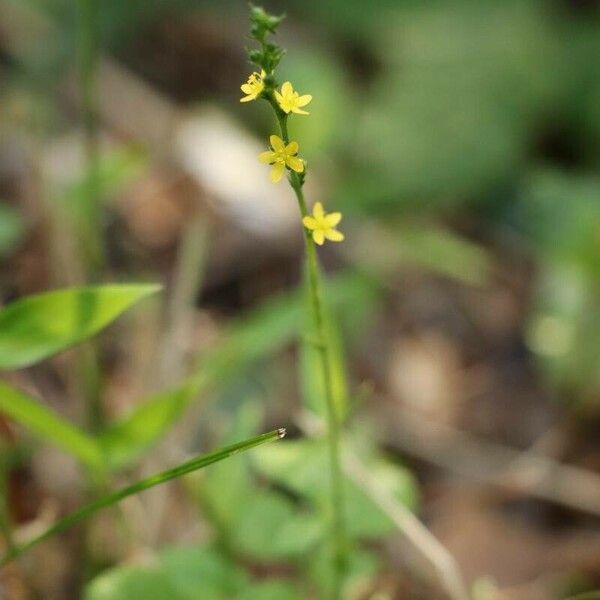
Known in Japan as Kinmizuhiki, the Japanese Agrimony is a graceful woodland perennial that paints mountain trails with splashes of gold. Its name translates to "golden cord," likening its slender yellow flower spikes to the decorative gold ribbons used on traditional Japanese gift envelopes. While it looks like a delicate wildflower, it is a hardy member of the Rose family with a surprisingly "clingy" personality.
🔍 How to Identify
- 🌼 The Flowers: Tiny, five-petaled yellow blossoms cluster tightly along tall, upright spikes (racemes), typically blooming from the bottom upward.
- 🍃 The Foliage: The leaves are pinnate, meaning they are divided into several pairs of serrated leaflets that give the plant a textured, fern-like appearance.
- 🧶 The Burrs: After the flowers fade, the plant produces small, conical fruits covered in hooked bristles that act like natural Velcro to hitch rides on passing animals.
🏡 In Your Garden
- 🌲 Edge of the Woods: This plant naturally thrives in dappled sunlight and moist, well-draining soil. It is an excellent choice for a "wild" garden or a transition area between a manicured lawn and a wooded lot.
- 🌱 The Spreading Habit: Because it relies on its hooked seeds (epizoochory) to reproduce, you may find "volunteers" popping up in unexpected places. It doesn't mind being ignored, making it a great low-maintenance option for hobbyists who prefer a naturalistic look.
⚠️ Safety & Toxicity
- 🐾 General Safety: Agrimonia nipponica is not considered highly toxic. It has been used in traditional herbal medicine for its astringent properties.
- 🧤 Minor Irritation: While not poisonous, the hooked bristles on the seed pods can be sharp and may cause mild skin irritation or become a nuisance if they get tangled in long pet fur or knitted clothing.
✨ Fun Fact
In Japanese floral language (Hanakotoba), Japanese Agrimony symbolizes "thankfulness." Its appearance in the wild is often seen as a sign that the forest ecosystem is healthy and well-balanced.

Detailed Care Instructions








