Plant Overview
Known by the quirky name "Harvestlice" because of its persistent, velcro-like seeds, this North American native is a staple of wet meadows and woodland edges. While its tiny yellow flowers might look humble, the plant has a long history in traditional folk medicine and plays a vital role in supporting local pollinators. It is the rugged, moisture-loving cousin of the common garden agrimony.
🔍 How to Identify
- 🍃 The "In-Between" Leaves: Look for large, serrated leaflets that are "interrupted" by much smaller, tiny leaflets tucked along the central stem. This unique pattern is a hallmark of the Agrimonia family.
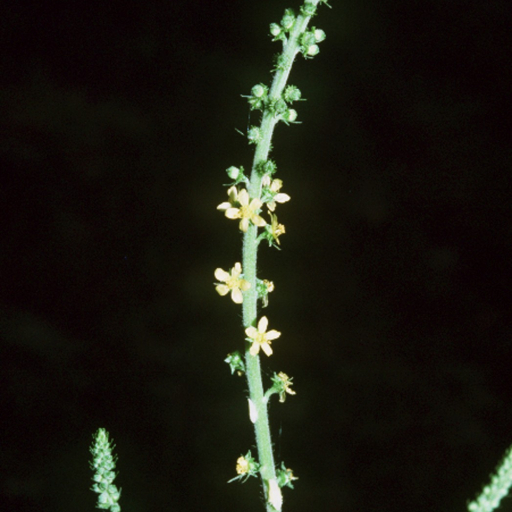
- 🌼 Golden Spires: The plant sends up tall, slender wands (racemes) covered in miniature, five-petaled yellow flowers that bloom sequentially from the bottom to the top.
- 🧶 The Hooked Fruit: Once the flowers fade, they produce small, top-shaped fruits covered in stiff, hooked bristles that are designed to hitch a ride on fur or clothing.
🏡 In Your Garden
- 💧 Thirst for Dampness: True to its nickname "Swamp Agrimony," this plant thrives in moist, clay-heavy soils where other perennials might struggle with "wet feet." It’s a perfect choice for rain gardens or low-lying spots.
- 🦋 A Pollinator Workhorse: While the flowers are small, they are rich in pollen. You will often see hoverflies and tiny native bees buzzing around the spires during the mid-to-late summer heat.
- 🌱 Space to Wander: Because it spreads via its "hitchhiking" seeds, it can colonize an area over a few seasons. If you want to keep it contained, clip the flower stalks before the green burrs harden and turn brown.
⚠️ Safety & Toxicity
- ✅ Generally Safe: Agrimonia parviflora is not considered toxic to humans or common household pets if touched or accidentally brushed against.
- 🐾 The Fur Factor: The primary "danger" is to long-haired pets. The hooked seeds can become deeply embedded in dog fur, leading to painful mats or skin irritation if they aren't brushed out promptly after a walk.
- ☕ Herbal History: While historically used in astringent teas, always consult with a professional herbalist or healthcare provider before attempting to ingest wild-foraged plants.
✨ Fun Fact
If you crush the fresh leaves of Swamp Agrimony between your fingers, they release a surprising and pleasant spicy, apricot-like aroma! This citrusy scent is one of the easiest ways to distinguish it from other look-alike weeds in the field.

Detailed Care Instructions

Place in a bright room that is sun drenched almost all day. Or directly in a south-facing window.

To water this plant, wait until the top inch of soil in the pot is completely dry. Then take a watering can or pitcher and slowly pour water onto the soil, making sure to saturate the top layer of soil without pooling the water. Allow any excess water to drain out of the bottom of the pot and dispose of it. Avoid over-watering the plant, as it can lead to root rot. It is also important to note that this plant prefers well-draining soil and may not tolerate standing water.
The ideal soil for Agrimonia Parviflora is a well-draining loamy soil with a pH level of 6.0-7.5. It requires a soil that retains moisture but is not waterlogged and has adequate drainage. It can tolerate a wide range of soil types, including rocky or sandy soils, but prefers a fertile, nutrient-rich soil. It grows best in full sun or partial shade and prefers a soil that is rich in organic matter. A fertile soil mix containing compost, peat moss, and perlite or vermiculite would be ideal for growing Agrimonia Parviflora. It is also important to maintain a consistent moisture level in the soil to avoid over or underwatering which can cause root rot or other issues.







