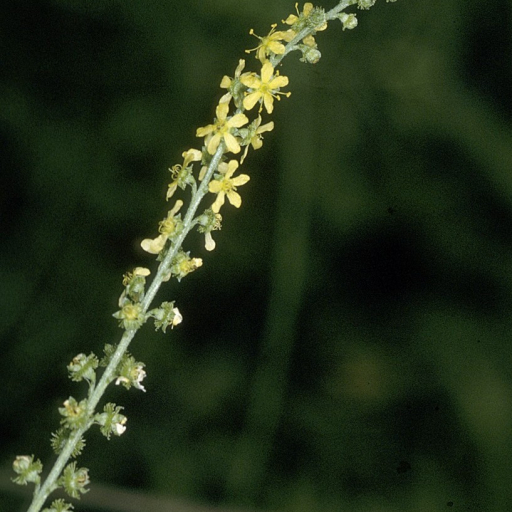
Plant Overview
Known as the Grooved Agrimony or Roadside Agrimony, this hardy North American native is a quiet staple of woodland edges and meadows. While it might look like a simple wildflower, it has a long history in herbal folklore and a clever way of spreading its legacy—by hitching a ride on your socks! It’s a resilient perennial that brings a touch of wild, rustic charm to any naturalized garden.
🔍 How to Identify
- 🌼 Spired Blooms: It features tiny, star-shaped yellow flowers with five petals that bloom along a tall, slender central stalk (raceme).
- 🍃 Jagged Foliage: The leaves are compound and "pinnate," meaning they look like a feather with large serrated leaflets interspersed with much smaller ones.
- 🪝 Hitchhiking Seeds: After flowering, it produces bell-shaped green fruits covered in hooked bristles that act like natural Velcro, clinging to fur and clothing.
🏡 In Your Garden
- 🌱 Rooted Resilience: Because it grows from a thick woody rhizome and a deep taproot, this plant is incredibly sturdy. However, this means it dislikes being moved once established, so pick its "forever home" carefully.
- 🦋 Pollinator Magnet: While humans might overlook its small flowers, bees and hoverflies find them irresistible. It’s an excellent choice for a "wild corner" intended to support local biodiversity.
⚠️ Safety & Toxicity
- ✅ Generally Safe: Agrimonia striata is not considered toxic to humans or common household pets if touched or accidentally brushed against.
- 🐾 Mechanical Irritant: The real "danger" lies in the hooked seed pods (burs). These can become painfully tangled in the fur of long-haired dogs or cats, sometimes requiring scissors to remove, and can cause minor skin irritation if they poke through thin clothing.
✨ Fun Fact
The name "Agrimonia" is believed to be derived from the Greek word argemone, which translates to "healing to the eye." In ancient times, various species of Agrimony were steeped into teas and washes, believed to help with everything from sight to battlefield wounds.

Detailed Care Instructions
To successfully grow Agrimonia striata (also known as woodland agrimony), follow these steps:
- Climate and Sunlight: Determine if your climate is suitable for this plant, as it is native to certain regions of North America. It prefers full sun to partial shade, so choose a location where it will receive at least 6 hours of direct sunlight per day.
- Soil Preparation: This plant prefers well-draining soil with a pH of around 6.0 to 7.5. Make sure the soil is loose, loamy, and rich in organic matter. If your soil is heavy clay or sandy, amend it with compost or aged manure to improve its texture and fertility.
- Planting: Start by digging a hole twice as wide and deep as the root ball of your Agrimonia striata plant. Gently place the plant in the hole, ensuring that the crown is level with or slightly above the soil surface. Backfill the hole with soil, lightly firming it around the roots. Water thoroughly after planting.
- Watering: While these plants are somewhat drought-tolerant, regular watering is necessary, especially during dry spells. Water deeply but infrequently to encourage deep root growth. Ensure the soil remains consistently moist but not waterlogged. Mulching around the plant can help retain moisture.
- Fertilization: Agrimonia striata generally does not require much fertilization. However, you can apply a balanced organic fertilizer during the spring or early summer to promote healthy growth. Follow the package instructions for proper application.
- Pruning: Since these plants have a tendency to spread, you may need to prune them to control their growth and maintain their shape. Trim any dead or damaged branches after winter or in early spring. Regularly removing spent flowers can also encourage continual blooming.
- Pest and Disease Control: Rarely bothered by pests or diseases, Agrimonia striata is generally low-maintenance. However, keep an eye out for common garden pests like aphids, slugs, or snails. Use organic pest control methods or consult a gardening expert if any issues arise.
- Propagation: You can propagate Agrimonia striata through division or from seed. Divide established plants in early spring or fall by carefully separating the clumps and replanting them. To start from seed, collect ripe seeds in late summer and sow them directly in the garden or indoors during early spring for later transplanting.
By following these steps, you can successfully grow and enjoy Agrimonia striata plants in your garden.

Place in a bright room that is sun drenched almost all day. Or directly in a south-facing window.

Watering the plant known as Agrimonia Striata requires attention to a few key factors. First, pay attention to the moisture level of the soil. The plant prefers moist but well-draining soil, so don't let it dry out completely or become waterlogged. Use a watering can or hose to water around the base of the plant, aiming for the soil rather than the leaves. Avoid getting water on the leaves, as this can lead to disease. Water the plant deeply but infrequently, rather than giving it small amounts of water frequently. Monitor the plant's growth and adjust watering as needed based on weather conditions and other factors.
To fertilize this plant, apply a balanced fertilizer with equal amounts of nitrogen, phosphorus, and potassium. Use a slow-release granular fertilizer and apply it in the spring when the plant begins to actively grow. Avoid over-fertilizing, as this may cause the plant to become leggy and weak. Water the plant thoroughly before and after fertilizing to ensure the fertilizer is evenly distributed in the soil.
Agrimonia striata is a herbaceous perennial plant that belongs to the Rosaceae family. The best soil to use for Agrimonia striata should be well-draining, fertile, and rich in organic matter. The PH level of the soil should be slightly acidic to neutral (between 6.0 to 7.0).
Agrimonia striata prefers moist soil that is not waterlogged because waterlogging can lead to root rot and fungal diseases. Therefore, it is important to ensure adequate drainage. The soil should not be too dry either because this can cause the plant to wilt and become vulnerable to pests and diseases.
It is recommended to add compost or well-rotted manure to the soil to increase its fertility and organic matter content. Additionally, mulching with organic matter such as bark, straw, or leaves can help to retain moisture in the soil and suppress weed growth.
Overall, the ideal soil for Agrimonia striata should be fertile, well-draining, and rich in organic matter, with a slightly acidic to neutral PH level. Adequate moisture levels should also be maintained to ensure healthy growth and development of the plant.
Agrimonia striata plant can be propagated via division or seed.
If propagating via division, select a healthy mature plant and dig it up during the dormant season. Carefully separate the roots into several smaller clumps, making sure each clump has some stems and leaves attached. Replant the divisions in well-draining soil with partial shade and keep the soil moist until the new plants become established.
To propagate via seed, collect the seeds when they are ripe and dry. Sow the seeds directly into a moist, fertile soil in the fall or early spring. Cover the seeds with a thin layer of soil and keep the soil consistently moist until the seeds germinate. Once seedlings have grown large enough, they can be transplanted into their permanent location.
Make sure to water the new plants regularly until they become established, and protect them from harsh environmental factors such as extreme heat, cold or wind.








