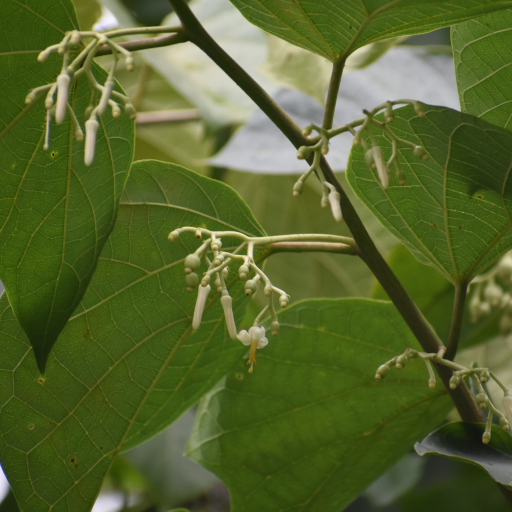
Plant Overview
Known as the Mountain Alangium, this elegant deciduous tree is a hidden gem of high-altitude Asian forests. It is prized by collectors for its gracefully arching branches and peculiar, ribbon-like flowers that look like delicate white shreds hanging from the canopy. In its native habitats, it is often found clinging to misty slopes, acting as a sturdy, architectural sentinel of the peaks.
🔍 How to Identify
- 🍃 Lobed Foliage: The leaves are broad and heart-shaped at the base, often featuring three to five shallow lobes that resemble a soft, thin-textured maple leaf.
- ☁️ Ribbon Flowers: Its most striking feature is the clusters of fragrant white flowers. The petals are long and narrow, curling backward like decorative wood shavings to reveal prominent yellow stamens.
- 🌳 Layered Habit: It typically grows as a small tree or large shrub with a distinctive horizontal branching pattern that creates a "layered" look in the landscape.
🏡 In Your Garden
- 🏔️ Mountain Roots: Because it originates from alpine and sub-alpine regions, this plant craves "cool feet." It thrives in dappled shade where the soil remains consistently moist and rich in organic mulch.
- 🌬️ Climate Nuance: It is highly sensitive to extreme lowland heat and stagnant air. To keep it happy, plant it in a spot with excellent air circulation to mimic the mountain breezes of its homeland.
- 🌱 Transplant Sensitivity: Like many Alangium species, it can be "fussy" when moved. Once planted in a well-draining, acidic spot, avoid disturbing its root ball to prevent leaf drop.
⚠️ Safety & Toxicity
- 🚫 Toxic Status: Generally considered toxic if ingested.
- 🐾 Pet & Child Safety: The plant contains various alkaloids (such as anabasine) throughout its bark and leaves. If chewed or swallowed, it can cause nausea, dizziness, or more serious neurological symptoms. It is best placed in a part of the garden where pets and curious children do not wander.
✨ Fun Fact
In traditional botanical history, members of the Alangium genus have been used in ancient medicine as muscle relaxants. Scientists have found that the compounds within the plant are so potent that they are still being studied today for their unique chemical properties!

Detailed Care Instructions








