Plant Overview
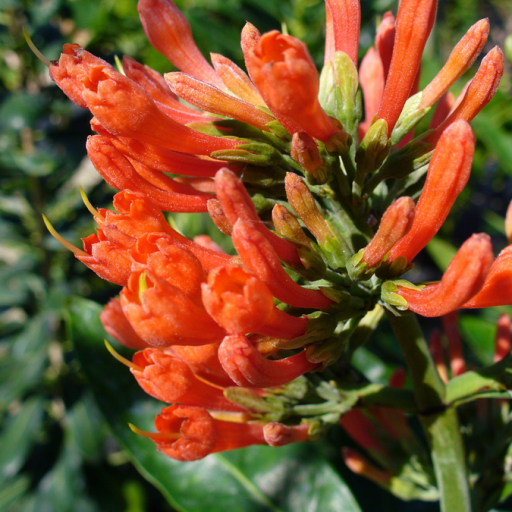
Known as the Natal Flame Bush, Alberta magna is one of South Africa's most spectacular botanical treasures. This rare evergreen shrub is famous for its glowing clusters of tubular crimson flowers that seem to "ignite" the garden in late autumn and winter. While it is a notoriously slow-grower, its year-round glossy foliage and unique "winged" fruits make it a prestigious centerpiece for any dedicated plant collector.
🔍 How to Identify
- 🍃 Lush Foliage: The leaves are large, leathery, and a deep, glossy green with a prominent midrib, providing a dense backdrop even when not in bloom.
- 🔥 Flame Flowers: It produces brilliant, upright clusters of tubular orange-to-red flowers that emerge at the very tips of the branches.
- 🦋 Winged Seeds: As the flowers fade, the sepals (the base of the flower) enlarge and turn a vivid, papery red, resembling tiny butterfly wings that help the seeds catch the wind.
🏡 In Your Garden
- 🧪 Acidic Preferences: This plant is a "calcifuge," meaning it strictly prefers acidic, well-draining soil; it may struggle and turn yellow if the soil is too alkaline or rich in lime.
- ⏳ The Patience Game: It is legendary for its slow growth rate and can be quite fussy about being moved, so it is best to choose a permanent "forever home" with plenty of mulch and protection from harsh frost.
⚠️ Safety & Toxicity
- ✅ Generally Safe: Alberta magna is not considered a toxic plant and is safe for general garden use around children and wildlife.
- 🐕 Pet Safety: There are no documented cases of toxicity to cats or dogs, though the leathery leaves are tough and may cause mild stomach upset if a pet decides to use them as a chew toy.
✨ Fun Fact
This genus was named in honor of Albertus Magnus, a 13th-century German philosopher and monk who was one of the most famous "natural scientists" of the Middle Ages. Despite its name, the plant is native only to a small coastal strip of South Africa.

Detailed Care Instructions








