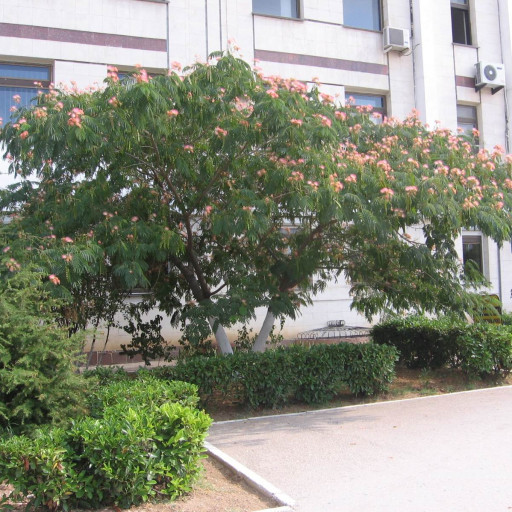
Plant Overview
Often called the Persian Silk Tree or simply Mimosa, Albizia julibrissin is the ultimate garden dreamer. With its feathery, fern-like foliage and explosive, neon-pink "pom-pom" flowers, it looks like something plucked straight from the pages of a Dr. Seuss book. While it brings an air of tropical elegance to temperate climates, it is a vigorous grower that demands plenty of space to spread its delicate, umbrella-shaped canopy.
🔍 How to Identify
- 🌸 The Blooms: Unlike traditional flowers with flat petals, these look like clusters of silky pink threads with white bases. They emit a sweet, apricot-like fragrance that is irresistible to butterflies.
- 🌿 The Foliage: The leaves are "bipinnate," meaning they are finely divided into tiny leaflets. This gives the tree a soft, lace-like appearance that filters sunlight into a dappled "mosaic" on the ground.
- 🫛 The Pods: Following the floral display, the tree produces long, flat, straw-colored seed pods that hang from the branches and often persist through the winter.
🏡 In Your Garden
- ☀️ Sun Seeker: This tree is a dedicated sun-worshipper. It needs bright, direct light to produce its iconic flowers. However, because its wood is relatively brittle and prone to breakage, it should be planted away from high-wind corridors or fragile structures.
- 🌱 The "Pioneer" Spirit: It is a nitrogen-fixer, meaning it can thrive in poor, sandy, or alkaline soils where other trees might struggle. Be mindful of its placement, as its shallow roots can sometimes lift nearby sidewalks or garden pavers.
- 💧 Drought Resilience: Once its root system is established, the Silk Tree is remarkably drought-tolerant, making it a popular choice for xeriscaping in warmer zones.
⚠️ Safety & Toxicity
- 🐾 Toxic Seed Pods: While the fluffy flowers are generally harmless, the seed pods contain neurotoxins (specifically ginkgotoxin) that are dangerous to dogs, cats, and horses if ingested.
- 👶 Child Safety: Keep an eye on small children; eating the seeds can cause digestive distress or, in rare cases, seizures. The tree is best enjoyed visually rather than through touch or taste.
✨ Fun Fact
In Japan, this tree is known as Nemunoki, which translates to "The Sleeping Tree." This is due to a behavior called nyctinasty: as the sun sets, the leaflets physically fold together as if the tree is tucking itself in for the night. This helps the plant conserve moisture and protect its delicate surfaces from the evening chill.

Detailed Care Instructions
| Color | Pink |
| Soil Ph | Adaptable |
| Humidity | High |
| Lighting | Part Sun |
| Soil Type | Average, Medium Moisture, Well-Drained |
| Bloom Time | June To July |
| Difficulty | Hard |
| Plant Type | Deciduous Tree |
| Mature Size | 20-40 Feet Tall, 20-50 Foot Spreed |
| Native Area | Iran To Japan |
| Temperature | 18°C - 24°C |
| Sun Exposure | Full Sun To Part Shade |
| Hardiness Zones | 6-9 |
To grow Albizia Julibrissin, also known as the Silk Tree or Mimosa Tree, follow these steps:
- Choose a suitable location: Albizia Julibrissin prefers full sun but can tolerate partial shade. It needs a well-draining soil that is not too acidic or alkaline.
- Prepare the planting area: Clear the planting area of weeds and grass. Loosen the soil and amend it with organic matter like compost to improve its fertility and drainage.
- Planting the seeds: You can start the seeds indoors before the last frost date or directly sow them in the ground in late spring. Place the seeds about 1 inch deep in the soil and cover them lightly with soil.
- Watering: Keep the soil evenly moist during the germination period. Once the plant establishes, it becomes drought tolerant and requires less watering, but it is still advisable to provide regular moisture during dry spells.
- Mulching: Apply a layer of organic mulch around the base of the tree to retain soil moisture and suppress weed growth. Make sure to keep the mulch a few inches away from the trunk to prevent rotting.
- Pruning: Albizia Julibrissin benefits from regular pruning to control its size and shape. Prune in late winter or early spring before new growth emerges. Remove dead or diseased branches and thin out crowded growth to improve air circulation.
- Fertilizing: Albizia Julibrissin generally doesn't require heavy fertilization. Apply a balanced slow-release fertilizer in early spring to provide essential nutrients. Avoid excessive use of nitrogen-based fertilizers, as they can promote excessive foliage growth at the expense of flowering.
- Pests and diseases: Watch out for common pests like aphids, spider mites, and scale insects. Treat infestations with insecticidal soap or neem oil. Albizia Julibrissin is generally resilient to diseases but may occasionally suffer from powdery mildew or root rot if the soil is poorly drained.
- Winter care: In regions with frost, protect young Albizia Julibrissin trees during winter by wrapping the trunk with burlap or applying a layer of mulch around the base to insulate the roots.
By following these steps, you can successfully grow Albizia Julibrissin and enjoy its beautiful flowers and feathery foliage.

Place in a window with dappled sun or a spot in the middle of a room. Or directly in a window facing west or east.

To water this particular plant, you should ensure that you only give it water when the top layer of soil has become dry to the touch. Make sure to water it slowly and thoroughly, allowing the water to fully penetrate the soil. Avoid over-watering the plant, as it may cause root rot and other diseases. Additionally, it is best to water the plant early in the morning or in the late afternoon to prevent evaporation and ensure maximum absorption. Finally, make sure to adjust your watering routine according to the weather conditions and the plant's specific needs.
To fertilize this plant, you should use a balanced, slow-release fertilizer with equal amounts of nitrogen, phosphorus, and potassium. Apply the fertilizer in the spring, before new growth starts. Make sure to water the plant well before and after fertilization to help the nutrients get to the roots. Avoid over-fertilizing, as this can lead to excessive growth and reduced flowering. Follow the instructions on the fertilizer package for the correct dosage and application method.
For Albizia Julibrissin plants, it is best to use a well-draining soil with a neutral pH level. The soil should be rich in organic matter and should not be too heavy or compacted. A mixture of topsoil, compost, and sand is often recommended to ensure good drainage and nutrient availability for the plant. It is important to avoid using soil that is too acidic, as this can cause nutrient deficiencies and other problems for the plant. Additionally, Albizia Julibrissin plants prefer moist soil, so they should be watered regularly, but not too frequently. When planting, it is also important to ensure that the plant is placed in a location that receives plenty of sunlight and has good air circulation.
The process of propagating this plant involves taking a cutting from the parent plant and encouraging it to form roots and grow into a new plant.
First, select a healthy stem from the parent plant that is around 4-6 inches in length. Cut the stem cleanly at a 45-degree angle using sharp scissors or a knife.
Next, remove the leaves from the bottom half of the stem, leaving only a few leaves at the top. Dip the cut end of the stem into rooting hormone powder, which can be found at a gardening supply store.
Prepare a small pot with well-draining soil and create a hole in the center. Insert the stem into the hole and gently press the soil around it to hold it in place.
Water the soil thoroughly and cover the pot with plastic wrap or a clear plastic bag to create a humid environment. Place the pot in a warm, bright location, but avoid direct sunlight.
After a few weeks, new roots should start to form. You can check by gently tugging on the stem to see if it resists or feels rooted. Once you see new growth, you can remove the plastic wrap and continue to care for the new plant as you would with a mature Albizia Julibrissin plant.
Common pests of the mimosa include Scale insect, mealybugs, spider mites, aphids. Make a habit of checking your mimosa frequently for pests so that any infestations can be caught and managed early.








