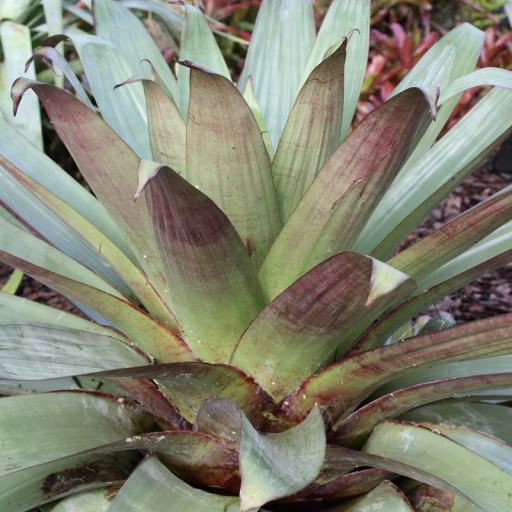
Plant Overview
Often called the "Imperial Bromeliad," this titan of the plant world once graced the private gardens of Brazilian royalty. Hailing from the steep, granite cliffs of Rio de Janeiro, it is one of the largest bromeliads in existence. Its slow-growing nature and regal, architectural form make it a coveted centerpiece for any tropical landscape or large conservatory.
🔍 How to Identify
- 🌿 Majestic Rosette: It forms a massive, star-shaped rosette of broad, strap-like leaves that can span over 5 feet across.
- 🎨 Rich Coloration: While the top of the leaf is typically a waxy green, the underside often features a deep, luxurious burgundy or maroon (especially in the 'Rubra' cultivar).
- 🗼 Towering Bloom: When it finally flowers (after 10–20 years), it produces a spectacular, multi-branched flower spike that can reach up to 10 feet in height.
🏡 In Your Garden
- 💧 The Central Tank: Like many bromeliads, this plant uses its center as a "tank" to collect rainwater and nutrients. In a home setting, keep the central cup filled with fresh water, but flush it out occasionally to prevent stagnation.
- ☀️ Light for Color: While it can survive in partial shade, it needs bright, filtered sunlight to maintain its deep purple hues. Without enough light, the burgundy underside may fade to a duller green.
- 🪨 Rocky Roots: Because it naturally grows on cliffs, it has a relatively small root system for its size. It requires extremely well-draining soil—think orchid bark or a rocky mix—to avoid crown rot.
⚠️ Safety & Toxicity
- ✅ Pet & Child Safe: Alcantarea imperialis is non-toxic to cats, dogs, and humans, making it a safe choice for families.
- 🗡️ Physical Caution: While it lacks the sharp spines of some other bromeliads, the leaves are very stiff and leathery. Placement should be away from narrow walkways where someone might accidentally bump into the pointed leaf tips.
✨ Fun Fact
The Imperial Bromeliad is a "monocarpic" plant, meaning it blooms only once in its lifetime. However, don't worry about losing your garden giant; before the mother plant fades away, it produces several "pups" (offsets) at its base to carry on its royal lineage.

Detailed Care Instructions
Alcantarea Imperialis, also known as the Giant Bromeliad, is a stunning tropical plant that can reach up to 5 feet in height. Here are some tips on how to grow and care for this impressive plant:
- Light: Alcantarea Imperialis prefers bright, indirect light. Place your plant in a location where it will receive plenty of sunlight, but be sure to protect it from direct sunlight which can scorch the leaves.
- Watering: Water your Alcantarea Imperialis regularly, keeping the soil consistently moist but not waterlogged. Use room temperature water and water directly into the center of the plant's rosette of leaves.
- Soil: Use a well-draining potting mix for your Alcantarea Imperialis, such as a mix of peat moss, perlite, and pine bark.
- Temperature: Alcantarea Imperialis thrives in warm temperatures of 65-80°F (18-27°C). Keep it away from drafts and extreme temperature fluctuations.
- Fertilizing: Feed your Alcantarea Imperialis with a balanced, water-soluble fertilizer diluted to half strength every 2-4 weeks during the growing season (spring and summer).
- Humidity: This plant prefers high humidity levels, so misting the leaves regularly can help to keep it happy and healthy.
- Repotting: Repot your Alcantarea Imperialis every 2-3 years to refresh the soil and provide room for growth. Choose a pot that is slightly larger than its current one.
- Pups: Alcantarea Imperialis produces offsets or "pups" that can be separated from the parent plant once they reach a few inches in height. These can be repotted and grown into new plants.
By following these tips, you can successfully grow and care for your Alcantarea Imperialis plant, enjoying its beauty and impressive size in your home or garden.

Place in a window with dappled sun or a spot in the middle of a room. Or directly in a window facing west or east.

Alcantarea Imperialis plants should be watered regularly, ensuring that the soil is consistently moist but not waterlogged. It is important to water the plant at the base and avoid getting water on the leaves as this can cause rot and other issues. During the growing season, typically spring and summer, it may be necessary to water more frequently, especially if the plant is exposed to a lot of sunlight and heat. In the winter months, watering should be reduced to prevent overwatering and potential root rot. Additionally, using room temperature water is recommended to avoid shocking the plant. Always check the soil moisture levels before watering to ensure the plant is getting the appropriate amount of hydration.
To fertilize the Alcantarea Imperialis plant, use a balanced, slow-release fertilizer with an N-P-K ratio of 10-10-10 or similar. Apply the fertilizer in the spring and summer months, following the manufacturer's instructions for dilution and frequency. Avoid over-fertilizing, as this can lead to nutrient burn and damage to the plant. Water the plant before and after fertilizing to help the nutrients penetrate the soil and reach the roots.
Alcantarea Imperialis plants prefer well-draining soil that is rich in organic matter. A good soil mix for this plant can include a blend of peat moss, coco coir, perlite, and pine bark. This mixture will provide the plant with the necessary nutrients while allowing excess water to drain easily. It is important to avoid using soil that retains too much moisture, as this can lead to root rot and other issues. Additionally, occasional fertilization with a balanced liquid fertilizer can help promote healthy growth and vibrant foliage.
To propagate Alcantarea Imperialis plants, you can do so through division. First, carefully remove the plant from its pot or garden bed. Then, gently separate the plant into smaller sections, making sure each section has adequate root system attached. Replant the divided sections in fresh soil mix, ensuring they are placed at the same depth as they were before. Water the newly divided plants well and place them in a warm, bright location to encourage new growth. With proper care and maintenance, the divided sections should establish themselves as new, individual plants.
Common pests of the imperial bromeliad include Scale insect, mealybugs, spider mites, thrips. Make a habit of checking your imperial bromeliad frequently for pests so that any infestations can be caught and managed early.








