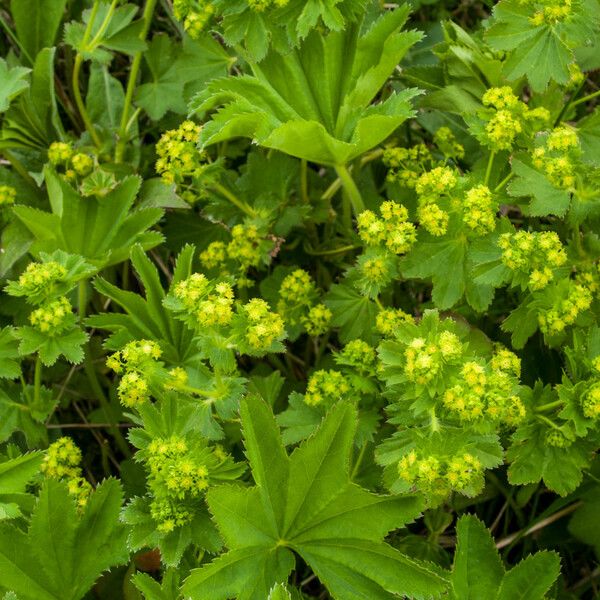
Plant Overview
Often called the "Dew Cup" for its magical ability to hold onto morning moisture, Alchemilla acutiloba is a hardy perennial known for its pleated, fan-like foliage. Its common name, Sharp-lobed Lady's Mantle, refers to the scalloped edges of its leaves that were once thought to resemble the draped cloak of the Virgin Mary. This plant is a staple in cottage gardens, acting as a soft, frothy "weaver" that fills the gaps between taller, more structured flowers.
🔍 How to Identify
- 🍃 Sharp-Toothed Foliage: The leaves are circular or kidney-shaped, featuring 7 to 11 distinct lobes with noticeably sharp, serrated "teeth" along the edges.
- ☁️ Frothy Blooms: In early summer, it produces airy, terminal clusters of tiny, star-shaped flowers that are a vibrant chartreuse or lime-green color.
- 💧 The Velvet Texture: The leaves are covered in fine, microscopic hairs that create a velvety feel and cause water to bead up into shimmering silver droplets.
🏡 In Your Garden
- 🌱 Moisture Lovers: Unlike many garden plants that hate "wet feet," this species thrives in damp, well-drained soil. It is particularly happy near ponds or in areas of the garden that stay naturally cool.
- ✂️ The Self-Seeding Habit: It is a prolific spreader. To prevent it from taking over your garden beds, it’s best to cut back the flower stalks as soon as they begin to fade but before they drop their seeds.
- 🌥️ Shadow Play: While it can handle full sun in cooler climates, it prefers partial shade in hotter regions to prevent its delicate leaf edges from "crisping" or turning brown.
⚠️ Safety & Toxicity
- ✅ Safe Status: Alchemilla acutiloba is generally considered non-toxic to humans, cats, and dogs.
- 🧤 Skin Sensitivity: While not poisonous, the fine hairs on the leaves can occasionally cause very mild skin irritation for people with highly sensitive skin if handled extensively without gloves.
✨ Fun Fact
The name Alchemilla is derived from the word "Alchemy." Ancient alchemists believed the dew collected from the center of these leaves was the purest form of water on Earth, using it in their attempts to turn base metals into gold and to create the "Philosopher's Stone."

Detailed Care Instructions
To grow Alchemilla acutiloba, also known as sharp-lobed lady's mantle, follow these steps:
- Choose the right location: Alchemilla acutiloba does well in partially shaded areas. Select a spot in your garden that receives morning sun or dappled sunlight throughout the day.
- Prepare the soil: This plant prefers well-draining soil that is rich in organic matter. Add compost or well-rotted manure to the planting area and mix it into the soil.
- Planting: Dig a hole that is slightly larger than the plant's root ball. Place the plant in the hole and fill it with soil, gently pressing it down around the roots. Ensure the crown of the plant (where the stems meet the roots) is level with the soil surface.
- Watering: Water the newly planted Alchemilla acutiloba thoroughly. Afterwards, keep the soil somewhat moist, but not overly saturated. Avoid overwatering, as this plant prefers slightly drier conditions.
- Mulching: Apply a layer of mulch around the plant to conserve moisture and suppress weed growth. Use organic mulch such as bark chips, straw, or compost.
- Pruning: Alchemilla acutiloba doesn't require extensive pruning. Occasionally trim back any dead or damaged foliage to maintain its appearance and health.
- Fertilizing: Alchemilla acutiloba generally doesn't require heavy feeding. However, you can apply a balanced, slow-release fertilizer in the spring to provide it with nutrients.
- Dividing: This plant tends to spread slowly via underground rhizomes. If it becomes overcrowded, you can divide Alchemilla acutiloba in spring or autumn by carefully digging up the plant and separating the rhizomes. Replant the divisions in new locations.
- Pests and diseases: Alchemilla acutiloba is generally resilient against pests and diseases. However, keep an eye out for slugs and snails, which can occasionally feed on its foliage. Use organic methods or deterrents to control these pests if necessary.
By following these steps, you should be able to successfully grow Alchemilla acutiloba in your garden and enjoy its attractive foliage and delicate yellow-green flowers.
To properly water the Alchemilla Acutiloba plant, it is essential to follow specific guidelines. Here's how you can water it effectively:
- Understand the watering needs: Before watering, it's important to consider the watering requirements of the Alchemilla Acutiloba plant. This will help you determine how often you should water it.
- Check soil moisture: Before watering, assess the soil's moisture level by inserting your finger about an inch deep into the soil. If it feels dry, it is an indication that the plant requires watering. If it feels moist, it's best to wait before watering as overwatering can be detrimental to the plant's health.
- Watering method: Use a watering can or a hose with a gentle flow to water the Alchemilla Acutiloba plant. Aim to water directly at the base of the plant rather than on the leaves, as wet foliage can promote the growth of fungal diseases.
- Adequate drainage: Ensure that the pot or container in which the Alchemilla Acutiloba plant is planted has proper drainage holes. This will prevent waterlogged soil, which can lead to root rot. Excess water should be able to drain freely.
- Watering frequency: Water the plant deeply but infrequently. Once the soil has dried out from the previous watering, water thoroughly until it evenly moistens the entire root system. Avoid frequent shallow watering, as it can result in weak root growth.
- Adjust according to seasons: As seasons change, the watering needs of the Alchemilla Acutiloba plant may vary. During the active growing season, typically spring and summer, it may require more frequent watering. In cooler months or during dormancy, reduce the watering frequency as the plant's growth slows down.
- Monitor environmental factors: Assessing external factors like temperature and humidity can impact the watering needs of the Alchemilla Acutiloba plant. Hotter and drier conditions may necessitate more frequent watering, while cooler or more humid conditions may require less.
- Prevent waterlogged soil: Avoid leaving the plant in standing water, as this can lead to root rot and other moisture-related issues. Ensure proper drainage, and if the plant is kept outdoors, consider using a saucer or a raised surface to prevent water from accumulating around the roots.
By following these watering guidelines, you can maintain the optimal moisture level for the Alchemilla Acutiloba plant, promoting its health and growth.
- Begin by selecting a balanced fertilizer, such as a 10-10-10 or 20-20-20 NPK (nitrogen, phosphorus, and potassium) formulation.
- Before applying fertilizer, make sure the soil is moist. Water the Alchemilla Acutiloba plant thoroughly a day or two before fertilizing.
- Apply the fertilizer according to the package instructions, taking into account the plant's size and current soil condition. Use a granular or slow-release fertilizer, as it will provide a steady supply of nutrients to the plant over time.
- Spread the fertilizer evenly around the base of the plant, avoiding direct contact with the stems or leaves. Use a small hand trowel or your hands to gently work the fertilizer into the topsoil, ensuring it's well incorporated.
- After fertilizing, water the plant again to help the nutrients reach the roots. This will also prevent any potential fertilizer burn on the leaves or stems.
- Repeat the fertilization process every 4-6 weeks during the growing season, which typically ranges from spring to early fall. However, be cautious not to over-fertilize, as excessive nutrients can harm the plant.
- Monitor the plant's growth and appearance regularly. If you notice any signs of nutrient deficiency, such as yellowing leaves or stunted growth, adjust your fertilizing schedule or consider adding a balanced organic fertilizer to supplement the nutrients.
- Remember to follow the specific instructions on the fertilizer packaging and consider any additional recommendations for your specific region or climate.
By following these fertilizing instructions, you can promote healthy growth and vibrant foliage for your Alchemilla Acutiloba plant.
Alchemilla acutiloba, a perennial herbaceous plant belonging to the Rosaceae family, requires a specific type of soil to thrive. It prefers a well-draining soil with a slightly acidic to neutral pH range between 5.5 and 7.0. The soil should have adequate moisture retention capacity without becoming waterlogged.
Ideally, the soil for Alchemilla acutiloba should be rich in organic matter, such as compost or well-rotted manure, as this plant benefits from a nutrient-rich growing medium. It thrives in loamy or sandy loam soils that are loose and friable, allowing for proper root development and air circulation.
Furthermore, the soil should be well-aerated, as good root oxygenation is essential for the overall health and development of the plant. Amending the soil with perlite or vermiculite can improve drainage and aeration if necessary.
It is crucial to avoid heavy clay soils or poorly-drained soils, as they can lead to root rot or other issues for Alchemilla acutiloba. These types of soils tend to retain excessive moisture, preventing the plant from establishing a healthy root system.
Finally, ensure that the soil is free from any contaminants, such as chemicals or pollutants, which can negatively affect the plant's growth and development. Regular soil testing and amending can help maintain optimal soil conditions for the Alchemilla acutiloba plant.
Alchemilla acutiloba is a herbaceous perennial plant that can be propagated through several methods, including division, cuttings, and seed sowing. Here are the detailed steps for each propagation method:
- Division:
- Choose a healthy Alchemilla acutiloba plant that is at least two years old.
- In early spring or fall, carefully dig up the plant using a garden fork or spade.
- Gently separate the plant into smaller sections, making sure each section has a viable root system.
- Plant the divided sections in well-draining soil, ensuring that the crown is level with the soil surface.
- Water the newly divided plants thoroughly and keep them well-watered until established.
- Choose a healthy Alchemilla acutiloba plant that is at least two years old.
- Stem cuttings:
- Select a healthy stem from the Alchemilla acutiloba plant, preferably one that is young, vigorous, and free from pests or diseases.
- Using a sharp and clean pair of pruning shears, cut a 4 to 6-inch (10 to 15 cm) section of stem just below a leaf node. Remove any lower leaves from the cutting, leaving only a few at the top.
- Dip the cut end in a rooting hormone powder or gel to encourage root development (optional).
- Fill a small pot with a well-draining rooting medium, such as a mix of perlite and peat moss or a commercial seed starting mix.
- Make a planting hole in the rooting medium using a pencil or your finger and insert the cutting, burying about half of its length.
- Place the pot in a warm and bright location, but avoid direct sunlight that could scorch the cutting.
- Mist the cutting lightly with water to maintain humidity and prevent it from drying out.
- Keep the soil consistently moist but not overly saturated.
- After a few weeks, gently tug on the cutting to check for resistance, indicating root development.
- Once roots have formed, carefully transplant the cutting into a larger pot or desired location in the garden.
- Select a healthy stem from the Alchemilla acutiloba plant, preferably one that is young, vigorous, and free from pests or diseases.
- Seed sowing:
- Collect ripe seeds from the Alchemilla acutiloba plant, which are usually produced after flowering in summer.
- Fill small nursery pots or seed trays with a well-draining soil mix, preferably one suitable for seed germination.
- Sprinkle the seeds evenly across the soil surface, allowing a few centimeters of space between each seed.
- Lightly press the seeds into the soil with your fingers, ensuring good seed-to-soil contact.
- Mist the soil surface with water to moisten it, but avoid creating a pond of water.
- Cover the pots or trays with a plastic wrap or propagator lid to create a greenhouse-like environment that retains moisture.
- Place the containers in a warm location with indirect light.
- Check the soil moisture regularly and mist as needed to prevent drying out.
- Germination can take a few weeks to several months, so be patient.
- Once the seedlings have grown and developed enough, usually reaching a few inches tall, they can be transplanted into individual pots or directly into the garden.
Remember to provide the propagated Alchemilla acutiloba plants with adequate care, including regular watering, proper sunlight exposure, and occasional fertilization, to help them establish and thrive.
- Collect ripe seeds from the Alchemilla acutiloba plant, which are usually produced after flowering in summer.








