Plant Overview
Commonly known as Parsley-piert, Alchemilla arvensis is a humble, low-creeping herb that often hides in plain sight within lawns and gravel paths. Despite its name, it isn’t a true parsley; it belongs to the Rose family and is a close relative of the more famous Lady’s Mantle. Historically, it earned a reputation as a "stone-breaker" in folk medicine, believed to help dissolve kidney stones.
🔍 How to Identify
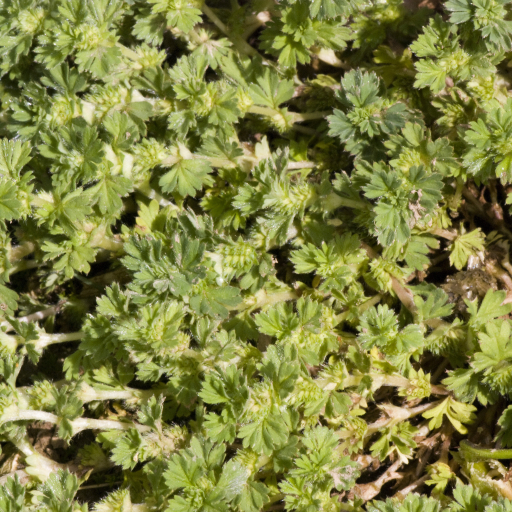
- 🌿 The Leaves: Tiny, fan-shaped leaves that are deeply divided into three lobes, each with further serrated edges. They are often covered in fine, soft hairs that give them a slightly fuzzy appearance.
- 🟢 The Flowers: You’ll have to look closely to see them! The flowers are minute, greenish, and lack petals. They grow in small clusters tucked away in the "axils" where the leaf meets the stem.
- 🌱 Growth Habit: This plant is a prostrate grower, meaning it forms dense, flat mats that hug the ground. It rarely rises more than a few inches high, making it very resistant to lawnmowers.
🏡 In Your Garden
- 🧱 The Soil Nuance: Parsley-piert is a "pioneer" species that loves disturbed ground. It specifically thrives in dry, sandy, or alkaline soils where other plants might struggle. If it’s popping up in your lawn, it’s often a sign of thin grass or compacted soil.
- 🛡️ Hardy Nature: Because it produces a deep taproot relative to its size, it is surprisingly drought-tolerant. While some see it as a weed, it provides excellent ground cover for bare patches of earth where little else will grow, and it requires zero maintenance once established.
⚠️ Safety & Toxicity
- ✅ Status: Generally considered non-toxic and safe.
- 🐾 Pet & Child Safety: There are no known toxic effects for cats, dogs, or humans. While it was traditionally used in herbal teas, it is not a common culinary ingredient, so it’s best enjoyed as a wild botanical rather than a snack.
✨ Fun Fact
The common name "Parsley-piert" is actually a linguistic evolution of the French phrase perce-pierre, which literally translates to "pierce stone." This refers to its historical use as a "lithontriptic"—a plant used to break up stones in the body!

Detailed Care Instructions
To grow Alchemilla arvensis (also known as field lady's mantle), follow these steps:
- Choose a suitable location: Select a spot that receives partial shade to full sun. The soil should be well-draining and slightly acidic to neutral pH.
- Prepare the soil: Loosen the soil by removing any weeds and breaking up clumps. Incorporate organic matter like compost or well-rotted manure into the soil to improve its fertility and drainage.
- Sow seeds: Alchemilla arvensis can be propagated through seeds. Sow the seeds directly into the prepared soil in early spring or autumn. Simply scatter the seeds on the soil surface and lightly press them in, then cover with a thin layer of soil. Water gently to settle the seeds.
- Watering: Keep the soil moist, but not waterlogged, during the germination and early growth stages. After the plants are established, they can tolerate some dryness, but it's still beneficial to water during dry spells.
- Thin the seedlings: If the seeds germinate densely, you may need to thin them out to give enough space for each plant to grow properly. Aim for a spacing of about 8 to 12 inches (20-30 cm) between the plants.
- Mulch: Apply a layer of organic mulch around the plants to retain soil moisture, suppress weeds, and regulate soil temperature.
- Maintenance: Alchemilla arvensis is a low-maintenance plant. It doesn't require frequent fertilization or pruning. However, removing spent flowers and dead leaves can help maintain a tidy appearance.
- Propagation: If you have an established Alchemilla arvensis plant, you can also propagate it by dividing the clump in early spring or autumn. Simply dig up the clump, divide it into smaller sections, and replant them at the same depth in another location.
With proper care and suitable growing conditions, your Alchemilla arvensis plants should thrive and beautify your garden with their delicate foliage and tiny yellow-green flowers.
To water Alchemilla Arvensis, it is best to follow a few tips:
- Assess soil moisture: Before watering, check the soil moisture level. Insert your finger about an inch deep into the soil near the plant's base. If the soil feels dry, it is an indication that watering is required. If it still feels moist, hold off on watering.
- Watering method: Use a watering can or a hose with a gentle attachment to avoid excessive force that may damage the plant's delicate foliage. Pour or spray water gently around the base of the plant, aiming to moisten the soil evenly.
- Watering frequency: Alchemilla Arvensis typically prefers moist soil. However, it is important not to overwater as it can lead to root rot. As a general guideline, water the plant when the top inch of soil feels dry. Monitor the plant's response to watering by observing the appearance of its foliage, as wilting may indicate both under or overwatering.
- Time of day: Water Alchemilla Arvensis early in the morning or late in the evening. This allows water to be absorbed by the plant's roots before evaporation occurs due to heat and sunlight.
- Avoid foliage wetness: Try to avoid wetting the foliage while watering as this can create a moist environment that promotes the development of fungal diseases. Direct the water flow towards the soil and not onto the leaves.
- Mulching: Apply a layer of organic mulch, such as wood chips or straw, around the base of the plant. Mulching helps to retain moisture in the soil, reducing the frequency of watering required.
- Adjust watering during different seasons: Alchemilla Arvensis may have different watering needs during different seasons. In hot and dry periods, you may need to increase the frequency of watering, while during cooler and rainy seasons, you may need to reduce it.
Remember, even though these instructions provide a general guideline for watering Alchemilla Arvensis, it is important to consider specific environmental factors, such as climate, humidity, and soil type, to ensure the plant's health and wellbeing.
To fertilize Alchemilla Arvensis, you will need a balanced, water-soluble fertilizer with equal ratios of nitrogen (N), phosphorus (P), and potassium (K). Follow these steps:
- Dilute the fertilizer according to the manufacturer's instructions. Usually, a concentration of 1 tablespoon of fertilizer per 1 gallon of water is recommended.
- Water the plant thoroughly before applying the fertilizer. This helps prevent any burning of the roots.
- Pour the diluted fertilizer solution around the base of the plant, avoiding direct contact with the leaves.
- Ensure that the fertilizer reaches the soil surface and penetrates into the root zone.
- Use the fertilizer solution once every four to six weeks during the growing season to provide adequate nutrition.
- Adjust the frequency or strength of fertilizer application if you notice any signs of nutrient deficiencies or excesses, such as yellowing leaves or stunted growth.
- After fertilizing, water the plant lightly to help the nutrients reach the roots and prevent any potential fertilizer burn.
Remember to always read and follow the instructions on your specific fertilizer product for the best results.
The ideal soil for Alchemilla Arvensis plant is a well-draining and slightly acidic soil. It should have a loamy texture and be rich in organic matter. This type of soil ensures that water does not pool around the roots, preventing the plant from experiencing waterlogging and root rot.
A loamy soil is important as it offers a balanced mixture of clay, sand, and silt particles. This composition allows for proper water retention without becoming too compacted. Additionally, loamy soil provides good air circulation to the roots and allows for essential nutrient absorption.
To enhance the acidity of the soil, you can incorporate organic matter such as peat moss or compost. These amendments help maintain a slightly acidic pH level, which is beneficial for the growth of Alchemilla Arvensis. However, it is crucial to strike the right balance, as an excessively acidic soil can also negatively affect the plant's health.
Taking into consideration the preferred soil requirements, a recommended mixture for growing Alchemilla Arvensis would be a combination of garden soil, compost, and peat moss. This blend provides adequate drainage, nutrient availability, and appropriate acidity levels to support the plant's overall health and development.
Alchemilla arvensis is a perennial herbaceous plant belonging to the family Rosaceae. It is commonly propagated through the following methods:
- Seeds: Harvest mature seeds from the plant during late summer or early fall. Sow the seeds directly into a prepared seedbed in early spring or late autumn. Ensure the seedbed is well-drained and moist. Cover the seeds lightly with soil and keep them consistently moist until germination occurs, which usually takes around 2-3 weeks. Transplant the seedlings to their permanent location when they have developed a few true leaves.
- Division: Divide mature plants in early spring or late autumn when they are dormant. Start by carefully digging up the entire plant, taking care not to damage the roots. Gently separate the clumps into smaller sections, ensuring each division has a healthy root system and several stems or foliage. Replant the divisions immediately in a prepared area with well-draining soil and maintain adequate moisture until established.
- Cuttings: Take softwood cuttings in early summer when the plant is actively growing. Choose healthy, non-flowering stems and cut them just below a node. Remove the lower leaves, leaving a few at the top. Dip the cut end of the stem in a rooting hormone powder to enhance rooting, then insert the cutting into a well-drained potting mix or a propagating medium. Place the container in a warm, bright area, ensuring the medium remains consistently moist. After a few weeks, the cuttings should develop roots. Transplant them into individual pots with well-draining soil and gradually acclimate them to the outdoor conditions before planting in their permanent spot.
- Rhizome Division: This method is suitable for species with rhizomatous growth. Carefully dig up the plant, exposing the underground rhizomes. Cut the rhizomes into smaller sections, ensuring each division has viable buds or growing points. Replant the divisions immediately in prepared soil, ensuring good drainage and moderate moisture. It is essential to plant the divisions at the same depth they were originally growing.
Each propagation method may have varying success rates depending on the conditions, so it is recommended to experiment with multiple approaches to increase the chances of success. Additionally, ensure the new plants receive proper care and maintenance, including regular watering, sufficient sunlight, and protection from severe weather conditions.








