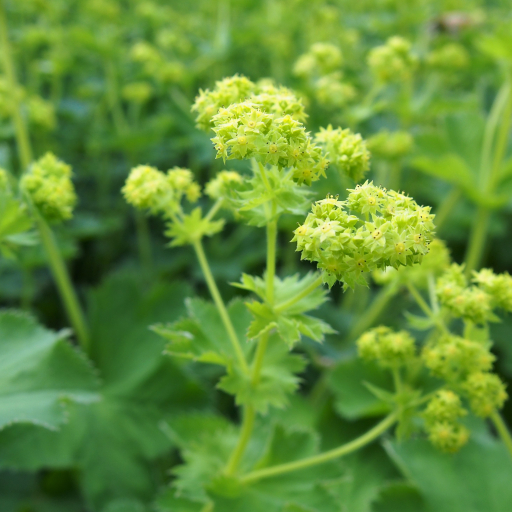
Plant Overview
Known as the "Pleated Lady’s Mantle," this charming perennial is a rugged and elegant addition to the woodland garden. It earns its name from its uniquely folded foliage, which resembles the pleats of a Victorian skirt or a meticulously folded paper fan. While its cousin, Alchemilla mollis, is more common in nurseries, Alchemilla plicata is prized by collectors for its more compact habit and distinctively hairy, silver-green leaves that sparkle under the morning dew.
🔍 How to Identify
- 🍃 The Pleated Leaf: The most striking feature is the leaf shape—circular with 7 to 9 shallow lobes that are "plicate" (folded like a fan), giving the foliage deep texture and shadow.
- ☁️ Velvety Hairs: Both the upper and lower surfaces of the leaves are covered in dense, soft hairs, which give the plant a muted, silvery-green appearance compared to other varieties.
- 🌼 Mist-like Flowers: In late spring to early summer, the plant produces airy sprays of tiny, petal-less, yellowish-green (chartreuse) flowers that seem to float above the leaves.
🏡 In Your Garden
- 💧 The "Cool" Factor: This plant loves moisture and cool roots. It is happiest in damp, well-draining soil and can struggle in intense, dry heat. In warmer climates, it must be tucked away in partial shade to prevent leaf scorch.
- 🌱 Naturalizing Habit: It functions beautifully as a "weaver" or groundcover, filling gaps between larger perennials. However, be aware that it can be a prolific self-seeder; if you want to prevent it from spreading, trim the flower stalks before they go to seed.
- ✂️ Mid-Summer Refresh: If the foliage begins to look tired or "floppy" after flowering, you can cut the entire plant back to the ground. It will quickly push out a fresh, tidy mound of new leaves.
⚠️ Safety & Toxicity
- ✅ Safe for All: Alchemilla plicata is generally considered non-toxic to humans, dogs, and cats.
- 🧤 Sensory Note: While not toxic, the fine hairs on the leaves can occasionally trap dust or pollen, which might cause very mild skin irritation for highly sensitive gardeners during pruning.
✨ Fun Fact
🧪 The Alchemist’s Dew: The genus name Alchemilla comes from the Arabic word for "alchemy." Ancient alchemists believed the water droplets that form on the leaves (through a process called guttation) were the purest form of water. They collected these "pearls" of dew, believing they were a key ingredient in the quest to turn lead into gold.

Detailed Care Instructions








