Plant Overview
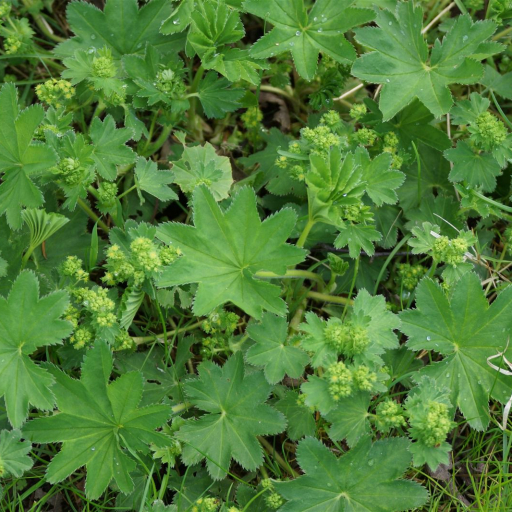
Known as the "Broad-toothed Lady’s Mantle," this charming perennial is a staple of traditional cottage gardens and misty meadows. Its name comes from the scalloped shape of its leaves, which medieval observers thought resembled the pleated folds of a lady's cloak. It is most famous for its "magical" relationship with water, often seen cradling a single, shimmering dewdrop in the center of its velvet-textured leaves.
🔍 How to Identify
- 🍃 The Foliage: Large, fan-shaped leaves with shallow, rounded lobes. Unlike some of its cousins, Alchemilla subcrenata has distinctively broad "teeth" along the leaf margins.
- 🌼 The Flowers: Tiny, star-shaped blossoms that grow in airy, frothy clusters. They lack true petals and are a vibrant, yellowish-green (chartreuse) color.
- ☁️ The Texture: The stems and leaf undersides are often covered in soft, fine hairs that give the plant a muted, matte appearance and help it trap moisture.
🏡 In Your Garden
- 💧 The "Cool Feet" Rule: This plant thrives in moist, well-drained soil. It loves "cool feet," meaning it appreciates a bit of mulch to keep its roots chilled and hydrated during the peak of summer.
- ✂️ Managing Its Spread: It is a prolific self-seeder. If you want to prevent it from taking over your garden beds, cut back the flower stalks as soon as they begin to turn tan and dry out.
- 🌥️ Light Nuance: While it can handle full sun in cooler climates, it prefers partial shade in hotter regions to prevent its delicate leaf edges from "crisping" or turning brown.
⚠️ Safety & Toxicity
- ✅ Status: Generally considered non-toxic and safe for homes with curious inhabitants.
- 🐾 Pets & Kids: It is not known to be poisonous to cats, dogs, or horses. Historically, various species of Lady's Mantle were even used in traditional herbal teas, though you should always consult a professional before consuming garden plants.
✨ Fun Fact
The genus name Alchemilla is derived from the word "Alchemy." Ancient alchemists believed that the water droplets found on the leaves (which the plant produces itself through a process called guttation) were the purest form of water on Earth, and they used them in their quests to turn base metals into gold!

Detailed Care Instructions
To grow Alchemilla subcrenata, also known as subcrenate lady's mantle, follow these steps:
- Plant selection: Obtain Alchemilla subcrenata plants from a reputable nursery or source. Choose healthy, young plants with no signs of disease or damage.
- Location: Select a suitable planting spot that receives partial shade to full sun, as it can tolerate a wide range of light conditions. Ensure that the soil is well-draining.
- Soil preparation: Prior to planting, prepare the soil by removing any weeds, rocks, or debris. Loosen the soil to allow for proper root growth. Alchemilla subcrenata prefers slightly acidic to neutral soil with a pH range of 5.5 to 7.0.
- Planting: Dig a hole slightly wider and deeper than the plant's root ball. Place the plant in the hole, ensuring that the crown (where the roots meet the stem) is level with the ground. Gently backfill the hole with soil, firming it around the plant to eliminate air pockets.
- Watering: After planting, water the plant thoroughly to help settle the soil and promote root establishment. In general, keep the soil moist but not waterlogged. During dry periods, provide regular watering to prevent the plant from drying out.
- Mulching: Apply a layer of organic mulch, such as compost or straw, around the base of the plant. Mulch helps retain moisture, suppresses weed growth, and insulates the roots.
- Pruning: Trim back any dead or damaged foliage annually in late winter or early spring to rejuvenate the plant and promote new growth.
- Fertilization: Alchemilla subcrenata does not require heavy fertilization. However, you can apply a balanced slow-release fertilizer in early spring to provide essential nutrients.
- Division: Every few years, divide the plants to maintain their vigor and prevent overcrowding. Dig up the plant, divide it into smaller sections, and replant each section in suitable locations.
- Pest and disease control: Alchemilla subcrenata is generally resistant to most pests and diseases. However, keep an eye out for aphids and snails, as they may occasionally feed on the foliage. Treat any infestation promptly with appropriate organic or chemical pest control methods.
By following these steps, you can successfully grow Alchemilla subcrenata plants in your garden or landscape.

Place in a window with dappled sun or a spot in the middle of a room. Or directly in a window facing west or east.

Watering this plant requires you to first check the soil moisture level by touching the top layer of the soil with your finger. If it feels dry to the touch, it usually indicates that the plant needs watering. You should then water the plant deeply, making sure that the water reaches the roots. Overwatering can damage the plant, so be careful not to water it too frequently or too much. It's best to wait until the top layer of the soil is dry again before watering. Additionally, make sure the plant is not exposed to direct sunlight or heat, as it can dry out the soil quickly.
To fertilize this plant, use a slow-release fertilizer in late spring or early summer. Apply the fertilizer evenly around the base of the plant, being careful not to get it on the leaves. Water the plant thoroughly after fertilizing. Repeat the fertilization process once every year.
The ideal soil for this plant should be well-draining with good organic matter content to provide the necessary nutrients for healthy growth. It should have a slightly acidic to neutral pH, between 6.0 and 7.0. The soil also needs to be moist, but not waterlogged, as too much water can lead to root rot. It should be free from any contaminants or pollutants that could harm the plant. This plant prefers soil that is rich in minerals, so adding compost or other organic fertilizers will be beneficial. Additionally, a layer of mulch around the base of the plant can help retain moisture and provide extra nutrients.
Alchemilla subcrenata is a plant that can be easily propagated through different methods such as seed propagation, division, and layering. To propagate this plant using the seed method, one must collect the seeds from a mature and healthy plant during the peak season. The collected seeds should be dried and stored in a cool and dry place until ready to sow.
To propagate through division, one must first select a mature and healthy plant and carefully dig around the root ball to lift it out of the soil. The root ball should then be gently separated into smaller sections, making sure that each section has some leaves and roots attached. The newly divided sections can then be planted in fresh soil.
Propagation through layering involves selecting a healthy branch of the plant and bending it down to the ground. The branch should be held in place using a small stake and covered with soil. After a few months, roots will begin to develop on the buried section of the branch. Once these roots have sufficiently developed, the branch can be cut away from the parent plant and planted in a new location.
Overall, Alchemilla subcrenata can be easily propagated through different methods, making it a versatile and easy plant to grow.








