Plant Overview
Often called the Thirteen-lobed Lady's Mantle, this charming perennial is a delicate relative of the more common garden favorite, Alchemilla mollis. Its name is a nod to its intricately divided foliage, which looks like a tiny, pleated green fan designed for royalty. In European folklore, the genus was favored by alchemists who believed the "heavenly water" collected on its leaves held the secret to turning lead into gold.
🔍 How to Identify
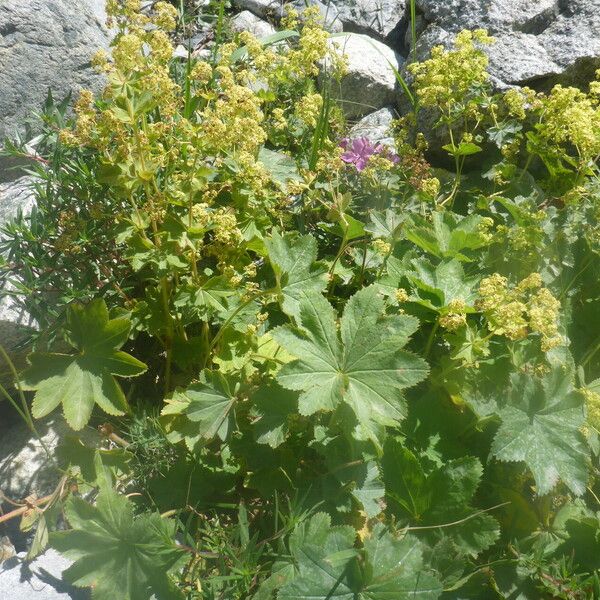
- 🍃 Thirteen-Lobed Leaves: Unlike common varieties, this species features deeply divided, palmate leaves that typically boast 11 to 13 distinct lobes, giving it a more "star-like" appearance.
- ✨ Dew Retention: The leaves are covered in fine, soft hairs (pubescence) that catch water droplets, causing rain or dew to bead up like shimmering silver pearls in the center of the leaf.
- ☁️ Frothy Blooms: It produces airy, branching clusters of tiny, star-shaped flowers in a soft chartreuse or lime-green hue that seem to float above the foliage in early summer.
🏡 In Your Garden
- 💧 Moisture Lover: While it is surprisingly resilient, this plant performs best in "cool and moist" conditions. It is an excellent choice for stabilizing soil near ponds or in damp, shaded garden borders where other plants might struggle with wet feet.
- 🌱 Low Maintenance Spreader: It has a polite, mounding growth habit. While it can self-seed if the flowers aren't deadheaded, it isn't usually considered invasive; rather, it creates a lush, weed-smothering carpet that looks beautiful at the front of a flower bed.
⚠️ Safety & Toxicity
- ✅ Non-Toxic: Alchemilla tredecimloba is generally considered safe and non-toxic for humans, cats, and dogs.
- 🧤 Mild Sensitivity: While safe to touch, the fine hairs on the leaves can occasionally trap dust or pollen, which might cause very mild skin irritation for those with hyper-sensitive skin or specific allergies during pruning.
✨ Fun Fact
The name Alchemilla is derived from the Arabic word alkemelych (alchemy). Ancient herbalists believed that the dew drops gathered from these leaves were the purest form of water on Earth, and they used this "celestial water" in their attempts to discover the Philosopher's Stone!

Detailed Care Instructions








