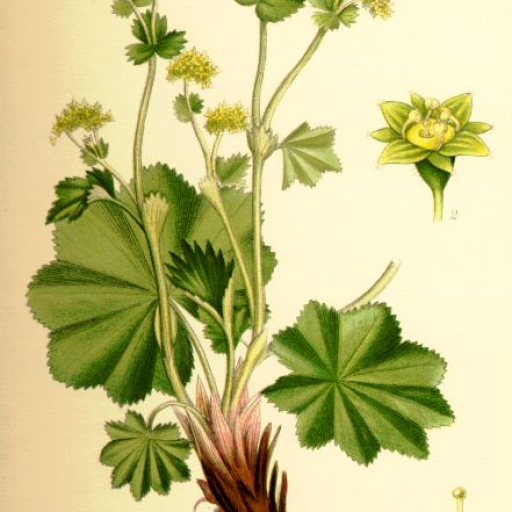
Plant Overview
Common Lady’s Mantle, often called the "Dew Cup," is a charming perennial that looks like it stepped straight out of a medieval tapestry. Its botanical name, Alchemilla, hints at a mystical past; ancient alchemists believed the morning dew collected on its pleated leaves was the purest form of water, capable of turning base metals into gold. Today, it is a staple in cottage gardens, loved for its frothy flowers and its ability to catch raindrops like shimmering diamonds.
🔍 How to Identify
- 🍃 The Foliage: Distinctive fan-shaped, circular leaves with 7 to 11 scalloped lobes. They have a pleated or "accordion-fold" appearance, resembling a lady's cloak or mantle from the Middle Ages.
- ☁️ The Texture: Both the stems and leaves are covered in a fine, soft coating of silver hairs, giving the plant a velvety feel and a soft, matte-green hue.
- ✨ The Blooms: In late spring and summer, the plant produces airy, billowing clusters of tiny, star-shaped flowers. These blossoms are chartreuse (yellow-green) and lack true petals, creating a "frothy" effect above the leaves.
🏡 In Your Garden
- 💧 The Alchemist’s Water: Lady’s Mantle is famous for "guttation," where it exuded moisture from its leaf edges. Because of the velvety hairs, water beads up into perfect spheres rather than soaking in. To keep the leaves looking fresh, ensure the soil stays consistently moist, especially in full sun.
- 🌱 Growth Habit: This is a tough, low-maintenance groundcover that can tolerate a variety of light conditions. However, it is a prolific self-seeder. If you don't want "baby" mantles popping up everywhere, it’s best to cut back the flower stalks as soon as they start to fade.
- ✂️ Mid-Summer Refresh: If the foliage starts to look ragged or brown after a hot spell, you can cut the entire plant back to the ground. It will quickly flush out with a fresh mound of beautiful, new leaves.
⚠️ Safety & Toxicity
- ✅ Status: Generally considered non-toxic and safe.
- 🐾 Details: This plant is safe for households with cats, dogs, and children. In fact, it has a long history in traditional herbal medicine for various ailments, though you should always consult a professional before using garden plants for consumption or healing.
✨ Fun Fact
The droplets found on the leaves in the morning aren't always dew from the air. The plant actually pumps excess water out from its internal vascular system through specialized pores called hydathodes—a botanical "exhale" that creates those iconic sparkling beads.

Detailed Care Instructions
Growing Alchemilla vulgaris, commonly known as lady's mantle, can be a rewarding experience due to its attractive, fan-shaped leaves and delicate, chartreuse flowers. Here’s a step-by-step guide to help you cultivate this plant successfully:
1. Choosing a Location
- Light: Alchemilla vulgaris prefers partial shade but can tolerate full sunlight if the soil remains moist.
- Soil: It thrives in well-drained, fertile soil that is kept consistently moist. Sandy, loamy, or clay soils with good organic matter are ideal.
2. Planting
- Timing: Plant lady’s mantle in the spring or early fall when temperatures are moderate.
- Spacing: Space the plants 12-18 inches apart to allow for their eventual spread and to ensure good air circulation.
- Depth: Dig a hole twice the width of the root ball and of equal depth. Place the plant in the hole so the top of the root ball is level with the surrounding soil.
- Watering: Water the plant thoroughly after planting to settle the soil around the roots.
3. Watering
- Alchemilla vulgaris enjoys consistently moist soil. Water regularly, especially during dry spells, but be careful not to overwater, as it does not like soggy soil.
4. Mulching
- Apply a 2-3 inch layer of organic mulch around the base of the plant. This helps retain soil moisture, suppress weeds, and regulate soil temperature.
5. Feeding
- Lady’s mantle is not a heavy feeder. A light application of a balanced, slow-release fertilizer in the spring when new growth starts is sufficient.
- Alternatively, you can add compost or well-rotted manure to the soil in the spring.
6. Pruning and Maintenance
- Deadheading: Remove spent flowers to encourage more blooms and prevent self-seeding if you do not want it to spread excessively.
- Cutting Back: In late fall or early spring, cut back the foliage to the ground to promote fresh, new growth in the spring.
- Dividing: Divide the plants every 3-5 years to rejuvenate them and maintain vigor. This is best done in the spring or fall.
7. Pests and Diseases
- Alchemilla vulgaris is generally pest-free and disease-resistant. However, keep an eye out for slugs and snails, which might occasionally feed on the foliage.
- Ensure good air circulation around the plants to prevent fungal diseases.
8. Companion Planting
- Lady’s mantle pairs well with other shade-loving plants like hostas, ferns, and astilbes. Its soft, mounding habit and vibrant green flowers also make it an excellent border or edging plant.
By following these care and maintenance steps, you can successfully grow and enjoy Alchemilla vulgaris in your garden.

Place in a window with dappled sun or a spot in the middle of a room. Or directly in a window facing west or east.

Watering Alchemilla vulgaris (commonly known as lady's mantle) requires attention to soil moisture and local climate conditions. Here are some detailed guidelines:
### Soil Considerations
1. **Well-Draining Soil:** Ensure the plant is in well-drained soil to prevent waterlogging, as soggy conditions can promote root rot.
2. **Moist, Not Wet:** Aim to keep the soil consistently moist, particularly during the plant’s active growing period in spring and summer.
### Watering Schedule
1. **Regular Watering:** Water the plant regularly, but avoid overwatering. The soil should be allowed to dry slightly between waterings but should never be completely dry.
2. **Early Morning or Evening:** Water early in the morning or late in the evening to reduce evaporation and allow the plant to absorb moisture more efficiently.
### Methods of Watering
1. **Base Watering:** Direct water towards the base of the plant to avoid wetting the foliage, which can lead to fungal diseases.
2. **Drip Irrigation:** Consider using drip irrigation systems to provide consistent moisture without over-saturation.
### Seasonal Adjustments
1. **Spring and Summer:** Increase watering frequency during dry or hot periods, as the plant actively grows and may require more moisture.
2. **Fall and Winter:** Reduce watering in the fall as the plant begins to go dormant, and water sparingly during winter if the climate is cool or damp.
### Mulching
1. **Mulch Layer:** Apply a layer of mulch around the base of the plant to retain soil moisture and regulate temperature. Organic mulch such as compost or wood chips is ideal.
### Signs of Proper Watering
1. **Healthy Growth:** New leaves should appear vibrant and green without yellowing or browning at the edges.
2. **Soil Test:** Check soil moisture with your finger or a soil moisture meter to ensure it remains consistently moist but not waterlogged.
By following these guidelines, you can help ensure that your plant remains healthy and vibrant.
Alchemilla Vulgaris is a relatively low-maintenance plant, but appropriate fertilization can enhance its growth and overall health. Here are some fertilizing instructions:
- Type of Fertilizer:
- Use a balanced, all-purpose fertilizer with an NPK ratio such as 10-10-10 or 20-20-20.
- Organic options like compost or well-rotted manure also work well.
- Use a balanced, all-purpose fertilizer with an NPK ratio such as 10-10-10 or 20-20-20.
- Timing:
- Fertilize in early spring just before new growth begins.
- For optimal growth, you may also apply a light feeding in mid-summer.
- Fertilize in early spring just before new growth begins.
- Application:
- If using a granular fertilizer, sprinkle it evenly around the base of the plant, avoiding direct contact with the stems.
- For liquid fertilizers, dilute according to the manufacturer's instructions and apply to the soil around the plant.
- If using compost or manure, spread a thin layer around the plant base and gently mix it into the topsoil.
- If using a granular fertilizer, sprinkle it evenly around the base of the plant, avoiding direct contact with the stems.
- Amount:
- Follow the recommended dosage on the fertilizer package.
- Avoid over-fertilizing, as it can lead to excessive leaf growth at the expense of flowers.
- Follow the recommended dosage on the fertilizer package.
- Watering:
- Water the plant thoroughly after applying fertilizer to help it absorb the nutrients.
By following these guidelines, you should be able to maintain the health and vitality of your Alchemilla Vulgaris plant effectively.
- Water the plant thoroughly after applying fertilizer to help it absorb the nutrients.
To successfully grow Alchemilla vulgaris, selecting the appropriate soil is crucial. Here are the detailed soil requirements for this plant:
Soil Type
- Well-Draining: The soil should have good drainage to prevent waterlogging, which can harm the roots. Sandy loam or loamy soils are generally ideal.
Soil Composition
- Organic Matter: Incorporate organic matter such as compost or well-rotted manure to enrich the soil. This will improve soil structure, moisture retention, and nutrient availability.
- pH Level: Aim for a neutral to slightly acidic pH, ideally in the range of 6.0 to 7.0. Conduct a soil test to ascertain the current pH level and amend it if necessary.
Soil Moisture
- Moist but Not Soggy: While it can tolerate short periods of dryness, it prefers consistent moisture. Ensure the soil remains moist but avoid overwatering.
Soil Preparation
- Mixing: Before planting, mix the soil with compost or organic matter. A ratio of about 1 part compost to 2-3 parts native soil can be beneficial.
- Aeration: Properly aerate the soil by tilling or turning it over. This improves root penetration and promotes healthy growth.
Amendments
- Compost: Regularly add compost to maintain a nutrient-rich environment.
- Mulch: Use organic mulch such as shredded bark or leaf mold to help retain soil moisture and regulate temperature.
Implementing these soil guidelines will create an optimal growing environment for Alchemilla vulgaris, promoting robust and healthy plants.
Alchemilla vulgaris can be propagated through seed sowing, division, or stem cuttings. Here's a detailed guide for each method:
Seed Sowing:
- Collection and Preparation:
- Collect seeds from mature plants once the flowers have set seed.
- Clean the seeds to remove any chaff.
- Collect seeds from mature plants once the flowers have set seed.
- Sowing:
- Sow seeds in autumn or early spring for natural cold stratification. If sowing at other times, simulate cold stratification by placing seeds in a moist, cold (around 4°C or 40°F) environment for 4-6 weeks.
- Use a well-draining seed compost or soil mix.
- Sow seeds on the surface, pressing them lightly into the soil, but do not cover them as they need light for germination.
- Sow seeds in autumn or early spring for natural cold stratification. If sowing at other times, simulate cold stratification by placing seeds in a moist, cold (around 4°C or 40°F) environment for 4-6 weeks.
- Germination:
- Keep the soil moist but not waterlogged.
- Place the seed tray in a bright location, avoiding direct sunlight.
- Germination may take several weeks.
- Keep the soil moist but not waterlogged.
- Transplanting:
- Once seedlings have two to three true leaves, transplant them into pots or plant them directly into the garden.
Division:
- Once seedlings have two to three true leaves, transplant them into pots or plant them directly into the garden.
- Best Time:
- The best time to divide Alchemilla vulgaris is in spring or early autumn when the plant is not in active growth.
- The best time to divide Alchemilla vulgaris is in spring or early autumn when the plant is not in active growth.
- Preparation:
- Choose a healthy, mature plant.
- Water the plant thoroughly a day before division to reduce transplant shock.
- Choose a healthy, mature plant.
- Division Process:
- Carefully dig up the entire plant, ensuring you get a good portion of the root system.
- Use a sharp knife or spade to divide the plant into smaller clumps, each with several shoots and a portion of the root system.
- Carefully dig up the entire plant, ensuring you get a good portion of the root system.
- Replanting:
- Replant the divisions immediately at the same depth they were growing before.
- Water thoroughly after planting.
Stem Cuttings:
- Replant the divisions immediately at the same depth they were growing before.
- Selection:
- Take cuttings in late spring or early summer when the plant is actively growing.
- Select a healthy, non-flowering stem.
- Take cuttings in late spring or early summer when the plant is actively growing.
- Cutting and Preparation:
- Cut a 3-4 inch (8-10 cm) section of stem just below a leaf node.
- Remove the lower leaves to expose the nodes, leaving a few leaves at the top.
- Cut a 3-4 inch (8-10 cm) section of stem just below a leaf node.
- Rooting:
- Dip the cut end in rooting hormone to encourage root formation (optional but beneficial).
- Insert the cutting into a pot filled with a moist, well-draining rooting medium (e.g., a mix of perlite and peat or a commercial rooting mix).
- Dip the cut end in rooting hormone to encourage root formation (optional but beneficial).
- Aftercare:
- Place the cutting in a bright location, avoiding direct sunlight.
- Cover with a plastic bag or a propagator lid to maintain high humidity but ensure good air circulation to prevent mold.
- Keep the medium moist but not waterlogged.
- Roots should form in a few weeks, and the cuttings can then be transplanted to individual pots or the garden.
By following these methods, you can effectively propagate Alchemilla vulgaris and establish a healthy garden population.
- Place the cutting in a bright location, avoiding direct sunlight.








