Plant Overview
Known for its distinctive "quilted" look, Alchornea rugosa—often called the Crinkle-leafed Alchornea—is a hidden gem of the tropical shrub world. In its native Southeast Asian habitats, it is a staple of the forest understory, favored for its hardy nature and the interesting way light dances across its deeply textured foliage. It is a plant that prioritizes texture over showy blooms, making it a favorite for "texture-first" garden designers.
🔍 How to Identify
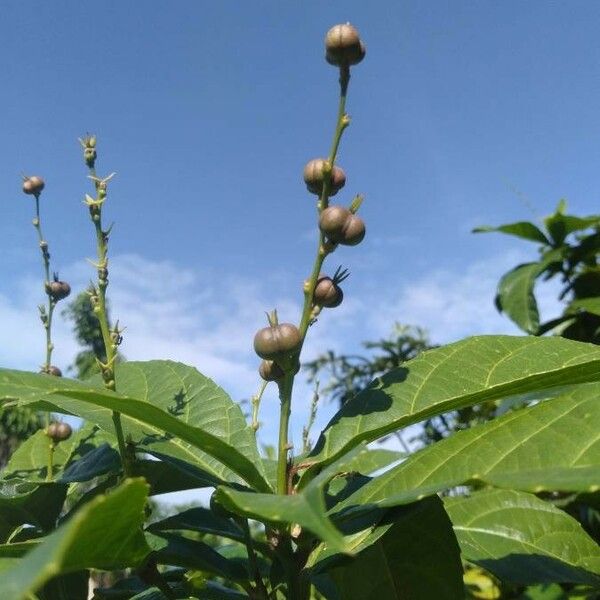
- 🍃 Rugose Leaves: The most striking feature is the "rugose" or wrinkled texture of the leaves. They are deeply veined, giving them a three-dimensional, embossed appearance.
- 🌿 Growth Habit: This is an evergreen shrub or small tree that usually stays between 2 to 5 meters tall. It has a slender, upright form that fills out beautifully with age.
- 🌾 Subtle Flowers: It produces long, thin spikes (racemes) of tiny, petal-less flowers. They aren't flashy, appearing as greenish-red clusters that blend into the foliage.
- 🍒 Seed Capsules: After flowering, it develops small, three-lobed capsules that eventually split open to release seeds.
🏡 In Your Garden
- 🌤️ Light Nuance: Because it naturally grows in the forest understory, it thrives in dappled sunlight or partial shade. Direct, harsh midday sun can sometimes scorch the edges of those beautifully textured leaves.
- 💧 Moisture Balance: It prefers consistently moist, well-draining soil. It is relatively resilient once established, but it hates "wet feet"—ensure your pot or garden bed doesn't allow water to stagnate around the roots.
- ✂️ Shaping: If left to its own devices, it can become a bit leggy. Pruning the tips in early spring encourages a bushier, denser growth habit, perfect for creating a privacy screen or a lush backdrop.
⚠️ Safety & Toxicity
- 🐾 Pet & Child Safety: While not considered highly toxic like some of its cousins, it belongs to the Euphorbiaceae family. Many plants in this family contain sap that can cause mild skin irritation or dermatitis in sensitive individuals.
- 👅 Ingestion: It is best to keep this plant out of reach of curious pets and toddlers. Ingesting the leaves may cause mild gastrointestinal upset or mouth irritation.
✨ Fun Fact
In various parts of Southeast Asia, Alchornea rugosa has a long history in traditional folk medicine. Different cultures have used decoctions of its leaves and roots to treat everything from simple fevers to digestive issues, earning it a spot in many "living pharmacies" in rural villages.

Detailed Care Instructions








