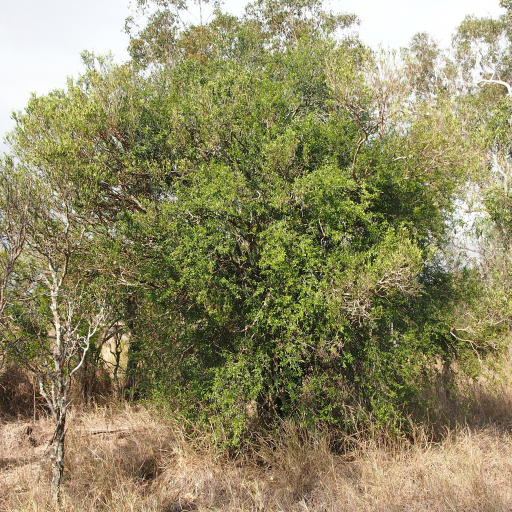
Plant Overview
The Scrub Boonaree, or Alectryon diversifolius, is a master of disguise in the botanical world. Native to the dry rainforests and scrublands of Eastern Australia, this hardy survivor is famous for its "Dr. Jekyll and Mr. Hyde" transformation. It is a favorite for those seeking a "set and forget" plant that offers architectural beauty and a safe haven for local wildlife.
🔍 How to Identify
- 🍃 Leaf Polymorphism: This is its most striking trait. Juvenile leaves are tiny, deeply lobed, and prickly (looking much like Holly), while adult leaves are longer, smoother, and rounded.
- 📐 Zigzag Branching: In its younger stages, the stems often grow in a distinct, rigid "zigzag" pattern, which helps create a dense, impenetrable thicket.
- 🍒 Jewel-like Fruit: It produces small, woody capsules that split open to reveal a glossy black seed nestled in a brilliant, fleshy red "cup" (aril) that looks like a tiny bird's eye.
🏡 In Your Garden
- 🌵 Drought Specialist: Once its roots are established, the Scrub Boonaree is incredibly drought-tolerant. It has evolved to survive in harsh, rocky soils where water is scarce, making it perfect for xeriscaping.
- 🐦 A Bird’s Buffet: The bright red fruit is a high-energy snack for native birds. By planting this, you are providing a natural food source for honeyeaters and berry-loving species without any extra effort.
- 🐌 Slow and Steady: This isn't a plant that will take over your yard overnight. It is slow-growing, which makes it an excellent choice for a low-maintenance hedge or a specimen plant that won't outgrow its space too quickly.
⚠️ Safety & Toxicity
- 🐾 Low Risk: The Scrub Boonaree is generally considered safe and non-toxic to humans and pets. However, like many members of the Sapindaceae (Soapberry) family, the seeds may contain small amounts of saponins.
- 🧤 Prickly Protection: The juvenile leaves are quite sharp and "toothed." If you are pruning a young plant, it’s a good idea to wear gardening gloves to avoid minor scratches.
✨ Fun Fact
The genus name Alectryon comes from the Greek word for "Rooster." This is a nod to the fleshy red crest on the seed, which early botanists thought looked exactly like a rooster's comb!

Detailed Care Instructions








