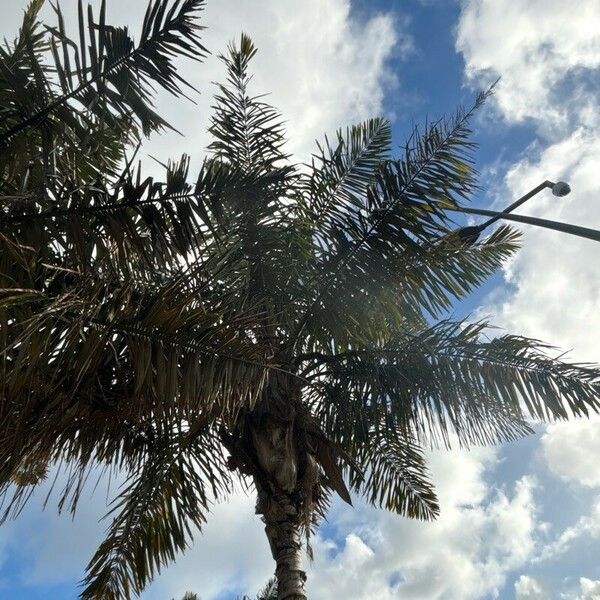
Plant Overview
Hailing from the coastal forests of Brazil, Allagoptera caudescens—often still referred to by its former tongue-twister name, Polyandrococos—is a palm that brings a shimmering, metallic elegance to any landscape. Known locally as the "Buri Palm," it is celebrated for its striking "silver-back" leaves that catch the light with every breeze. It’s a resilient survivor that looks like it belongs in a high-end coastal resort.
🔍 How to Identify
- 🍃 The Silver Lining: The most distinctive feature is the underside of the fronds, which are covered in a dense, silvery-white glaucous coating that contrasts beautifully with the dark green tops.
- 🌴 Growth Habit: Unlike its bushy, trunkless cousins, this species eventually develops a sturdy, solitary trunk marked with clean rings from fallen leaves.
- 🥥 Clustered Fruit: It produces dense, heavy clusters of small, yellowish-green fruits that hang like oversized grapes beneath the crown.
🏡 In Your Garden
- 🏖️ Coastal Warrior: Because it originates from sandy Atlantic forests, this palm is exceptionally salt-tolerant. It’s the perfect choice for seaside gardens where salt spray might kill more delicate species.
- 🏜️ Drainage is Key: While it loves tropical humidity, it absolutely hates "wet feet." In a garden setting, it requires sandy, well-draining soil to mimic its native dunes; otherwise, the roots may rot in heavy clay.
- 🐢 Patience Required: This is a slow-growing palm. It won't take over your yard overnight, making it a great specimen for medium-sized gardens where you want a permanent, unchanging focal point.
⚠️ Safety & Toxicity
- ✅ General Safety: Allagoptera caudescens is generally considered non-toxic to humans and common household pets.
- 🌵 Physical Warning: While not "poisonous," the leaf bases and the edges of the fronds can be quite stiff and sharp. Use caution when pruning to avoid skin abrasions or "paper cuts" from the tough foliage.
✨ Fun Fact
The genus name Allagoptera comes from the Greek words for "change" and "wing," referring to the way the leaflets are arranged in different planes, giving the fronds a ruffled, feathery, three-dimensional appearance rather than a flat one!

Detailed Care Instructions







