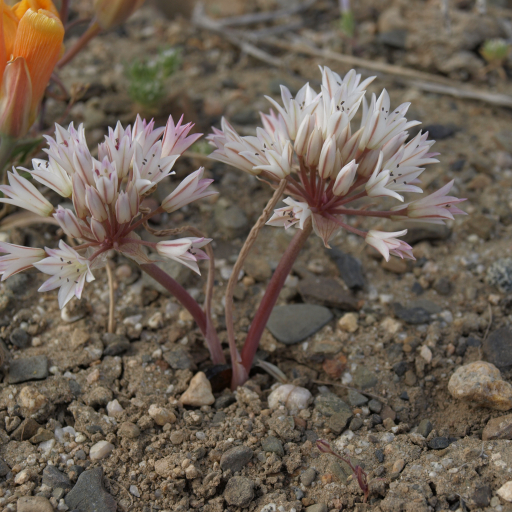
Plant Overview
Known as the Dark-red Onion or Great Basin Onion, this desert native is a master of the American West's harshest landscapes. Often found peeking out from sagebrush or rocky slopes, it is celebrated for its deep, wine-colored blooms that seem almost too delicate for their rugged, wind-swept home. It is a resilient perennial that spends most of its year hiding underground as a hardy bulb.
🔍 How to Identify
- 🌸 Flower Head: A dense, spherical cluster (umbel) featuring 15 to 50 tiny, bell-shaped flowers that range from a deep, moody maroon to a rich royal purple.
- 📏 Stem & Structure: A single, leafless stalk (scape) that stands surprisingly sturdy against desert winds, typically reaching between 4 to 12 inches in height.
- 🍂 Foliage: The leaves are narrow, tubular, and singular. Interestingly, they often begin to wither or turn brown just as the flower reaches its full, dramatic bloom.
🏡 In Your Garden
- 🏜️ The Dry Life: This plant requires a strict "dry summer dormancy." If grown in a garden setting, you must stop watering entirely once the flowers fade; otherwise, the bulb is highly prone to rotting in damp soil.
- 🪨 Soil Nuance: It hates "rich" garden soil. To keep it happy, use a mix of grit, sand, and volcanic rock. It is an ideal candidate for rock gardens or high-altitude landscapes where other flowers might fail.
⚠️ Safety & Toxicity
- 🐾 Toxic to Pets: Like all members of the Allium genus (including kitchen onions and garlic), this plant contains sulfoxides. If ingested by dogs or cats, it can cause oxidative damage to red blood cells, leading to anemia.
- 🚫 The Deadly Lookalike: While the bulbs are historically edible for humans, they bear a striking resemblance to the Death Camas (Toxicoscordion venenosum). Always crush a leaf first—if it doesn't smell strongly of onion/garlic, do not touch it!
✨ Fun Fact
Indigenous peoples of the Great Basin traditionally harvested these small bulbs, slow-roasting them in pits for many hours. This process breaks down the complex sugars, turning a pungent, bitter bulb into a sweet, soft treat that tastes somewhat like roasted parsnips.

Detailed Care Instructions








