Plant Overview
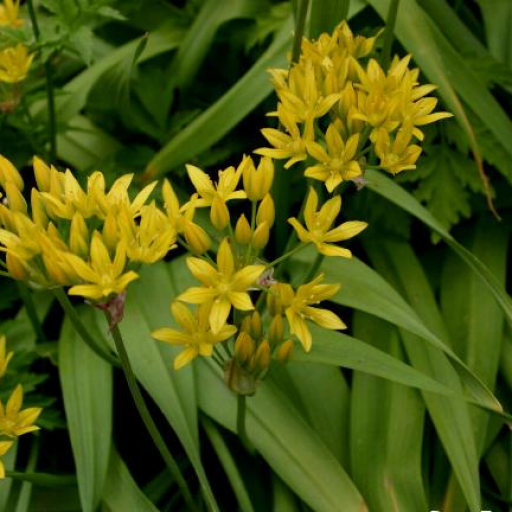
Often called the "Golden Garlic" or "Lily Leek," Allium moly is a sunny Mediterranean gem that brings a splash of bright yellow to rocky gardens and woodland borders. Unlike its tall, purple-headed cousins, this plant stays low to the ground and blooms in cheery, star-shaped clusters during late spring. In ancient lore, it is often linked to the magical herb "Moly" gifted by Hermes to Odysseus to protect him from enchantments.
🔍 How to Identify
- 🌼 The Flowers: Brilliant, star-shaped yellow florets gathered in loose, umbrella-like clusters (umbels) that seem to glow in the sunlight.
- 🍃 The Foliage: Broad, lance-shaped leaves with a distinct grey-green or glaucous tint that often start to wither as the flowers reach their peak.
- 📏 Growth Habit: A compact perennial reaching only about 10–15 inches in height, making it an excellent choice for the front of flower beds.
🏡 In Your Garden
- ☀️ Sun & Soil: These plants are incredibly hardy and thrive in well-drained soil. While they love the sun, they are more shade-tolerant than most Alliums, often performing well under the dappled light of deciduous trees.
- 🌱 Naturalizing: They are "set it and forget it" plants. Because they produce small offsets (bulblets) rapidly, they will naturally spread to form a beautiful golden carpet over a few seasons without becoming aggressively invasive.
⚠️ Safety & Toxicity
- 🐾 Toxic to Pets: Like all members of the onion and garlic family, Allium moly contains sulfoxides that are toxic to dogs, cats, and horses if ingested.
- 🚫 Human Consumption: While technically edible and carrying a mild garlic scent, it is primarily grown as an ornamental. Large quantities can cause digestive upset in humans, so it is best kept for viewing rather than cooking.
✨ Fun Fact
🏺 Homeric Legend: In the Odyssey, the god Hermes gave Odysseus a plant called "Moly" to protect him from the sorceress Circe. While botanists debate the exact species, this yellow bloom has carried the legendary name for centuries as a symbol of protection against magic.

Detailed Care Instructions
| Humidity | Normal |
| Lighting | Full Sun |
| Difficulty | Medium |
| Hibernation | Cold Period |
| Hardiness Zones | 3 - 9 |
To grow Allium Moly plants, you can follow these steps:
- Choose a suitable location: Allium Moly plants prefer full sun or partial shade. Select a spot in your garden that receives at least 6 hours of direct sunlight per day.
- Prepare the soil: Allium Moly plants prefer well-draining soil. Amend the soil with organic matter, such as compost, to improve drainage and fertility. The pH level should be slightly acidic to neutral.
- Planting time: Plant the bulbs in the fall, around September or October, before the first frost. This will give the plants enough time to establish their roots before winter.
- Dig holes: Dig small holes, approximately 3-4 inches deep, and space them about 3-4 inches apart. You can plant the bulbs individually or in groups.
- Plant the bulbs: Place the bulbs in the holes with the pointed end facing upwards. Cover the bulbs with soil and gently firm the soil around them.
- Watering: After planting, water the bulbs thoroughly to help them settle in. Allium Moly plants prefer moderate moisture, so water them consistently, especially during dry periods. Avoid over-watering, as it can lead to rot.
- Mulch: Apply a layer of organic mulch, such as straw or wood chips, around the base of the plants. This will help to retain moisture, suppress weed growth, and provide insulation during winter.
- Maintenance: Allium Moly plants are relatively low-maintenance. Remove any weeds that may compete with the plants for nutrients and water. Deadhead spent flowers to promote more blooms and prevent self-seeding.
- Fertilization: Allium Moly plants generally do not require much fertilization. However, you can apply a balanced, slow-release fertilizer in early spring to promote healthy growth.
- Division: After a few years, Allium Moly plants may become overcrowded. You can dig up the clumps in early fall, separate the bulbs, and replant them in a well-prepared soil.
With proper care, Allium Moly plants should thrive and produce beautiful yellow flowers in late spring or early summer.

Place in a bright room that is sun drenched almost all day. Or directly in a south-facing window.

Allium Moly plant requires regular watering to maintain its growth and beauty. It is essential to water this plant deeply at least once a week or when the soil becomes dry to the touch. Avoid over-watering as this can lead to root rot and fungal diseases. The amount of water required depends on factors such as the plant's size, the soil type, and the climate. Therefore, it is advisable to check the soil regularly to ensure it is moist but not too wet.
During the growing season, water the Allium Moly plant more frequently, especially in hot and dry conditions. Consider using a drip irrigation system to ensure a slow and steady water supply to the roots. If you're watering by hand, apply the water directly to the soil around the base of the plant, instead of getting the leaves wet.
It is also important to mulch around the plant to help retain moisture in the soil and reduce water loss through evaporation. Organic mulch such as shredded leaves or bark chips works well for this purpose.
In summary, water the Allium Moly plant deeply once a week or when the soil becomes dry, avoid over-watering, use a drip irrigation system, water directly at the base, mulch the plant, and check the soil regularly to avoid under or over-watering.
To properly fertilize this plant, use a balanced fertilizer with equal amounts of nitrogen, phosphorus, and potassium. Apply the fertilizer in early spring before new growth appears and then again in early summer. Avoid over-fertilizing as it can lead to excessive foliage growth and reduced flowering. Always follow the instructions on the fertilizer packaging for proper application rates.
The ideal soil for planting Allium Moly should be well-drained and moderately fertile, with a pH level between 6.0 and 7.0. A sandy loam soil is highly recommended, as it will provide good drainage while still retaining enough moisture for the plant's roots to grow.
To ensure proper drainage, it is important to avoid heavy clay soils or areas prone to waterlogging, as this can cause the bulbs to rot. The soil should also be rich in organic matter, particularly nitrogen, which will support healthy growth and flowering.
Before planting, it is a good idea to prepare the soil by digging in compost or well-rotted manure. This will help to improve soil structure and fertility, providing the plant with the necessary nutrients to establish strong roots.
When planting, it is important to place the bulbs at a depth of around three times their diameter, with the pointed end facing upwards. It is also recommended to space the bulbs around 4-6 inches apart, to allow for adequate air circulation and prevent overcrowding.
Overall, selecting a well-drained, fertile soil with plenty of organic matter is key to successfully growing Allium Moly.
Allium moly is a plant that can be propagated through two methods: division and seed.
To propagate the plant through division, in the spring or fall, dig up the plant and gently remove the bulbs from the soil. Carefully separate the smaller bulbs from the parent bulb and replant them in a new location. Be sure to plant the bulbs at the same depth they were originally planted.
To propagate the plant through seed, wait until the flower heads have withered and turned brown. Collect the seeds and plant them in a seed-starting mix either indoors or outdoors. Keep the soil moist and in a sunny location until the seeds germinate. Once the seedlings have grown large enough, they can be transplanted to their final location.








