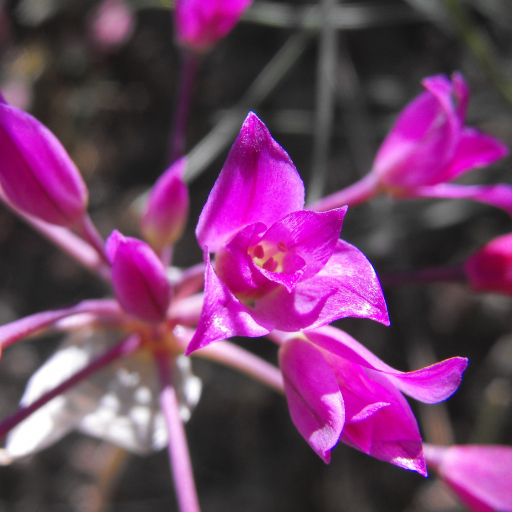
Plant Overview
Commonly known as the Mexican Onion or Peninsular Onion, this wildflower is a vibrant survivor of the sun-drenched chaparral. Native to the canyons and dry slopes of California and Baja California, it acts like a hidden treasure that reveals itself in late spring with brilliant, wine-colored blooms. It’s a favorite for "xeriscaping" enthusiasts who want to bring a touch of the wild, rugged Southwest into their rock gardens.
🔍 How to Identify
- 🌸 The Umbel: The most striking feature is its flower cluster (umbel), which holds 5 to 35 bell-shaped flowers. These range from a deep, sultry magenta to a bright reddish-purple.
- 🌿 Slender Stems: A single, smooth green stalk rises from the ground, often reaching up to 18 inches tall, topped by the crown of flowers.
- 🧅 The Bulb: Underground, it possesses a small, ovoid bulb with a "coated" texture. If the bulb or leaves are bruised, they emit the unmistakable, pungent scent of culinary onions.
🏡 In Your Garden
- 🏜️ Drainage is Key: Because it evolved in rocky, sloped environments, this plant hates "wet feet." It requires extremely well-draining, gritty soil to prevent the bulb from rotting during its dormant phase.
- 💤 Summer Dormancy: Don’t panic when the plant disappears! Like many desert lilies and onions, it retreats entirely underground after blooming to survive the summer heat. Avoid watering it heavily during this resting period.
- 🦋 Pollinator Magnet: While humans might enjoy the look, local butterflies and native bees are the true fans. It provides a vital nectar source in the late spring when other wildflowers may already be fading.
⚠️ Safety & Toxicity
- 🐾 Status: Toxic to pets (Cats, Dogs, and Horses).
- 🚫 Details: Like all members of the Allium genus (including garlic and leeks), it contains N-propyl disulfide. If ingested in large quantities by pets, it can cause damage to red blood cells, leading to anemia. While generally ignored by wildlife due to its strong scent, keep it away from curious nibbling pets.
✨ Fun Fact
Indigenous groups in the regions where it grows, such as the Serrano people, historically used the bulbs of various wild Allium species as a food source, often roasting them to mellow the intense, spicy flavor before eating.

Detailed Care Instructions
To grow Allium peninsulare, you can follow these steps:
- Choose a suitable location: Allium peninsulare prefers full sun to partial shade. Select a spot in your garden that receives at least 6-8 hours of direct sunlight per day.
- Prepare the soil: Ensure that the soil is well-draining and fertile. Allium peninsulare prefers sandy or loamy soil with good drainage. If your soil is heavy and compacted, amend it with organic matter such as compost or well-rotted manure to improve drainage and fertility.
- Plant the bulbs: Allium peninsulare is grown from bulbs. Plant the bulbs in the fall, about 4-6 inches deep and around 6-8 inches apart. The pointed end of the bulb should face upwards. If planting multiple bulbs, space them out evenly to allow for proper growth and spread.
- Watering: Keep the soil evenly moist during the growing season (spring and early summer). Avoid overwatering as excessive moisture can cause the bulbs to rot. Once established, Allium peninsulare is relatively drought tolerant and does not require frequent watering.
- Fertilizer: Allium peninsulare generally doesn't require heavy fertilization. However, you can apply a slow-release fertilizer or a balanced organic fertilizer in early spring to provide a nutritional boost. Follow the instructions on the fertilizer packaging for application rates and methods.
- Mulching: Apply a layer of organic mulch, such as wood chips or straw, around the plants to help retain moisture, suppress weed growth, and maintain a more consistent soil temperature.
- Maintenance: Remove any dead or faded flower heads to encourage the plant to put energy into bulb development instead of seed production. After the foliage dies back naturally in late summer, you can cut it back to ground level. This allows the bulbs to go into dormancy and prepare for the next growing season.
- Division: Over time, Allium peninsulare may form large clumps. If the clumps become too congested, you can dig up the bulbs in late summer or early fall when they are dormant, divide them, and replant them in separate locations. This helps rejuvenate the plants and improves their overall health and vigor.
With appropriate care and conditions, Allium peninsulare should grow and bloom beautifully, adding color and interest to your garden.

Place in a bright room that is sun drenched almost all day. Or directly in a south-facing window.

Allium Peninsulare is a flowering plant that belongs to the genus Allium. It is a native plant in regions that have dry and hot climates. When it comes to watering this plant, it is important to note that it requires moderate watering. Overwatering should be avoided as it can cause root rot and other types of fungal problems.
The first thing that should be considered when watering Allium Peninsulare is the quality of the soil. The soil should be well-draining, as waterlogged soil can cause damage to the roots. The soil should also be left to dry out a bit before watering again. This gives the roots enough time to breathe and absorb nutrients from the soil.
When watering, it is important to water deeply rather than surface watering. This helps to encourage healthy root growth. The best time to water Allium Peninsulare is early in the morning or late afternoon. This gives the plant enough time to absorb the water before the heat of the day sets in.
It is also important to water the plants at the base, rather than over the leaves. This prevents moisture from accumulating on the leaves, which can cause fungal problems. In addition, it is important to avoid watering the plant from above, as this can cause the blooms to wither.
Finally, it is important to monitor the plant's water needs and adjust the watering schedule as needed. This will ensure that the plant remains healthy and continues to bloom beautifully.
To fertilize the Allium Peninsulare plant, apply a balanced fertilizer with a ratio of 10-10-10 in early spring before the growing season begins. Use a rate of 1 tablespoon of fertilizer per square foot of soil. Water thoroughly after applying. Avoid fertilizing during the fall or winter months, as it can encourage new growth that may be damaged by frost. Repeat the application of fertilizer every four to six weeks during the active growing season.
Allium Peninsulare grows best in a well-drained soil that is rich in organic matter. The ideal soil pH range for this plant is between 6.0 and 7.5. It is important to choose a soil that is not too heavy or compacted as this can cause drainage problems and lead to root rot. A loamy soil with a mixture of sand and clay is the preferred choice. Additionally, it is recommended to incorporate compost or other organic fertilizers into the soil to improve overall soil quality. Overall, a healthy, nutrient-rich soil will provide the best growing conditions for Allium Peninsulare, leading to strong growth and beautiful blooms.
To propagate this plant, you will need to start with healthy mature plants. Choose a plant with full, vibrant leaves and stems. Be sure to take cuttings from the plant during the growing season when the plant is actively growing.
To take a cutting, use a sharp, clean pair of scissors or pruning shears to remove a stem from the main plant. The cutting should be about 4-6 inches long and have several leaves attached to it.
Next, remove the lower leaves from the cutting, leaving only a few leaves at the top. This will help the cutting conserve energy as it roots.
Dip the cut end of the cutting into rooting hormone powder to encourage root growth. Then, plant the cutting in a well-draining potting mix.
Keep the cutting moist and in a warm, shaded area until it develops roots and starts to grow. Once the cutting has rooted, you can transplant it into a larger container or directly into the ground.
Be sure to keep new plants watered and well-maintained until they are established. With time and care, your new plants will grow and thrive.








