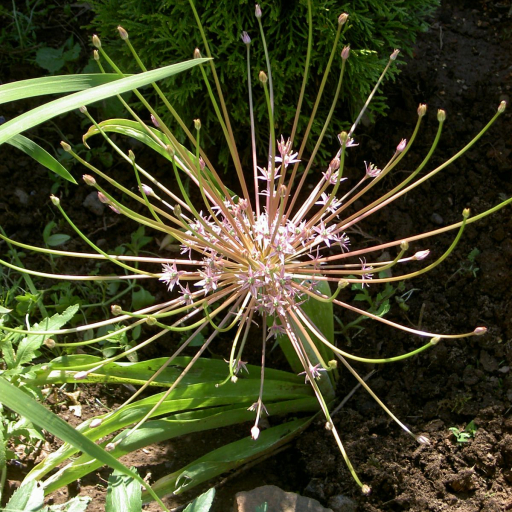
Plant Overview
Known as the "Fireworks Onion" or "Tumbleweed Onion," Allium schubertii looks like a slow-motion explosion frozen in time. Originating from the rocky hillsides of the Mediterranean and Middle East, this ornamental onion is a favorite for garden designers seeking a dramatic, architectural "wow" factor. Unlike the tight, solid globes of other Alliums, this species is airy, whimsical, and truly one-of-a-kind.
🔍 How to Identify
- 🌸 The "Explosion" Bloom: It features a massive flower head (umbel) that can reach up to 12 inches across, resembling a celestial starburst of tiny rose-purple florets.
- 📏 Uneven Stalks: The secret to its look is the varying lengths of the internal flower stems (pedicels); some are short while others are very long, creating a distinct three-dimensional effect.
- 🍃 Wavy Foliage: It produces wide, strap-shaped, grayish-green leaves that hug the ground, providing a low-profile base for the tall flower spikes.
🏡 In Your Garden
- 🏜️ Summer Dormancy: This plant is a desert native and prefers to stay dry during its summer dormant period. It thrives in "gritty" soil where water drains away quickly, as sitting in damp earth will cause the bulb to rot.
- 💤 The Vanishing Act: Do not be alarmed when the leaves begin to wither and turn brown just as the flower starts to open. This is a natural survival strategy to funnel all the plant's moisture and energy into the bloom.
- ✂️ Everlasting Decor: Because the flower structure is so woody and stiff, the "firework" heads hold their shape perfectly even after they turn brown. They are highly prized for dried floral arrangements.
⚠️ Safety & Toxicity
- 🐾 Toxic to Pets: Like all members of the Allium family (including garlic and onions), this plant is toxic to dogs and cats. If ingested, it can cause damage to red blood cells.
- 👶 Mildly Irritating: While not usually life-threatening to humans, the bulbs can cause stomach upset if eaten and the sap may cause minor skin irritation for those with sensitive skin.
✨ Fun Fact
In its native habitat, Allium schubertii is a true tumbleweed! Once the seeds are ripe, the entire dried flower head breaks off at the stem and rolls across the desert floor driven by the wind, scattering its seeds across the landscape as it travels.

Detailed Care Instructions
To successfully grow Allium Schubertii plants, follow these steps:
- Select a suitable location: Choose a sunny spot in your garden or an area that receives at least 6 hours of direct sunlight each day. Allium Schubertii prefers well-drained soil.
- Prepare the soil: Before planting, amend the soil with organic matter such as compost or well-rotted manure. This will improve the soil's fertility, drainage, and moisture-holding capacity.
- Planting time: Allium Schubertii bulbs are typically planted in the fall, around 4-6 weeks before the first frost. This allows them to establish roots before winter.
- Planting depth: Dig a hole that is two to three times the depth of the bulb and place the bulb with the pointed side facing upwards. The recommended planting depth is about 6-8 inches.
- Spacing: Space the bulbs about 12-15 inches apart to allow enough room for growth and airflow.
- Watering: After planting, give the bulbs a thorough watering to settle the soil around the roots. Water regularly during the growing season, especially during dry periods. Avoid overwatering as it can promote bulb rot.
- Fertilizing: Allium Schubertii does not require frequent fertilization, but you can apply a balanced slow-release fertilizer in early spring or a bulb-specific fertilizer according to the package instructions.
- Mulching: Apply a layer of mulch around the plants to help retain moisture, suppress weeds, and regulate soil temperature. However, avoid covering the bulbs entirely as they can rot if kept too wet.
- Maintenance: Deadhead the flower stalks once they have faded to divert energy back to the bulb. Allow the foliage to die back naturally before removing it.
- Division: Allium bulbs multiply over time, and you can divide them every few years in the fall while the plants are dormant to prevent overcrowding.
- Pests and diseases: Allium Schubertii is generally pest and disease resistant. However, they can sometimes attract onion flies or be susceptible to bulb rot if planted in poorly drained soil. Proper cultural practices and good soil preparation can help prevent these issues.
By following these steps, you can successfully grow Allium Schubertii plants and enjoy their unique and eye-catching blooms in your garden.

Place in a bright room that is sun drenched almost all day. Or directly in a south-facing window.

To water this plant, you should first ensure that the soil is dry to the touch. Once the soil is dry, slowly pour water around the base of the plant, making sure to avoid getting water on the leaves and flowers. Watering should be done regularly during the growing season, but the frequency may need to be adjusted depending on the weather conditions in your area. It is important not to overwater this plant, as too much moisture can lead to root rot and other problems. Additionally, make sure to allow excess water to drain away from the soil to prevent standing water around the roots.
To fertilize this plant, use a balanced fertilizer with equal amounts of nitrogen, phosphorus, and potassium. Apply the fertilizer in the early spring just as new growth is starting. Spread the fertilizer evenly over the soil around the plant and water well. Repeat the application every six weeks throughout the growing season. Avoid over-fertilizing, as this can lead to weak growth and disease susceptibility.
The best type of soil to use for the plant in question is well-draining soil with a pH between 6.0 and 7.5. It should also be rich in organic matter and have good porosity. It is important to avoid using heavy clay soils or areas with standing water, as this can lead to root rot. Additionally, the plant prefers full sun to partial shade and requires regular watering to maintain healthy growth.
- First, locate a mature Allium Schubertii plant that you wish to propagate. Look for a healthy specimen that is currently producing healthy blooms.
- Once you have identified a healthy plant, select a section of the plant that has a good root system. Using a sharp knife or garden shears, carefully remove this section of the plant, making sure to include some of the roots.
- Prepare a new planting site for your propagated Allium Schubertii plant. Choose a location that offers plenty of sunlight and well-draining soil.
- Plant your propagated Allium Schubertii plant in the new location, making sure the roots are fully covered with soil. Water the soil thoroughly to help your new plant establish itself.
- Continue to care for your propagated Allium Schubertii plant just as you would with any other Allium variety. This includes providing it with plenty of sunlight, water, and fertilizer. Over time, your propagated plant will grow and produce its iconic spherical flowers just like its parent plant.








