Plant Overview
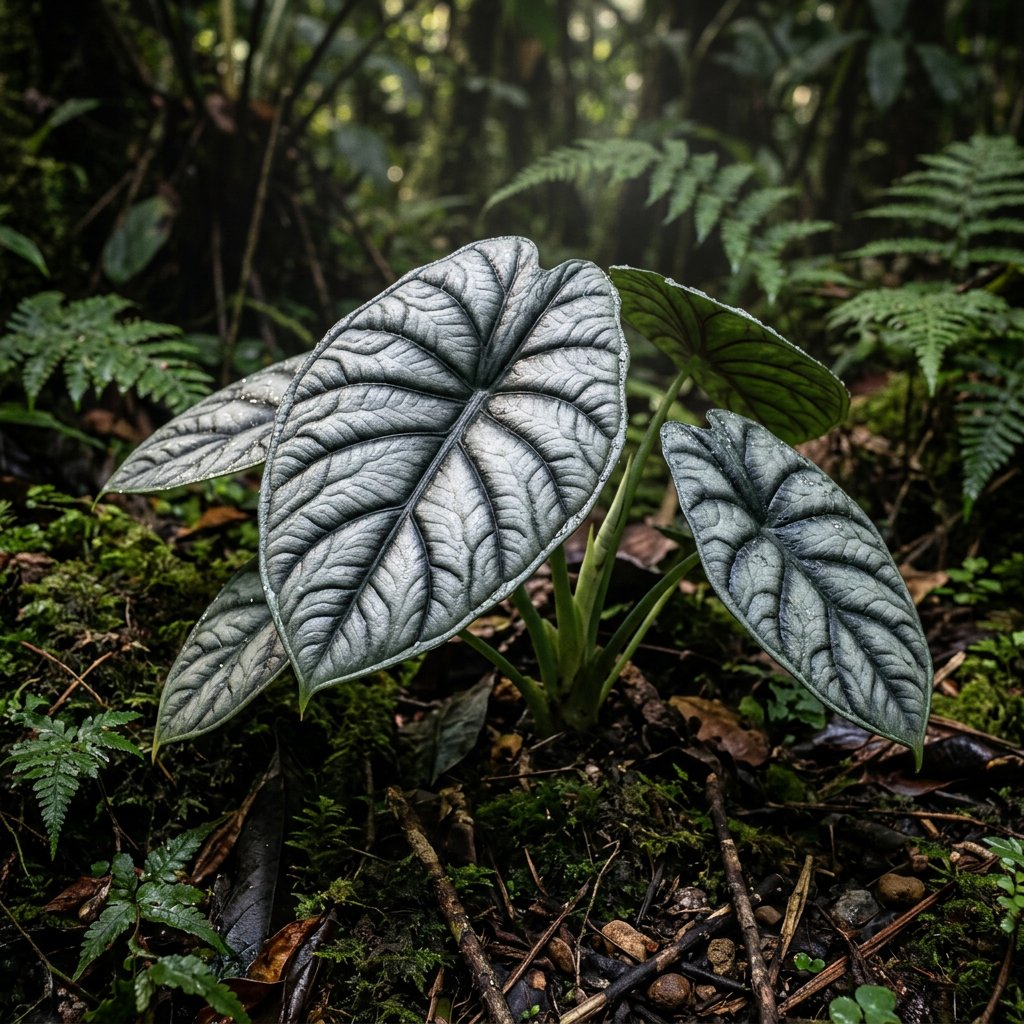
Often called the "Goddess of Silver Foliage," the Alocasia nebula 'Imperialis' looks more like a piece of carved gunmetal than a living organism. Native to the rocky, limestone-rich rainforests of Sarawak, Borneo, this "Jewel Alocasia" is a slow-growing masterpiece that brings an otherworldly, prehistoric aesthetic to any indoor jungle.
🔍 How to Identify
- 🌑 Leaf Texture: The foliage is incredibly thick, stiff, and leathery, featuring a matte finish that feels almost like suede or high-quality plastic.
- 🥈 Coloration: The top of the leaf is a striking silver-grey or "ghostly" blue-green, contrasted by deep, recessed veins that appear nearly black.
- 🍷 The Underside: If you flip a leaf over, you’ll find a dramatic surprise—the backs are often a rich, mottled burgundy or deep purple, supported by speckled petioles (stems).
🏡 In Your Home
- ☁️ Humidity is Queen: Unlike hardier houseplants, the 'Imperialis' originates from misty limestone cliffs. It requires high humidity (above 60%) to prevent its thick leaves from developing crispy, brown edges or "halos."
- 🧪 Substrate Sensitivity: This plant hates "wet feet." Because it grows naturally in rocky crevices, it requires an airy, chunky aroid mix (bark, perlite, and charcoal) rather than standard potting soil to avoid root rot.
- 💤 The Winter Nap: Don't panic if it stops growing in the winter. Jewel Alocasias often enter a semi-dormant state when light levels drop, requiring significantly less water during the colder months.
⚠️ Safety & Toxicity
- 🚫 Status: Toxic to humans and pets.
- 🧪 Details: Like all Alocasias, the tissues contain needle-like calcium oxalate crystals. If chewed or swallowed, it causes intense mouth irritation, swelling of the throat, and digestive distress. Keep it on a high shelf away from curious cats or toddlers.
✨ Fun Fact
The specific epithet nebula comes from the Latin word for "cloud" or "mist." It was given this name because the plant was first discovered in the "cloud-like" limestone regions of Borneo where it stays perpetually damp and shrouded in fog.

Detailed Care Instructions
To grow Alocasia Nebula Imperialis plants successfully, follow these steps:
- Select a suitable location: Choose a spot with bright, indirect sunlight. Avoid placing the plant in direct sunlight, as it can scorch the leaves. Also, ensure the spot has good airflow but avoid exposing it to drafts.
- Temperature and humidity: Alocasia Nebula Imperialis prefers warm temperatures between 65-85°F (18-29°C). They also prefer high humidity, so mist the leaves regularly or place a tray filled with water near the plant to increase humidity.
- Soil and potting: Use a well-draining potting mix that retains moisture but doesn't become waterlogged. A mix of peat moss, perlite, and potting soil works well. Plant the Alocasia Nebula Imperialis in a pot that provides enough room for growth, and ensure it has drainage holes to avoid waterlogging.
- Watering: Keep the soil evenly moist but not soggy. Allow the top inch of soil to dry out slightly before watering again. Overwatering can lead to root rot, while underwatering can cause the leaves to droop and yellow.
- Fertilization: Apply a balanced, water-soluble plant fertilizer every two weeks during the growing season (spring and summer). Reduce the frequency to once a month in fall and winter.
- Repotting: Alocasia Nebula Imperialis plants prefer slightly crowded conditions and don't generally require frequent repotting. Repot only when the roots have filled the existing pot and become root-bound.
- Pruning and maintenance: Regularly remove any brown or dying leaves to maintain the plant's appearance. You can also prune off any leggy or overgrown stems to encourage new growth.
- Pest control: Monitor for pests like spider mites, aphids, and mealybugs. If you notice any signs of infestation, use organic or chemical pest control methods to address the issue.
Remember, Alocasia Nebula Imperialis is a tropical plant that requires consistent care and attention to thrive. With proper conditions and care, you can enjoy the stunning foliage and growth of this unique plant.
To properly water this plant, first, ensure that the soil in the pot is dry to the touch before watering. When it comes time to water, use room temperature water and pour it slowly over the soil until water begins to drain out of the drainage holes in the bottom of the pot. Do not let the plant sit in standing water. This plant prefers to be kept relatively moist, so be sure to monitor the soil moisture closely, especially during warmer months when the plant may need more frequent watering. Avoid getting water on the leaves as this can cause damage and promote the growth of mold or bacteria.
To fertilize this plant, use a balanced liquid fertilizer once a month during the growing season, which is typically spring through early fall. Dilute the fertilizer according to the instructions on the packaging, and apply it to the soil around the base of the plant. Be careful not to fertilize too often or with too much fertilizer as this can cause damage to the plant. Additionally, make sure to water the plant thoroughly before and after fertilizing to avoid over-fertilization.
Alocasia Nebula Imperialis plant requires a well-draining, nutrient-rich soil that retains moisture without becoming waterlogged. The ideal soil for this plant should be a mix of peat moss, perlite, and vermiculite, with some added compost or organic matter to improve fertility. Alocasia Nebula Imperialis plant prefers slightly acidic soil with a pH range between 5.5-6.5. Avoid using heavy, clayey soil and opt for lighter, airy soil that allows for proper drainage. It is recommended to avoid using garden soil as it may contain weed seeds, pests, and fungal diseases that can harm the plant's growth.
One way to propagate this plant is through division. Carefully remove the plant from its pot and gently separate any offsets or additional growth from the main root ball. Make sure each offset or growth has its own set of roots. Plant each individual piece in its own pot with well-draining soil and provide regular watering and indirect sunlight.
Another method of propagation is through stem cuttings. Take a stem cutting with a few healthy leaves and a node (where the leaf meets the stem). Dip the cut end in rooting hormone and plant it in well-draining soil. Keep the soil moist and provide indirect sunlight. Once roots have formed, the new plant can be transferred to a larger pot.
Air layering can also be used to propagate this plant. Make a small cut in the stem, apply rooting hormone, and wrap a wet sphagnum moss around the cut. Cover the moss with plastic wrap and secure it with tape. Keep the moss moist and in a few weeks, roots will develop. Cut the new plant free from the original stem and transfer to a pot with well-draining soil.







