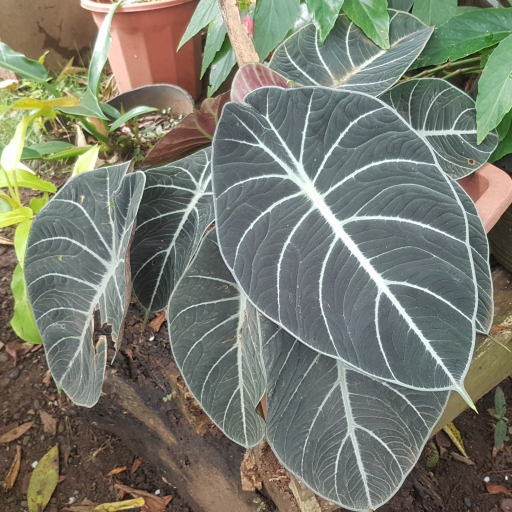
Plant Overview
Often called the "Black Velvet," the Alocasia reginula is a miniature masterpiece originally discovered in the jungles of Borneo. Its species name, reginula, literally translates to "Little Queen," a fitting title for a plant that commands attention with its dark, regal foliage. Unlike its towering Alocasia cousins, this "jewel" variety stays compact, making it a sophisticated favorite for desktop displays and terrariums.
🔍 How to Identify
- 🖤 Velvety Foliage: The leaves are deep emerald to near-black, featuring a plush, matte texture that feels like expensive velvet to the touch.
- ⚪ Striking Veins: Prominent, silvery-white veins create a high-contrast "lightning bolt" pattern across each leaf.
- 📐 Leaf Structure: The leaves are notably thick, stiff, and heart-shaped (cordate), often with a subtle burgundy or deep purple underside.
🏡 In Your Garden
- ☁️ Atmospheric Needs: Because it originates from the humid forest floors of Southeast Asia, it thrives in high humidity but requires excellent airflow to prevent the velvet leaves from trapping moisture and rotting.
- 💧 The "Drought-ish" Rule: Unlike many tropicals, the Little Queen is highly susceptible to root rot; it prefers to dry out significantly between waterings because its thick leaves store a surprising amount of water.
- 🪴 Soil Preference: It hates "heavy" feet. Use a chunky, airy mix (like orchid bark and perlite) to mimic the loose organic debris of its native habitat.
⚠️ Safety & Toxicity
- 🚫 Status: Toxic to humans and pets.
- 🐱 Details: Like all members of the Araceae family, it contains calcium oxalate crystals. If chewed or ingested, it can cause immediate mouth irritation, swelling of the throat, and digestive distress in cats, dogs, and curious children.
✨ Fun Fact
The deep, dark color of the Black Velvet isn't just for show—it is an evolutionary trick! The plant’s leaves are designed to absorb all visible light waves to maximize photosynthesis in the extremely dim, shaded environment of the rainforest floor.

Detailed Care Instructions
| Color | Light Butter Yellow |
| Soil Ph | 5.5 To 6.5 |
| Lighting | Part Sun |
| Toxicity | Toxic |
| Soil Type | Loose, Well-Draining Potting Mix Or Crumbly Loam |
| Bloom Time | Spring And Summer Growth |
| Plant Type | Tropical Plant |
| Mature Size | Size Ranges Based On Variety From Two Feet Tall And Two Feet Wide To 15 Feet Tall And Eight Feet Wide |
| Native Area | Asia |
| Sun Exposure | Bright Indirect Light |
| Hardiness Zones | 10 And 11 For Outdoor Plants |
To successfully grow an Alocasia Reginula plant, also known as the "Black Velvet" or "Ebony" Alocasia, follow these steps:
- Light: Place the plant in a location with bright, indirect sunlight. Avoid direct sunlight, as it can scorch the leaves. Partial shade can also be suitable.
- Temperature: Alocasia Reginula prefers a warm and humid environment. Maintaining a temperature between 65°F and 80°F (18°C to 27°C) is ideal. Protect the plant from drafts and temperature extremes.
- Watering: Keep the soil consistently moist but not soggy. Water the plant thoroughly when the top inch of the soil feels dry. Ensure good drainage to prevent waterlogging, as it can lead to root rot.
- Humidity: Alocasia Reginula appreciates high humidity. Increase humidity by misting the leaves regularly or placing a tray filled with water and pebbles near the plant (avoid letting the pot sit in water). Another option is using a humidifier or placing the plant in a bathroom or kitchen where humidity levels tend to be higher.
- Soil: Use a well-draining potting mix enriched with organic matter. A mix of peat moss, perlite, and orchid bark can provide the necessary drainage. Avoid heavy, compacted soils as they can retain excess moisture.
- Fertilizer: Feed the plant with a balanced liquid fertilizer every two to four weeks during the growing season (spring and summer). Follow the instructions on the fertilizer packaging and avoid over-fertilization, as it can result in leaf burn.
- Repotting: Alocasia Reginula prefers slightly crowded roots. Repot the plant only when the roots have outgrown the current pot. Use a container only slightly larger than the previous one to avoid excessive soil moisture.
- Pruning: Trim any yellow or damaged leaves to promote healthy growth. Remove any pests or diseased parts promptly to prevent further damage.
- Pests and diseases: Watch out for common houseplant pests such as aphids, mealybugs, spider mites, and scale. Regularly inspect the leaves and stems for any signs of infestation. Treat pests with suitable insecticides or insecticidal soap.
- Propagation: Alocasia Reginula can be propagated through division. During repotting, separate the plant into smaller sections, making sure each division has healthy roots and foliage. Plant the divisions in separate pots with well-draining soil.
Remember that Alocasia Reginula is toxic to pets and humans if ingested, so keep it away from curious pets and children. With proper care and attention to its requirements, your Alocasia Reginula plant will thrive and grow into a beautiful houseplant.

Place in a window with dappled sun or a spot in the middle of a room. Or directly in a window facing west or east.

To water this plant, you will need to ensure that the soil remains consistently moist, but not water-logged. You can check the soil moisture by inserting your finger about an inch into the soil. If it feels dry, then it's time to water. Use room temperature water to avoid shock to the roots. Water at the base of the plant, and avoid getting water on the foliage. If using a watering can, pour slowly to allow the soil to absorb the water. If using a tray, pour water into the tray and allow the plant to absorb it through the drainage holes. Avoid over-watering as this can lead to root rot. Water more frequently during the growing season and reduce watering during the dormant season. Monitor the plant for signs of distress such as drooping leaves or yellowing foliage.
To fertilize this plant, use a balanced liquid fertilizer once a month during the growing season (spring and summer), and reduce frequency during the winter months. Dilute the fertilizer to half strength and apply to moist soil. Always avoid fertilizing a dry or stressed plant. Over-fertilization can lead to damage or burning of the leaves, so it's important to follow the recommended dilution carefully.
A suitable soil medium for the Alocasia Reginula plant should be well-draining and rich in organic matter. It should have a pH level ranging from 5.5 to 7.0 with a mixture of peat moss, perlite, and sand. The soil should also be able to retain moisture without getting waterlogged which can lead to root rot. Due to its tropical nature, it requires a humid environment; thus, adding coco coir to the soil mixture will help with moisture retention. It is essential to avoid heavy soils that can compact quickly as Alocasia Reginula has shallow roots that require a porous soil mixture. Adding a slow-release fertilizer can also be beneficial in promoting healthy growth.
Propagation of this plant can be done through division of the rhizomes. It is best to do this when repotting the plant. Carefully remove the plant from its pot and loosen the soil from the roots. Gently separate the rhizomes and remove any dead or damaged roots. Each division should have at least one healthy leaf and some roots. Plant the divisions into appropriately sized pots, using well-draining soil. Water the plant well and place it in a bright, indirect light location. Keep the soil moist but not waterlogged. New growth should appear in a few weeks.
Common pests of the alocasia black velvet include Mealybugs, spider mites, fungus gnats, aphids, thrips. Make a habit of checking your alocasia black velvet frequently for pests so that any infestations can be caught and managed early.








