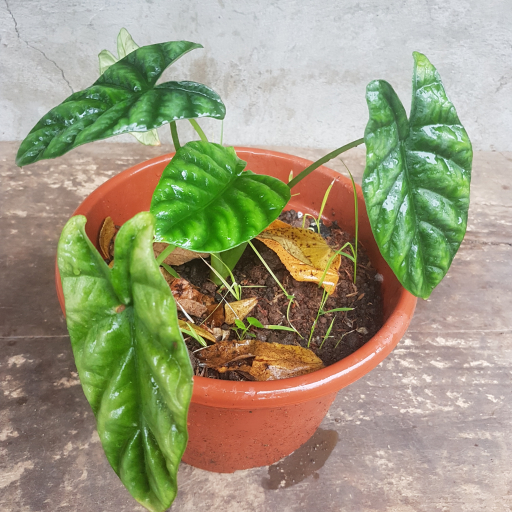
Plant Overview
Known as "Quilted Dreams," this Philippine native is a true masterpiece of the botanical world. Its leaves look like they were forged from a mixture of molten silver and deep forest-green wax, boasting a texture so deep it hardly looks real. It is a compact "Jewel Alocasia" that brings a prehistoric, sculptural vibe to any indoor plant collection.
🔍 How to Identify
- 🍃 Bullate Foliage: The leaves are deeply "quilted" or puckered, creating a dramatic three-dimensional landscape of ridges and valleys across the surface.
- 💿 Metallic Sheen: The foliage possesses a distinct glossy finish; young leaves often emerge with a silvery-gray hue before maturing into a dark, moody green.
- 📐 Sinuate Margins: True to its name, the leaf edges are "sinuate," meaning they have a wavy, slightly scalloped perimeter that adds to its architectural look.
🏡 In Your Garden
- ☁️ Humidity over Hydration: While it craves a humid environment (mimicking the Philippine rainforest), it is notoriously sensitive to "wet feet." It is better to provide a humidifier than to over-saturate the soil, which can lead to rapid root rot.
- 🪴 Chunky Mix is Key: This species naturally grows in limestone-rich leaf litter. In a home setting, it requires a very airy, "chunky" potting mix—think plenty of orchid bark and perlite—to ensure the roots can breathe.
⚠️ Safety & Toxicity
- 🚫 Toxic Status: Highly toxic to both humans and pets if ingested.
- 👅 Oral Irritation: The plant contains raphides (needle-like calcium oxalate crystals). If any part of the plant is chewed, it causes immediate burning, swelling of the throat, and digestive distress.
- 🧤 Sap Sensitivity: The clear sap can cause mild skin irritation or "itchiness" for some people; it is best to wear gloves when pruning or repotting.
✨ Fun Fact
- 💎 The Jewel Class: Alocasia sinuata is part of an elite group of "Jewel Alocasias." Unlike their giant cousins that grow massive leaves to catch sunlight, these jewels stayed small and evolved complex leaf textures to maximize light absorption in the dim, rocky shadows of the jungle floor.

Detailed Care Instructions
To grow Alocasia Sinuata plant, you can follow these steps:
- Plant Selection: Choose a healthy and well-propagated Alocasia Sinuata plant. You can either purchase a plant from a nursery or propagate it from a rhizome.
- Lighting: Alocasia Sinuata plants prefer bright but indirect light. Place them in a spot with filtered sunlight or partial shade. Avoid direct exposure to intense sunlight as it can scorch the leaves.
- Temperature and Humidity: These plants thrive in warm and humid conditions. Maintain a temperature range of 65-85°F (18-29°C). Provide higher humidity levels by placing the plant on a tray filled with water and pebbles or use a humidifier.
- Soil: Use well-draining and rich organic soil for planting Alocasia Sinuata. A mixture of potting soil, perlite, and coco coir or peat moss works well. They prefer slightly acidic to neutral pH levels.
- Watering: Keep the soil consistently moist but not waterlogged. Water the plant thoroughly when the top inch of soil feels dry. Avoid overwatering as it can lead to root rot. Ensure good drainage in the pot to prevent waterlogging.
- Fertilizer: Feed the Alocasia Sinuata plant with a balanced liquid fertilizer once a month during the growing season (spring and summer). Dilute the fertilizer according to the package instructions.
- Pruning: Trim off any yellow or dead leaves regularly to maintain the plant's health and appearance.
- Potting and Repotting: Alocasia Sinuata plants prefer slightly crowded roots, so you can repot them every 1-2 years or when they outgrow their pots. Choose a pot with good drainage holes and slightly larger than the current one.
- Pests and Diseases: Watch out for common houseplant pests like spider mites, aphids, and mealybugs. Regularly inspect the plant for any signs of pests and take appropriate measures to control them. Ensure good air circulation to prevent diseases like fungal infections.
- Propagation: Alocasia Sinuata can be propagated through division or separate the offsets that grow alongside the mother plant. Ensure each division has a healthy rhizome attached and plant it in a separate pot.
Remember to research and understand the specific care requirements of Alocasia Sinuata to ensure its optimal growth and health.

Place in a window with dappled sun or a spot in the middle of a room. Or directly in a window facing west or east.

To water this plant, you should wait until the top inch of soil is dry before giving it a thorough watering. When watering, take care to ensure that water reaches the roots of the plant. Try to avoid getting the leaves wet, as this can lead to fungal diseases or damage to the plant. Use room temperature water to avoid shocking the plant with cold water. It is also important to ensure that the pot has adequate drainage, so that excess water can flow out and prevent the roots from becoming waterlogged.
To fertilize this plant, it is recommended to use a balanced liquid fertilizer during the growing season. Apply the fertilizer every 2-3 weeks, diluting it according to the manufacturer's instructions. During the dormant season, reduce the frequency of fertilization to once a month. Be sure to water the plant thoroughly before and after fertilizing to avoid burning the roots. Avoid over-fertilizing as this can cause damage to the plant and inhibit its growth.
The best soil to use for this plant is a well-draining soil that is high in organic matter. It should be a mixture of peat moss, perlite, and vermiculite, with a pH level of 5.5 to 7.0. The soil should be moist but not waterlogged, as the roots of this plant are sensitive to overwatering. It is recommended to add a layer of mulch on top of the soil to help retain moisture and keep the soil cool. Additionally, it is important to avoid using heavy soils and soils that are prone to compacting, as they can lead to root rot and poor plant growth.
To propagate this plant, you will need to use the division method. Carefully remove the plant from its pot or the ground and gently separate the root system into multiple sections. Be sure to keep at least one or two leaves attached to each section. Plant each section in its own pot with fresh soil, keeping it lightly moist until new growth appears. Provide your new plants with plenty of bright, indirect light and regular watering to encourage growth.
Common pests of the alocasia quilted dreams include Mealybugs, spider mites, fungus gnats, aphids, thrips. Make a habit of checking your alocasia quilted dreams frequently for pests so that any infestations can be caught and managed early.








