Plant Overview
Hailing from the jagged granite peaks of the Andringitra Massif in Madagascar, Aloe andringitrensis is a true mountain dweller. Known to enthusiasts as the "Andringitra Aloe," this succulent is prized for its architectural symmetry and its ability to withstand the harsh, windy conditions of high altitudes. It brings a touch of wild, prehistoric elegance to any collection, looking more like a living sculpture than a typical houseplant.
🔍 How to Identify
- 🌿 The Rosette: It forms a dense, stemless (or short-stemmed) rosette of thick, fleshy leaves that curve slightly inward, creating a compact, starburst shape.
- 🎨 Leaf Color: The leaves are typically a stunning glaucous blue-green or deep greyish-green, often taking on reddish or bronze hues when exposed to intense sun or cooler temperatures.
- 🦷 Marginal Teeth: The edges of the leaves are lined with small, sharp, reddish-brown teeth that give the plant a fierce, "don't touch" appearance.
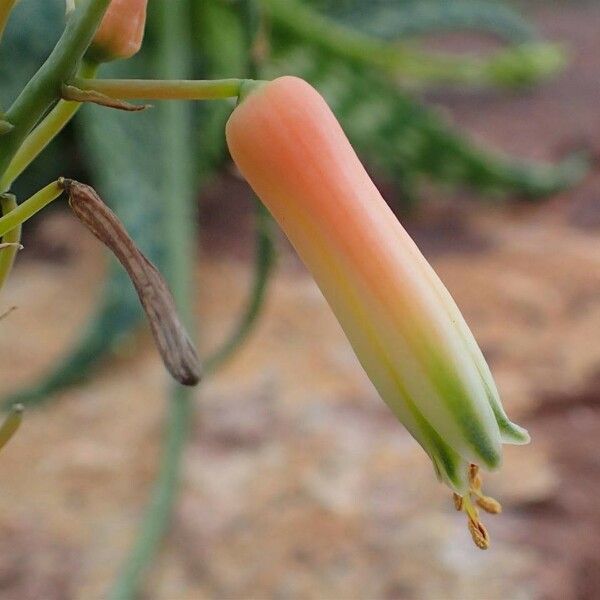
- 🏮 The Blooms: When it decides to flower, it sends up a branched stalk bearing cylindrical clusters of tubular, bright coral-red or orange flowers that are a favorite for pollinators.
🏡 In Your Garden
- ⛰️ Alpine Origins: Because it grows naturally among rocks at high elevations, this Aloe craves exceptional drainage. It is much more tolerant of cool nights than its tropical cousins, but it absolutely detests "wet feet" or stagnant, humid air.
- ☀️ Sun Seeker: To maintain its tight, compact shape and vibrant leaf coloration, it needs bright, direct light. In low light, the rosette will stretch out and lose its signature rugged charm.
- 💧 Thirst Quencher: It follows a "soak and dry" cycle. In the winter, it enters a semi-dormant state and requires almost no water at all, mimicking the dry season of its Madagascar home.
⚠️ Safety & Toxicity
- 🐾 Toxic to Pets: Like many members of the Aloe family, this species contains saponins and anthraquinones. If ingested by cats or dogs, it can cause vomiting, lethargy, and digestive upset.
- 👶 Keep Away from Kids: While not deadly to humans, the sharp teeth along the leaf margins can easily scratch curious hands, and the sap can cause skin irritation for those with sensitivities.
✨ Fun Fact
This plant is a specialist of "Inselbergs"—isolated rock hills that rise abruptly from the plains. Because it evolved in such isolation on the granite domes of Madagascar, it is found nowhere else on Earth in the wild, making it a true botanical treasure for conservation-minded gardeners.

Detailed Care Instructions
Aloe Andringitrensis plant should be watered thoroughly but also be allowed to dry out between waterings to prevent root rot. It is best to water from the bottom by placing the pot in a shallow tray of water for a few hours, allowing the plant to absorb water through the drainage holes. Avoid getting water on the leaves as this can lead to fungal diseases. Watering frequency will depend on factors such as temperature, humidity, and soil type, so it is important to check the soil moisture level before watering. In general, it is better to underwater than overwater this plant.
The preferred soil type for the Aloe Andringitrensis plant is a well-draining, sandy mix that is slightly alkaline in nature. This plant thrives in soils with a pH range of 7.0 to 7.5. The soil should be light and porous, allowing for proper root development and good air circulation. The addition of gravel or perlite can help improve drainage. Aloe Andringitrensis plants also prefer a soil that is rich in organic matter, such as compost or manure. It is important to avoid using heavy, clay soils that can retain water and lead to root rot.








