Plant Overview
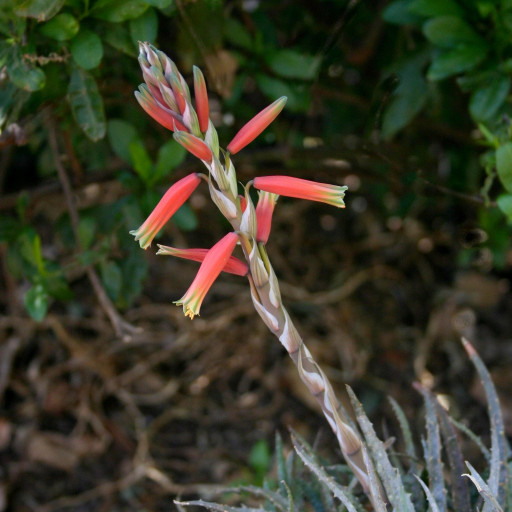
Known affectionately as the Hedgehog Aloe, this pint-sized succulent proves that you don't need a huge garden to make a big impact. Native to the rugged landscapes of South Africa’s Eastern Cape, it forms dense, spiky clumps that look like tiny sea creatures emerging from the soil. While the plant itself stays low and "humble," its fiery blooms are legendary for their disproportionate height and vibrant color.
🔍 How to Identify
- 🌵 Spiny Texture: The leaves are triangular and boat-shaped, covered in soft, white, pearly "teeth" or bumps (tubercles) that give it a prickly, hedgehog-like appearance.
- 🎨 Blue-Green Hue: The foliage typically displays a striking shade of blue-green or glaucous grey, often turning slightly purple or reddish when exposed to high heat or cold.
- 🌸 Outsized Blooms: During late winter or spring, it sends up a tall, sturdy stalk topped with massive, tubular orange-red flowers that often seem too large for the small plant to support.
🏡 In Your Garden
- ☀️ Sun Seeker: This Aloe thrives in bright, direct light. Providing plenty of sunshine keeps the rosettes tight and "chunky"; in too much shade, the plant will stretch out (etiolate) and lose its iconic hedgehog shape.
- 💧 The "Drought" Rule: Because it stores water in its fleshy leaves, it is extremely sensitive to overwatering. It prefers a "soak and dry" method and must be planted in gritty, cactus-specific soil to ensure the roots never sit in stagnant moisture.
⚠️ Safety & Toxicity
- 🐾 Pet Warning: Like many members of the Aloe family, Aloe humilis contains saponins and anthraquinones. If ingested by cats or dogs, it can cause digestive upset, vomiting, or lethargy.
- 🌵 Physical Caution: While the "teeth" on the leaves are generally softer than those of a cactus, they can still be quite sharp. Keep it out of reach of toddlers who might be tempted to grab the interesting texture.
✨ Fun Fact
The species name humilis actually means "lowly" or "humble" in Latin. It was named this because of its ground-hugging growth habit, though its spectacular floral display is anything but modest!

Detailed Care Instructions
| Color | Green Leaves, Red-Orange Flowers |
| Humidity | Normal |
| Lighting | Full Sun |
| Toxicity | Poisonous |
| Soil Type | Well-Drained Succulent Soil |
| Bloom Time | Late Winter Or Early Spring |
| Difficulty | Easy |
| Plant Type | Cactus/Succulent |
| Mature Size | Small During Its Entire Life Cycle |
| Native Area | South Africa |
| Temperature | 18°C - 30°C |
| Sun Exposure | Full Sun To Partial Shade |
| Hardiness Zones | 9B - 11B |
To grow Aloe Humilis plant, you can follow these steps:
- Obtain a healthy Aloe Humilis plant: Purchase a young Aloe Humilis plant from a local nursery or online. Make sure it is a healthy specimen with no signs of damage or disease.
- Choose the right pot: Select a pot or container with good drainage holes. Aloe Humilis prefers well-draining soil, so a terracotta or clay pot is ideal.
- Prepare the potting mix: Create a well-draining potting mix by combining cactus soil with perlite or pumice. This mixture provides the perfect balance of moisture retention and drainage.
- Plant the Aloe Humilis: Gently remove the Aloe Humilis plant from its nursery pot, being careful not to damage the roots. Place it in the prepared potting mix and firm the soil gently around it. Ensure that the base of the plant is at the same level as the rim of the pot.
- Watering: Allow the soil to dry out completely between waterings. Aloe Humilis is a succulent plant and can tolerate drought. Overwatering can lead to root rot, so be cautious not to let the soil stay constantly wet.
- Sunlight: Place your Aloe Humilis in a location with bright, indirect sunlight. It thrives in full sun but can also tolerate partial shade.
- Temperature: Aloe Humilis prefers warm temperatures between 70-85°F (21-29°C). Protect it from temperatures below 50°F (10°C).
- Fertilizer: Aloe Humilis is not a heavy feeder, so it does not require frequent fertilization. Apply a balanced, water-soluble fertilizer diluted to half the recommended strength once every two to three months during the growing season.
- Repotting: As the Aloe Humilis grows, it may outgrow its pot. Repotting can be done every 2-3 years, preferably during spring. Choose a slightly larger pot and repot the plant using fresh potting mix.
- Maintenance: Regularly remove any dead or yellowing leaves from the plant to maintain its health and appearance. Protect it from frost during the winter months if you live in a colder climate.
With proper care, your Aloe Humilis plant should thrive and grow well.

Place in a bright room that is sun drenched almost all day. Or directly in a south-facing window.

To water this plant, allow the top inch of soil to dry out before watering thoroughly. Do not let the plant sit in standing water, as this can lead to root rot. Use a pot with drainage holes to allow excess water to escape. Water deeply, until excess water drains out of the pot, then allow the soil to dry out again before watering again. In the winter, water sparingly, only when the soil is completely dry.
For the plant, it is best to fertilize during active growth periods, which is typically during the summer months. You can use a balanced fertilizer with equal amounts of nitrogen, phosphorus, and potassium. Dilute the fertilizer to half strength and apply every two weeks during the active growth period. Avoid fertilizing during the fall and winter months when the plant is dormant.
A suitable soil for Aloe Humilis plant is a well-draining mixture that is free from organic matter, such as coconut coir or peat moss. It is important to use a sandy or gritty soil that is mixed with perlite, gravel, or small rocks to ensure adequate drainage. The soil should be slightly acidic, with a pH range between 6.0 and 7.0. It is also important to avoid using heavy soils that retain too much moisture, as this can lead to root rot and other fungal diseases. Aloe Humilis plants prefer to grow in a full sun to partial shade, so it is recommended to place it in an area with bright indirect sunlight.
Aloe Humilis can be propagated through offsets or plantlets that grow on the sides of the mother plant. To do this, use a sharp and sterile knife or scissors to cut the offset as close to the mother plant as possible. Allow the cut to dry for a day or two before planting it in a well-draining soil mix of sand, gravel, and peat moss. Water the newly planted offset sparingly until it has rooted and established itself. It's important to keep the soil lightly moist but not wet during the rooting process. It's best to propagate the plant in late spring or early summer when the plant is actively growing.








