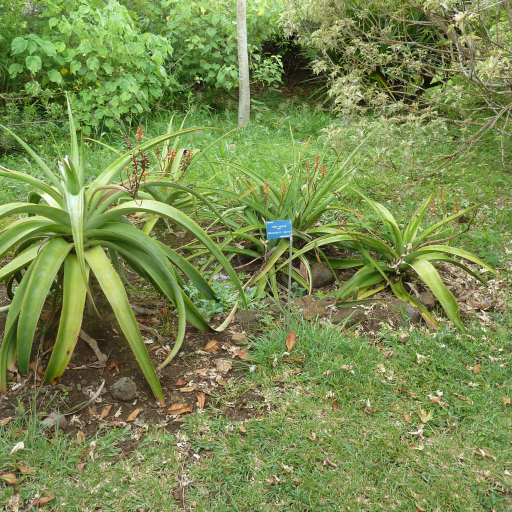
Plant Overview
Often called the Mazambron on its native Réunion Island, Aloe macra is a rare and striking succulent that tells a story of island evolution. This plant is a true survivor, naturally clinging to volcanic cliffs and rocky slopes where few other species can thrive. Today, it is highly valued by plant collectors for its elegant, tapering rosettes and its status as a "living jewel" from the Indian Ocean.
🔍 How to Identify
- 🌿 The Rosette: It features long, slender, sword-shaped leaves that arch gracefully outward from a central point, often forming a stemless or short-stemmed clump.
- 🦷 Leaf Margins: The edges of the leaves are lined with small, firm, reddish-brown teeth that are sharp to the touch but neatly spaced.
- 🔥 Vibrant Blooms: During the flowering season, it sends up a tall, branched stalk topped with tubular flowers that range from a fiery orange to a soft yellowish-red.
🏡 In Your Garden
- 🌋 Volcanic Roots: Because it originates from rocky island terrain, this Aloe demands exceptional drainage; it prefers "gritty" soil mixes that mimic its volcanic home to prevent root rot.
- ☀️ Sun Seeker: It thrives in bright, indirect light but can handle direct morning sun; however, unlike desert Aloes, it appreciates a bit more atmospheric humidity due to its tropical island heritage.
⚠️ Safety & Toxicity
- 🚫 Status: Mildly toxic to pets and humans if ingested.
- 🐱 Details: Like many succulents in the Aloe family, the sap contains saponins and anthraquinones. If chewed by cats or dogs, it can cause digestive upset, lethargy, or skin irritation if the "latex" layer (the yellow sap under the skin) touches sensitive areas.
✨ Fun Fact
Historically, early settlers on Réunion Island used Aloe macra as a substitute for "True Aloe" (Aloe vera) to treat wounds and ailments, unaware that this specific species was a unique botanical treasure found nowhere else on Earth!

Detailed Care Instructions
Growing Aloe macra, a species of aloe native to Reunion Island, involves several key steps. This plant is relatively hardy and can do well with the right care. Here's a guide to help you grow Aloe macra:
1. Climate and Location
Aloe macra prefers warm climates and can tolerate some drought. However, it is not frost-resistant. If you live in a cooler climate, consider growing the plant in a pot that can be moved indoors during the colder months.
2. Soil Requirements
Use well-draining soil, as aloe plants do not like to sit in water. A cactus or succulent mix works well. If you are using regular potting soil, amend it with sand, perlite, or gravel to improve drainage.
3. Planting
- Seed: If starting from seeds, sow them in a well-draining mix and keep them moist until they germinate. This can take a few weeks.
- Offsets/Pups: Most people grow aloe plants from offsets (pups) that grow around the base of a mature plant. Carefully separate the pups from the mother plant and replant them.
4. Watering
Water the plant deeply but infrequently. Allow the soil to dry out completely between waterings. During the growing season (spring and summer), you might water about once every two weeks. In the winter, water less frequently, about once a month.
5. Light Requirements
Aloe macra thrives in bright, indirect sunlight. Direct sunlight can scorch the leaves, especially if the plant has not been acclimatized to it. A south or west-facing window is ideal if you are growing it indoors.
6. Temperature and Humidity
The ideal temperature range for Aloe macra is between 60°F and 85°F (15°C to 29°C). It can tolerate lower humidity levels, which makes it suitable for indoor growing as well.
7. Fertilizing
Fertilizing is generally not necessary, but if you wish, you can feed your Aloe macra during the growing season with a diluted, balanced, water-soluble fertilizer once a month.
8. Pruning and Maintenance
Remove any dead or damaged leaves to encourage healthy growth. Clean the leaves occasionally to remove dust, which can interfere with photosynthesis.
9. Potting and Repotting
If growing in a pot, choose one with drainage holes. Aloe macra does well being slightly root-bound, but you should repot it every couple of years to refresh the soil and accommodate growth.
10. Pests and Diseases
Aloe plants are relatively resistant to pests, but they can sometimes suffer from scale, mealybugs, or fungal issues related to overwatering. Keep an eye out for any signs of distress and address them promptly.
11. Propagation
Apart from using seeds and offsets, you can propagate Aloe macra through leaf cuttings, although this method is less common and less reliable compared to using pups.
By following these steps, you should be able to successfully grow and care for your Aloe macra plant. Happy gardening!
Watering Aloe Macra involves a specific set of guidelines tailored to its natural habitat and growth requirements. Here are the key steps you should follow:
- Frequency: This plant prefers to dry out between waterings. Water it deeply, but infrequently. Typically, watering once every 2-3 weeks during the growing season (spring and summer) should suffice. In the dormant period (fall and winter), reduce watering to once a month or even less, depending on the humidity and temperature of your environment.
- Soil: Ensure the plant is in well-draining soil. A typical succulent or cactus mix works well, as it helps prevent water from sitting at the roots, which can cause root rot.
- Drainage: Use a pot with drainage holes to ensure excess water can escape. Standing water can be harmful.
- Watering Technique: Water the plant thoroughly until water runs out of the drainage holes. Ensure that you allow the soil to dry out completely before the next watering. Overhead watering should be avoided to prevent water from getting trapped in the rosette, which can lead to rot.
- Signs of Overwatering: Be vigilant for signs of overwatering, such as yellowing leaves, mushy texture, and a foul odor from the soil. If these symptoms appear, let the soil dry out completely before the next watering.
- Humidity: This plant is adapted to arid conditions, so it doesn’t require high humidity levels. Average household humidity is usually sufficient.
- Seasonal Considerations: During the hottest part of the year, especially in extremely dry climates, you may need to water slightly more often. Conversely, if the plant is in a humid environment, it may need less frequent watering.
By following these guidelines, you can help ensure your plant receives the appropriate amount of water to thrive without the risk of overwatering.
Here are the fertilizing instructions for Aloe macra:
- Frequency: Fertilize sparingly; ideally, once a month during the growing season, which typically spans from spring through early fall. Avoid fertilizing during the winter months when the plant goes into a dormant state.
- Type of Fertilizer: Use a balanced, water-soluble fertilizer that is diluted to half strength. A formula such as 10-10-10 (Nitrogen-Phosphorus-Potassium) is suitable.
- Application: Mix the fertilizer with water according to the instructions on the package, then water the plant with this solution. Ensure the soil is evenly moist but not waterlogged.
- Special Considerations: Avoid over-fertilizing, as this can lead to nutrient burn and potentially damage the plant. It is better to under-fertilize than to over-fertilize.
- Soil: Ensure that the plant is in well-draining soil, as this helps prevent root rot and allows the fertilizer to be absorbed efficiently.
By following these guidelines, you will help maintain a healthy and thriving Aloe macra.
Aloe Macra, a succulent plant native to certain regions, requires well-drained soil for optimal growth. Here are the specific soil characteristics and conditions it thrives in:
- Soil Type:
- Cactus or Succulent Mix: A commercial cactus or succulent potting mix is ideal, as these are specifically formulated to provide excellent drainage.
- DIY Mix: You can create your own mix by combining equal parts of potting soil, coarse sand or perlite, and gravel or pumice. This combination ensures the soil remains loose and aerated.
- Cactus or Succulent Mix: A commercial cactus or succulent potting mix is ideal, as these are specifically formulated to provide excellent drainage.
- pH Level:
- Preferably between 6.0 and 7.0. This range is slightly acidic to neutral, which is suitable for most succulents.
- Preferably between 6.0 and 7.0. This range is slightly acidic to neutral, which is suitable for most succulents.
- Drainage:
- Good drainage is crucial. The soil should allow water to flow through quickly to prevent root rot, a common issue with succulents if kept in overly moist conditions.
- Good drainage is crucial. The soil should allow water to flow through quickly to prevent root rot, a common issue with succulents if kept in overly moist conditions.
- Texture:
- Light and gritty. Avoid dense or clay-heavy soils that retain water. A gritty texture helps replicate the plant’s natural rocky habitat.
- Light and gritty. Avoid dense or clay-heavy soils that retain water. A gritty texture helps replicate the plant’s natural rocky habitat.
- Nutrient Content:
- Moderately rich in nutrients. While not overly demanding, occasional feeding with a balanced, water-soluble succulent fertilizer during the growing season (spring and summer) can promote healthy growth.
- Moderately rich in nutrients. While not overly demanding, occasional feeding with a balanced, water-soluble succulent fertilizer during the growing season (spring and summer) can promote healthy growth.
- Organic Matter:
- Minimal organic matter but incorporating a small amount of organic material, like well-decomposed compost, can help provide necessary nutrients without compromising drainage.
- Minimal organic matter but incorporating a small amount of organic material, like well-decomposed compost, can help provide necessary nutrients without compromising drainage.
- Pots and Containers:
- If growing in containers, ensure they have sufficient drainage holes. The container should also be slightly larger than the root ball to allow for expansion but not so large that the soil remains wet for extended periods.
By adhering to these guidelines, you can ensure that Aloe Macra has the proper conditions to thrive, mimicking its natural environment and promoting robust growth.
- If growing in containers, ensure they have sufficient drainage holes. The container should also be slightly larger than the root ball to allow for expansion but not so large that the soil remains wet for extended periods.
Propagating Aloe macroclada, a type of succulent, can be achieved through several methods. Here's a detailed guide on how to do it:
1. Propagation through Offsets:
Offsets, also known as pups, are small plantlets that grow at the base of the parent plant.
- Identify Offsets: Look for small offshoots growing near the base of the mature plant.
- Remove Offsets:
- Carefully dig around the base to expose the offsets.
- Use a clean, sharp knife or scissors to cut the offset away from the parent plant. Ensure that each offset has some roots attached.
- Carefully dig around the base to expose the offsets.
- Drying:
- Allow the cut offsets to dry for a day or two in a shaded location. This helps to form a callus over the cut surface, which reduces the risk of rot.
- Allow the cut offsets to dry for a day or two in a shaded location. This helps to form a callus over the cut surface, which reduces the risk of rot.
- Planting:
- Prepare a well-draining potting mix (you can use a succulent or cactus mix).
- Plant the offset in the soil and water lightly.
- Prepare a well-draining potting mix (you can use a succulent or cactus mix).
- Aftercare:
- Place the newly planted offsets in a bright, shaded location.
- Water sparingly until the new plant establishes roots (typically a few weeks).
2. Propagation through Leaf Cuttings:
This method can be a bit less reliable than using offsets but is still possible.
- Place the newly planted offsets in a bright, shaded location.
- Select a Healthy Leaf: Choose a firm, healthy leaf from the parent plant.
- Cut the Leaf:
- Use a clean, sharp knife to cut the leaf as close to the base as possible.
- Use a clean, sharp knife to cut the leaf as close to the base as possible.
- Drying:
- Allow the cut leaf to dry and develop a callus over the cut end for several days up to a week.
- Allow the cut leaf to dry and develop a callus over the cut end for several days up to a week.
- Planting:
- Place the callused end of the leaf into a well-draining potting mix.
- Water lightly.
- Place the callused end of the leaf into a well-draining potting mix.
- Aftercare:
- Keep the soil slightly moist but not waterlogged.
- Place the pot in indirect sunlight.
- New growth will take time, and roots will develop before new shoots appear.
3. Propagation through Seeds:
This method is typically more time-consuming and less common but viable.
- Keep the soil slightly moist but not waterlogged.
- Obtaining Seeds: Collect seeds from the flower of a mature plant or purchase from a trusted supplier.
- Sowing Seeds:
- Use a shallow tray with a well-draining succulent or cactus soil mix.
- Sow the seeds on the surface and lightly cover with a thin layer of sand or fine soil.
- Use a shallow tray with a well-draining succulent or cactus soil mix.
- Germination:
- Mist the soil lightly to keep it moist.
- Place the tray in a warm, bright location but out of direct sunlight.
- Maintain humidity by covering the tray with a plastic cover or plastic wrap.
- Mist the soil lightly to keep it moist.
- Aftercare:
- Seeds may take several weeks to germinate.
- Once seedlings appear, gradually expose them to more light.
- Transplant the seedlings into individual pots once they are large enough to handle.
General Tips:
- Seeds may take several weeks to germinate.
- Soil: Always use a well-draining soil mix to prevent root rot.
- Watering: Water sparingly, especially until the new plants are well-established.
- Light: Provide bright, indirect sunlight. Avoid direct sun initially until the new plants are stronger.
- Temperature: These plants prefer warm conditions. Keep them away from cold drafts.
By following these steps, you can successfully propagate this specific succulent variety and enjoy the expansion of your plant collection.








