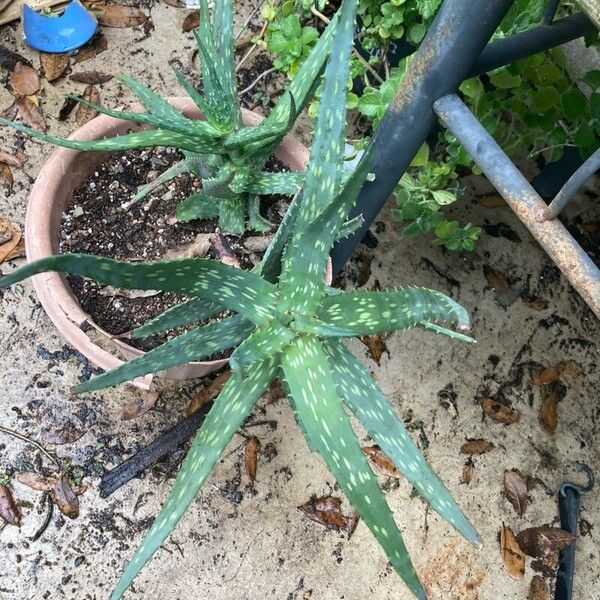
Plant Overview
Commonly known as the Nyeri Aloe, this striking succulent hails from the highlands of central Kenya. Unlike the low-growing varieties many are used to, Aloe nyeriensis is a bold, architectural plant that develops a sturdy trunk over time, eventually forming a beautiful, multi-branched shrub. It is celebrated by collectors for its vibrant, torch-like flowers that seem to glow against the arid landscape.
🔍 How to Identify
- 🌿 The Foliage: The leaves are long, narrow, and sword-shaped, typically a deep olive green. In high-sun conditions, they often take on a reddish-bronze hue at the tips.
- 🦷 Serrated Edges: The leaf margins are lined with sharp, pale-colored teeth that provide a fierce but beautiful texture.
- 🔥 The Blooms: It produces magnificent upright flower spikes (racemes) in shades of bright coral-red or orange. These blooms are tubular and clustered densely at the top of branched stems.
🏡 In Your Garden
- ⛰️ Highland Heritage: Because it originates from high-altitude regions in Kenya, this Aloe is surprisingly hardy but demands excellent drainage. It prefers "gritty" soil mixtures that mimic the rocky slopes of its homeland.
- ☀️ Sun Seeker: To achieve the most vibrant leaf colors and ensure it has enough energy to produce its massive flower displays, place it in the brightest spot available. In darker corners, it may become "leggy" and lose its compact, sculptural form.
⚠️ Safety & Toxicity
- 🐾 Pet Warning: Like many members of the Aloe family, Aloe nyeriensis contains saponins and anthraquinones. It is considered mildly to moderately toxic to cats and dogs if ingested, potentially causing digestive upset or lethargy.
- 🧤 Physical Safety: The sharp teeth along the leaf edges can easily scratch skin. It is best planted away from narrow walkways or areas where children play.
✨ Fun Fact
In its native Kenyan habitat, the Nyeri Aloe is a favorite "fast food" stop for Sunbirds. These colorful, nectar-feeding birds have long, curved beaks perfectly evolved to reach the sweet nectar hidden deep inside the Aloe’s tubular red flowers!

Detailed Care Instructions







