Plant Overview
Often called the Dwarf Jewel Aloe, Aloe parvula is a petite masterpiece from the central highlands of Madagascar. Unlike its giant cousins used for sunburn relief, this species is a "living sculpture," prized by collectors for its frosted texture and compact, star-like symmetry. It is the perfect choice for enthusiasts who want the rugged charm of an Aloe but only have a small windowsill to spare.
🔍 How to Identify
- 🌵 Frosted Foliage: The blue-green or grayish leaves are densely covered in tiny, soft white "teeth" or tubercles, giving the entire plant a fuzzy, crystalline appearance.
- 📐 Miniature Rosettes: This is a true dwarf species; individual rosettes rarely grow larger than 4-6 inches across, often forming neat, crowded clumps over time.
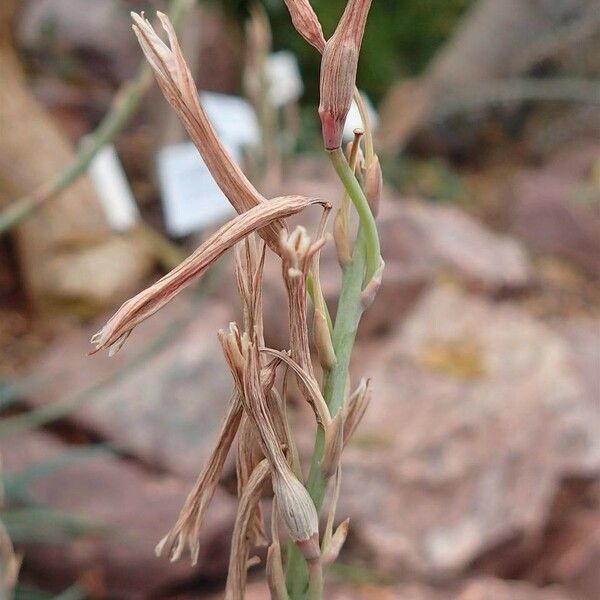
- 🌸 Coral Blooms: Despite its small stature, it produces impressive flower spikes featuring pendulous, bell-shaped flowers in shades of coral-pink or bright orange.
🏡 In Your Garden
- ⛰️ Rock Specialist: Because it grows naturally on rocky Malagasy slopes, it has evolved to hate "wet feet." Use a very gritty succulent mix with plenty of pumice or perlite to mimic its mountain home.
- 🎨 Sun Blushing: While it prefers bright, indirect light, this Aloe will "stress-color" into beautiful shades of deep purple or bronze when exposed to more intense sunlight—a natural defense mechanism that many growers find aesthetically striking.
⚠️ Safety & Toxicity
- 🐾 Toxic to Pets: Like most Aloe species, Aloe parvula contains saponins and anthraquinones. If ingested by cats or dogs, it can cause vomiting, lethargy, and digestive upset.
- 👶 Handle with Care: While the "teeth" on the leaves are much softer than those of larger Aloes, they can still be slightly prickly. Keep it out of reach of curious toddlers to avoid minor scratches or accidental ingestion.
✨ Fun Fact
The name parvula is Latin for "very small" or "slight." It is one of the few Aloe species that has managed to survive the harsh, high-altitude conditions of Madagascar by staying low to the ground and hugging the heat-retaining rocks!

Detailed Care Instructions
To grow an Aloe Parvula plant, you can follow these steps:
- Choose a suitable location: Aloe Parvula plants thrive in bright indirect sunlight, so find a spot that receives partial sun. It can tolerate some direct sunlight, but too much can scorch the leaves. Make sure the area has good air circulation as well.
- Select the right container: Use a well-draining pot with drainage holes to prevent waterlogging. Aloe Parvula plants prefer shallow containers as they have a shallow root system.
- Use well-draining soil: Aloe Parvula plants require soil that drains well to prevent root rot. You can use succulent or cactus soil mix, or create your own blend by mixing regular potting soil with sand or perlite.
- Watering: Aloe Parvula plants are succulents and are adapted to arid conditions. Water them sparingly and allow the soil to dry out between watering. Overwatering can cause root rot, so it's better to underwater than overwater. Aim to water only when the top inch or two of soil feels dry.
- Fertilization: Aloe Parvula plants do not require frequent fertilization. You can apply a balanced, water-soluble fertilizer diluted to half strength once or twice a year during the growing season (spring and summer).
- Temperature and humidity: Aloe Parvula plants prefer temperatures between 65-80°F (18-27°C). They can tolerate slightly cooler or warmer temperatures, but avoid exposing them to temperatures below 50°F (10°C). They prefer low humidity, so if you live in a humid climate, ensure good air circulation around the plant.
- Propagation: Aloe Parvula plants can be propagated through offsets (pups) that grow from the base of the mother plant. Gently separate them from the mother plant when they are a few inches tall and have their own root system. Allow the offsets to dry for a day or two before planting them in well-draining soil.
- Pruning: Prune dead or damaged leaves to maintain the plant's appearance and health. Use clean, sharp pruning shears to avoid introducing diseases to the plant.
Remember to monitor your Aloe Parvula plant regularly and adjust care accordingly. With proper care, your Aloe Parvula plant should grow successfully.

Place in a bright room that is sun drenched almost all day. Or directly in a south-facing window.

To properly water this plant, carefully observe the soil moisture and ensure that it is completely dry before watering. It is important to avoid overwatering as this can lead to root rot. Water the plant thoroughly, allowing excess water to drain out of the bottom of the pot. It is best to water this plant infrequently, typically once every two to three weeks, depending on the humidity level and temperature of its environment. Be sure to use room-temperature water and avoid using cold or hot water. Additionally, it is important to avoid getting water on the leaves of the plant, as this can lead to damage or disease.
To fertilize this plant, use a balanced, water-soluble fertilizer with equal amounts of nitrogen, phosphorus, and potassium. Dilute the fertilizer to half strength and apply it once a month during the growing season. Be sure to water the plant thoroughly before and after fertilizing to prevent burning the roots. Also, avoid getting the fertilizer on the leaves or stem to avoid damage.
The ideal soil for Aloe Parvula plant is a well-draining, sandy mix that is rich in nutrients. A mixture of equal parts of sandy loam, perlite, and peat moss is recommended. It is important that the soil is not overly dense or compact as this can cause the roots to rot. The pH level of the soil should be slightly alkaline, around 7.0, to ensure proper nutrient uptake. It is also important to avoid using heavy garden soil or soil mixes that contain clay, which can retain too much water and suffocate the roots. Instead, a well-draining soil will allow for adequate water drainage while also providing essential oxygen to the plant's roots.
To propagate this plant, take a healthy leaf cutting that is at least three inches long. Allow the cutting to callus over by letting it sit in a dry, shaded area for a day or two. Once the cutting has callused, plant it in a well-draining soil mix and water sparingly. Keep the soil moist but not wet, and provide bright but indirect sunlight. The cutting should begin to sprout roots within a few weeks, and once established, it can be cared for like a mature plant.








