Plant Overview
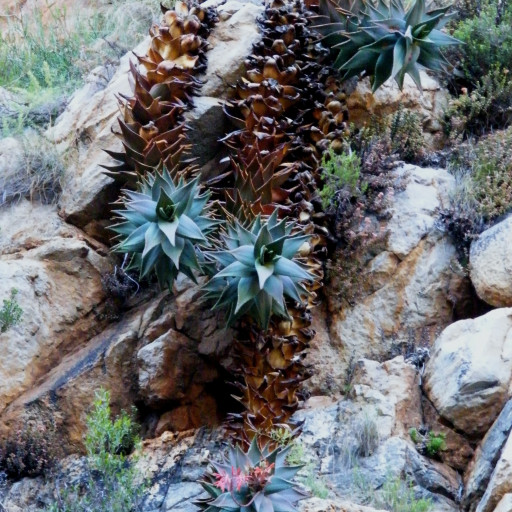
Known affectionately as the Mitre Aloe, this rugged South African native is a master of the rocky cliffs. Unlike its upright cousins, it sprawls across the ground like a slow-moving green carpet, earning it the nickname "Rubble Aloe." In the wild, it survives harsh winds and scorching sun, making it one of the toughest and most resilient succulents for any home collection.
🔍 How to Identify
- 🍃 Chunky Triangular Leaves: The leaves are thick, fleshy, and curve inward, forming a tight rosette that resembles a bishop’s hat (a mitre) when viewed from the side.
- 🦷 White Serrated Edges: Each leaf is lined with small, harmless-looking white teeth that provide a striking, jagged contrast against the dusty bluish-green foliage.
- 🎨 Stress Coloring: While naturally a muted green, the leaves undergo a beautiful transformation to deep red or bronze when exposed to intense sunlight or cold.
- 🏮 Cone-Shaped Blooms: In summer, it produces branched stalks topped with dense, rounded clusters of dull-red or bright orange tubular flowers.
🏡 In Your Garden
- 🪨 The Rubble Lover: This plant naturally grows on sandstone slopes and rocky outcrops. Because it is adapted to "rubble," it requires exceptionally well-draining, gritty soil; it will quickly rot if kept in standard, moisture-retaining potting earth.
- 🧗 Creeping Stems: Unlike the common Aloe vera, this species develops long, prostrate stems that "crawl" along the ground. It is best used as a groundcover or allowed to cascade dramatically over the edges of a rock wall or a large stone planter.
⚠️ Safety & Toxicity
- 🐾 Mildly Toxic: The Mitre Aloe contains saponins and anthraquinones. If ingested by dogs or cats, it can cause vomiting, lethargy, or diarrhea.
- 🧤 Physical Irritant: While the sap is not typically irritating to humans, the "teeth" along the leaf margins can be quite sharp. Wear gloves when repotting to avoid scratches.
✨ Fun Fact
The species name perfoliata comes from the Latin words for "through" and "leaf." It refers to the way the leaves appear to encircle or "pierce" the stem, a clever structural design that helps the plant channel every drop of mountain dew directly down to its root system.

Detailed Care Instructions
| Humidity | Dry |
| Lighting | Full Sun |
| Difficulty | Easy |
| Hibernation | Cold Period |
| Temperature | 18°C - 30°C |
| Hardiness Zones | 9A - 11B |
To grow an Aloe Perfoliata plant, also known as a "spider aloe," you can follow these steps:
- Choose the right location: Aloe Perfoliata plants thrive in bright, indirect sunlight. Find a spot near a window or a place with filtered sunlight.
- Prepare the soil: Use a well-draining soil mix. You can create your own by combining equal parts of potting soil, sand, and perlite. This will ensure that excess water doesn't accumulate around the roots.
- Planting: Select a suitable pot with drainage holes. Fill it with the prepared soil mix. Place the Aloe Perfoliata plant gently into the pot and backfill with the soil mix, ensuring the base of the plant is level with the rim of the pot.
- Watering: Aloe Perfoliata plants are succulent, so they store water in their leaves. Allow the top inch of soil to dry out between waterings. Overwatering can lead to root rot, so it's better to underwater than overwater. Water the plant deeply, making sure the water drains out through the bottom of the pot.
- Temperature and humidity: Aloe Perfoliata plants prefer temperatures between 55-80°F (13-27°C). They thrive in average humidity but can tolerate dry air.
- Fertilizing: Aloe Perfoliata plants are not heavy feeders, so you can use a balanced liquid fertilizer diluted to half strength once a month during the growing season (spring and summer). Avoid fertilizing during winter.
- Pruning: If your Aloe Perfoliata plant becomes unruly or if the leaves start to crowd together, you can trim them back by cutting close to the base with a clean, sharp knife. This will give the plant a neater appearance.
- Propagation: Aloe Perfoliata plants can be propagated by removing the offsets or "pups" that grow around the base of the plant. Gently separate them from the main plant and pot them into their own pots with well-draining soil mix.
Remember, Aloe Perfoliata plants are quite resilient and can even tolerate a bit of neglect. However, following these steps will help ensure their optimal growth and health.

Place in a bright room that is sun drenched almost all day. Or directly in a south-facing window.

To properly water this plant, you should begin by inspecting the soil for dryness before watering. Use your finger to check the moisture level by sticking it about an inch into the soil. If it feels dry, you can proceed to watering.
When watering, give a thorough soak to the soil until the water flows out of the drainage holes at the bottom of the pot. Allow the excess water to drain out completely, and then discard any remaining water to avoid waterlogging the roots.
During the growing season, which is typically in the spring and summer months, aim to water the plant once a week. In the fall and winter months when the plant is dormant, reduce watering to once every two to three weeks.
It is important to note that overwatering can result in root rot, while underwatering can lead to dehydration and stress. Therefore, ensure that the soil is not constantly wet, but also not frequently dry, to keep the Aloe Perfoliata plant healthy and thriving.
- Choose a balanced fertilizer with equal amounts of nitrogen, phosphorus, and potassium.
- Dilute the fertilizer with water according to the instructions on the package.
- Apply the fertilizer to the soil around the base of the plant, avoiding contact with the leaves.
- Water the plant thoroughly after fertilizing to help the nutrients penetrate the soil.
- Fertilize every 2-3 months during the active growing season, typically from spring to early fall.
- Reduce or stop fertilizing during the dormant winter months when the plant is not actively growing.
When planting Aloe Perfoliata, it is important to use a well-draining soil mixture that is specifically designed for succulents and cacti. This soil typically contains a mixture of sand, perlite, and coarse gravel to promote proper drainage and prevent the roots from sitting in excess water. The soil should be slightly acidic to neutral, with a pH level ranging from 6.0 to 7.0, and should also be rich in nutrients to support healthy growth. Fertilizer can be added to the soil mix before planting or applied as a liquid solution during the growing season. It is important to avoid overwatering the Aloe Perfoliata plant, as this can lead to root rot and other diseases. Instead, it is recommended to allow the soil to dry out completely between watering sessions.
Aloe Perfoliata plant can be propagated through its offsets or pups. These are small plants that grow from the base of the mother plant. To propagate, carefully remove these offsets using a sharp, sterile knife or pruning shears. Make sure to remove them with a bit of the stem and leaves attached.
Next, let the cuttings dry and callus over for a few days in a dry, shaded area. This will help prevent rot when planted.
Once callused, plant the offsets in well-draining soil in a pot or directly in the ground. Water sparingly until you see new growth and roots forming. Keep in a warm, bright location but protect from direct sunlight until established.
As your new plants grow, continue to water sparingly and fertilize occasionally with a balanced, all-purpose fertilizer.
With proper care, these propagated Aloe Perfoliata plants can grow into mature, healthy plants and produce their own offsets for future propagation.








