Plant Overview
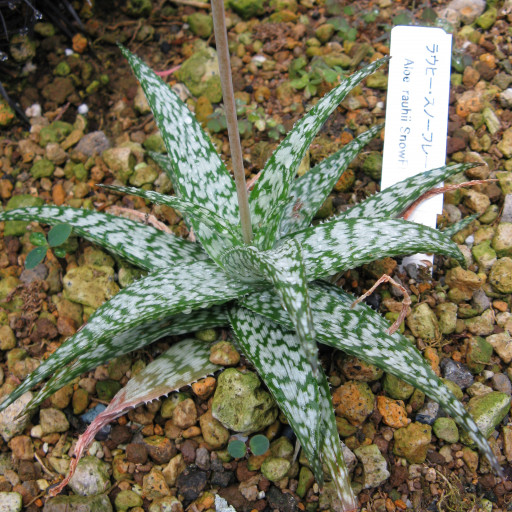
Often called the "Snowflake Aloe," this stunning Madagascan native looks as if it has been dusted by a light winter frost. Unlike many of its giant, jagged cousins, this miniature aloe stays small and compact, making it a darling for windowsill gardeners and succulent collectors. It carries a sense of tropical mystery from its origins in the dry, rocky thickets of southern Madagascar.
🔍 How to Identify
- ❄️ The Leaves: Thick, triangular leaves arranged in a tight rosette, featuring striking, elongated white spots that create a "snowflake" effect against a pale green or bronze background.
- 🦷 Soft Teeth: The edges of the leaves are lined with tiny, soft white teeth that are more decorative than defensive, making it much friendlier to touch than many other prickly succulents.
- 🌸 Bell-Shaped Blooms: In late spring or summer, it sends up a tall, slender stalk topped with tubular, coral-pink or orange flowers that are a magnet for pollinators.
🏡 In Your Garden
- ☀️ Light Stressing: This plant communicates through color. In bright, direct sun, the leaves may take on a beautiful purplish or bronze hue, while in deeper shade, the white spots pop against a dark green base.
- 🌵 The "Neglect" Rule: Because it hails from arid regions, it has a very sensitive root system that hates being soggy. It thrives when ignored; it is far better to forget to water it for a month than to water it twice in one week.
- 👶 The Offset Habit: It is a prolific "mother" plant, frequently producing tiny clones (pups) at its base. These can be easily detached once they have a few roots of their own to share with friends.
⚠️ Safety & Toxicity
- 🐾 Toxic to Pets: Like most members of the Aloe family, Aloe rauhii contains saponins and anthraquinones. If ingested by cats or dogs, it can cause vomiting, lethargy, and digestive upset.
- 🚫 Not for First Aid: Unlike the common Aloe vera, this species is grown for its beauty, not its medicinal properties. The sap can be a skin irritant for some people and should not be used on burns or ingested.
✨ Fun Fact
Aloe rauhii is considered a "celebrity" in the plant breeding world! Because of its beautiful patterns, it is the primary parent of dozens of famous designer hybrids, including the wildly popular 'Snowstorm' and 'Christmas Carol' aloes.

Detailed Care Instructions
| Soil Ph | 7.0-8.5 |
| Humidity | Dry |
| Lighting | Full Sun |
| Toxicity | Toxic |
| Soil Type | Sandy |
| Difficulty | Medium |
| Plant Type | Succulent |
| Mature Size | Less Than 6 Inches High |
| Native Area | Madagascar |
| Temperature | 15°C - 25°C |
| Sun Exposure | Indirect Sunlight |
| Hardiness Zones | 10-12 |
To grow an Aloe rauhii plant, also known as snowflake aloe, you can follow these steps:
- Choose a suitable location: Aloe rauhii prefers bright indirect sunlight. Select a spot with partial shade if you live in a hot climate or near a window with filtered light if growing indoors.
- Prepare the potting mix: Use a well-draining potting mix specifically formulated for succulents. You can also mix regular potting soil with sand or perlite to improve drainage.
- Select a container: Choose a pot with drainage holes to prevent waterlogging. A small-sized pot is suitable for young plants, but make sure to repot as it grows.
- Plant the aloe: Gently remove the plant from its nursery pot and loosen the roots, being careful not to damage them. Place the plant in the new pot, making sure it sits at the same depth it was in the previous pot. Fill the remaining space with the potting mix and gently pat it down.
- Watering: Aloe rauhii is a succulent that requires infrequent watering. Water deeply but allow the soil to dry out completely between waterings. Overwatering can cause root rot, so be careful not to let the roots sit in water for prolonged periods.
- Fertilization: Feed the plant with a balanced, diluted fertilizer formulated for succulents during the growing season (spring and summer). Follow the instructions on the fertilizer package for proper dosage and frequency.
- Temperature and humidity: Aloe rauhii thrives in temperatures between 65-80°F (18-26°C) during the day and cooler temperatures around 50-65°F (10-18°C) at night. It prefers low to average humidity levels.
- Propagation: Aloe rauhii can be propagated through offsets or pups that grow from the main plant. Wait until the offsets are around 3-4 inches tall before gently separating them from the mother plant. Plant them in separate pots using the same potting mix as mentioned earlier.
- Pruning: Trim off any dead or withered leaves close to the base of the plant to maintain its appearance and encourage healthy growth.
- Pests and diseases: Aloe rauhii is generally resistant to pests and diseases. However, keep an eye out for any signs of common succulent pests like mealybugs, aphids, or spider mites. If an infestation occurs, treat it promptly with appropriate insecticides or insecticidal soap.
Remember to research and consider the specific care requirements for Aloe rauhii to ensure the best growth and health for your plant.

Place in a bright room that is sun drenched almost all day. Or directly in a south-facing window.
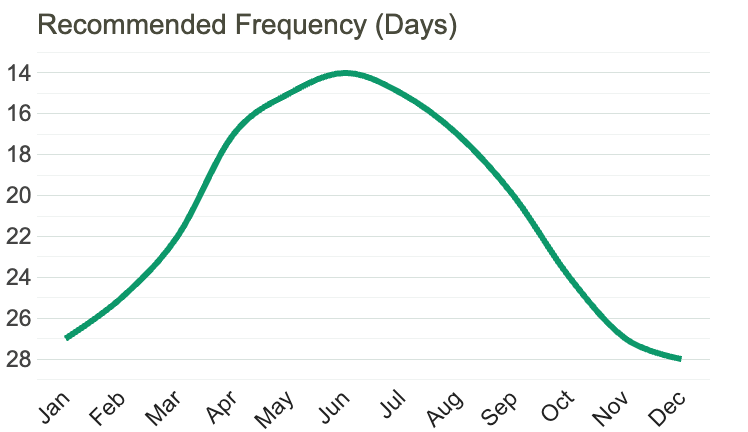
To water Aloe Rauhii, it is important to use a well-draining soil mix to avoid waterlogging the roots. Water the plant when the soil is completely dry, which typically occurs every 2-3 weeks during the growing season. During the winter months, reduce watering frequency to once a month. When watering, pour water slowly and thoroughly, making sure the water reaches the roots. It's also important to avoid getting water on the leaves to prevent rot and leaf damage.
To fertilize this plant, use a balanced fertilizer with an N-P-K ratio of 10-10-10. Dilute the fertilizer to half strength and apply once a month during the growing season (spring and summer). Do not fertilize during fall and winter months. Ensure that the soil is moist before fertilizing to prevent root burn. Apply the diluted fertilizer evenly around the plant, taking care not to pour it directly onto the leaves. Water the plant after fertilizing to help distribute the nutrients.
When potting an Aloe Rauhii plant, it is recommended to use a well-draining soil mix that is gritty and contains ample amounts of sand. The soil should also be nutrient-rich, with organic matter added to promote healthy growth. Additionally, a blend of perlite and coarse sand can be added to the soil mix to enhance drainage. Avoid using heavy, clay-based soils as they can hold onto moisture and lead to root rot. Instead, opt for a lightweight, well-draining soil that allows excess water to drain away from the roots quickly.
To propagate this plant, you will need a healthy and mature parent plant. Choose a mature leaf from the base of the parent plant that is at least 3 inches long. Use a sharp and clean knife to remove the leaf from the base of the plant. Allow the cut end of the leaf to dry for 1 to 2 days, during which time a protective film will form over the cut end.
Fill a small pot with well-draining soil and make a hole in the center. Insert the dried end of the leaf into the soil and gently pack the soil around the base of the leaf. Water the soil until it is moist but not waterlogged. Place the pot in a bright location with indirect sunlight and keep it at a temperature of 65-75°F.
Water the pot every 2-3 days to keep the soil moist but be careful not to overwater. After about 2 weeks, the leaf will start to grow roots, and as the weeks progress, a small green plantlet will appear at the base of the leaf. Continue to care for the plant, watering when necessary, and after a few months, it will be ready to be transplanted into a larger pot.