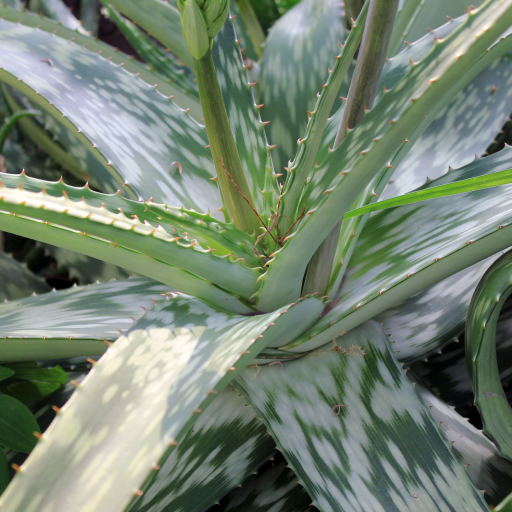
Plant Overview
Hailing from the rugged mountains of Saudi Arabia and Yemen, the Aloidendron sabaeum, or Arabian Tree Aloe, is a striking desert sentinel. Once classified as a true Aloe, this species was moved to the Aloidendron genus to reflect its impressive, tree-like stature. In its native habitat, it clings to rocky slopes, standing as a living testament to the ancient landscapes of the Biblical Kingdom of Sheba.
🔍 How to Identify
- 🏗️ The Silhouette: Unlike the low-growing garden aloes, this species develops a solitary, slender trunk that can reach heights of up to 15 feet. It lacks the messy "skirt" of dead leaves often found on other tree aloes, maintaining a clean, architectural look.
- 🍃 Recurved Leaves: The leaves are long, sword-shaped, and notably "recurved," meaning they arch gracefully downward toward the trunk. They are typically a pale, glaucous green but can take on pinkish hues when stressed by sun or cold.
- 🌸 Branching Blooms: During the winter, it sends out a multi-branched flower spike. The blossoms are cylindrical and range in color from a dusty reddish-pink to a muted brownish-yellow, providing much-needed nectar for birds.
🏡 In Your Garden
- ⛰️ Drainage is Vital: Because this plant evolved on steep, rocky hillsides, it has a zero-tolerance policy for standing water. If planting in a pot, use a very gritty cactus mix and terracotta to help the roots "breathe."
- ☀️ Sun-Seeker: To maintain its tight rosette and vibrant colors, it needs full sun. In low light, the trunk can become weak and "leggy," potentially causing the heavy head of the plant to topple over as it ages.
- 🌱 Slow and Steady: It is a slow grower, making it a perfect long-term focal point for xeriscaped gardens. It doesn't produce many "pups" (offsets), so it usually remains a single, majestic pillar rather than a clump.
⚠️ Safety & Toxicity
- 🐾 Pet Warning: Like most members of the Aloe family, the sap contains saponins and anthraquinones. It is considered toxic to cats and dogs if ingested.
- 🤢 Human Impact: While the gel is sometimes used topically in its native regions, it should never be eaten. Ingestion can cause significant stomach upset, cramping, and a strong laxative effect.
✨ Fun Fact
The species name sabaeum refers to the "Sabaeans," the ancient people of the Kingdom of Saba (Sheba). This plant has been a silent witness to thousands of years of human history along the ancient incense trade routes of the Arabian Peninsula.

Detailed Care Instructions








