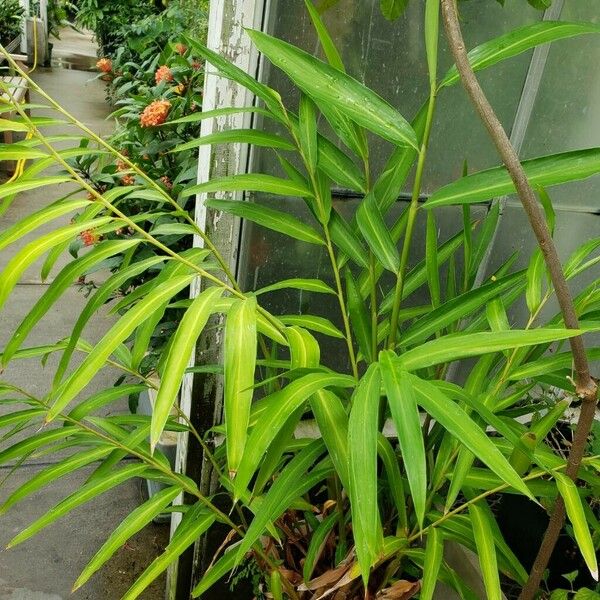
Plant Overview
Often called the Elegant Alpinia or sometimes the Philippine Shell Ginger, this plant is the definition of tropical grace. Native to the lush forests of the Philippines, it is prized for its architectural form and bamboo-like stems that add immediate height and texture to a space. While its cousins are often grown for spice, this variety is the "supermodel" of the ginger family, loved specifically for its refined, glossy foliage.
🔍 How to Identify
- 🎋 Bamboo-like Stems: It grows in dense, upright clumps of "pseudostems" (tightly wrapped leaf bases) that give it a reed-like, structural appearance.
- 🍃 Sword-Shaped Leaves: The foliage is long, lance-shaped, and deep emerald green, featuring a distinct waxy sheen that reflects light beautifully.
- 🐚 Shell-like Blooms: It produces drooping clusters of waxy, pearlescent buds that look like tiny sea shells, which eventually open to reveal intricate, orchid-like centers.
🏡 In Your Garden
- ☁️ The Humidity Factor: As a jungle native, this plant breathes through its leaves. If you keep it indoors, it thrives near a humidifier; otherwise, you may notice "crispy" brown edges on its elegant leaves during winter.
- 🌤️ Dappled Light Enthusiast: It hates the "hot seat" of direct afternoon sun, which can bleach its rich green color. It performs best in filtered light—think of the dappled sun reaching the floor of a rainforest.
- 🪴 Thirsty but Drainage-Dependent: While it loves consistent moisture, it cannot stand "wet feet." Using a chunky, peat-based potting mix ensures the roots stay hydrated without drowning in stagnant water.
⚠️ Safety & Toxicity
- ✅ Generally Safe: The Alpinia elegans is generally considered non-toxic to humans and is not listed as a high-risk plant for most households.
- 🐾 Pet Observation: While not strictly poisonous like lilies, ingesting large amounts of the fibrous leaves can cause mild stomach upset or drooling in cats and dogs. It’s best to keep it out of reach of curious chewers.
✨ Fun Fact
In many Southeast Asian cultures, the aromatic leaves of the Alpinia family aren't just for decoration—they are often used to wrap fish or rice before steaming, infusing the food with a subtle, earthy, and spicy fragrance!

Detailed Care Instructions








