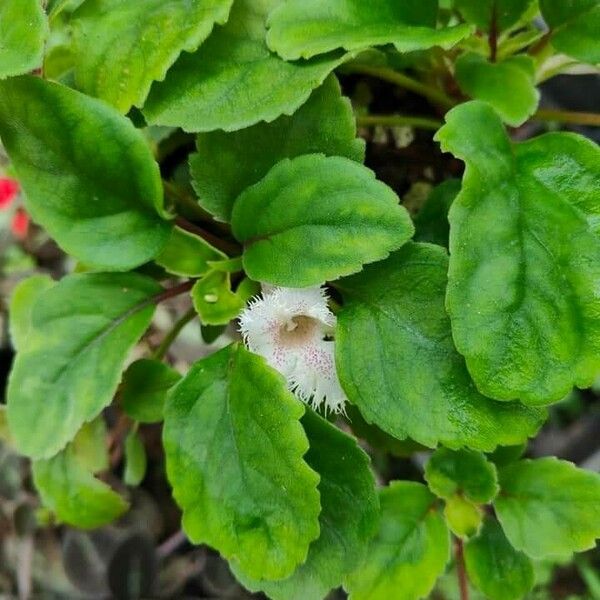
Plant Overview
Known as the Lace Flower Vine, this delicate beauty from the tropical forests of Mexico and Costa Rica is a hidden gem for indoor gardeners. Its botanical name, dianthiflora, literally means "flowers like a Dianthus," referring to the intricate, fringed edges of its snowy white blossoms. It is a favorite for those who love "touchable" plants, thanks to its plush, velvet-soft foliage and cascading growth habit.
🔍 How to Identify
- 🌸 Fringed blossoms: The most striking feature is its tubular white flowers that flare out into five petals, each ending in a deeply cut, lace-like fringe.
- 🍃 Velvety Foliage: The small, oval leaves are a rich, dark green and covered in fine, soft hairs that give the plant a suede-like texture.
- 🏃 Trailing Stolons: It produces long, thin, reddish stems (runners) similar to a strawberry plant, which dangle downward and sprout "pups" or clusters of new leaves at the ends.
🏡 In Your Garden
- ☁️ Humidity is Key: Coming from the tropics, this plant craves moisture in the air. While it makes a stunning hanging basket, it truly thrives in the controlled, humid environment of a terrarium or a bright, steamy bathroom.
- 🪴 The "Puppy" Method: Because it grows via stolons, propagation is effortless. You can simply pin one of the dangling "babies" into a small pot of soil while it's still attached to the mother plant, and it will root in no time.
- 🚿 Watering Nuance: Like its cousin the African Violet, it hates "cold feet" and wet leaves. Use room-temperature water and try to avoid splashing the fuzzy foliage, which can lead to unsightly spotting or rot.
⚠️ Safety & Toxicity
- 🐾 Pet-Friendly: You can breathe a sigh of relief! Alsobia dianthiflora is considered non-toxic to cats and dogs, making it a safe choice for a "pet-proof" jungle.
- 👶 Safe for Humans: It is non-poisonous to humans and does not have thorns or irritating sap, though the plant itself is quite fragile and should be kept out of reach of high-traffic areas to prevent damage.
✨ Fun Fact
The Lace Flower Vine is a member of the Gesneriad family. It is so closely related to the African Violet that specialized enthusiasts often grow them together to create a multi-textured display of fuzzy, flowering greenery!

Detailed Care Instructions
To grow an Alsobia Dianthiflora plant, follow these steps:
- Choose the right location: Alsobia Dianthiflora plants prefer bright, indirect sunlight. Find a spot in your home that receives bright, filtered light throughout the day.
- Soil: Use a well-draining soil mix that is slightly acidic. A mixture of peat moss, perlite, and sphagnum moss works well. Make sure the pot has good drainage.
- Planting: Fill a small pot with the soil mix and make a small hole in the center. Place the plant in the hole and gently firm the soil around it. Leave some space at the top for watering.
- Watering: Alsobia Dianthiflora plants prefer consistently moist but not waterlogged soil. Water the plant whenever the top inch of soil feels dry. Avoid overwatering or allowing the soil to dry out completely.
- Humidity: These plants appreciate high humidity. You can increase humidity by misting the leaves regularly or placing a tray filled with water near the plant to allow for evaporation.
- Temperature: Ideally, the plant should be kept in temperatures ranging from 60 to 75°F (15 to 24°C). Avoid extreme temperature fluctuations.
- Fertilizer: Feed the Alsobia Dianthiflora plant with a balanced, water-soluble fertilizer every two weeks during the growing season (spring and summer). Reduce fertilization during fall and winter.
- Support: Alsobia Dianthiflora plants are vining plants that benefit from being supported or hanging. Use a trellis or hooks to help support the growth.
- Pruning: Regularly trim back any long or leggy stems to encourage bushier growth and prevent the plant from becoming too leggy.
- Propagation: Alsobia Dianthiflora plants can be propagated through stem cuttings. Take a healthy stem cutting and place it in water until roots develop, then pot it into well-draining soil.
Remember to monitor the plant's health regularly and address any pest or disease issues promptly. With proper care, your Alsobia Dianthiflora plant should grow and thrive.

Place in a window with dappled sun or a spot in the middle of a room. Or directly in a window facing west or east.

Alsobia Dianthiflora is a trailing plant that belongs to the Gesneriaceae family. To ensure its healthy growth and development, proper watering is crucial. Here are some detailed instructions on how to water this particular plant:
1. Watering Frequency: Alsobia Dianthiflora requires regular watering to keep its soil consistently moist. As a general rule, water the plant whenever the top inch (2.5 cm) of soil feels dry to the touch.
2. Water Quantity: When watering, aim to thoroughly moisten the soil but avoid overwatering, which can lead to root rot. Allow water to penetrate and soak the soil until it reaches the root zone.
3. Watering Technique: Using a watering can, gently pour water around the base of the plant, aiming for the soil and root area. Avoid wetting the leaves excessively, as this can promote fungal diseases.
4. Drainage: It is essential to ensure proper drainage for Alsobia Dianthiflora. Use a well-draining potting mix and ensure the pot or container has drainage holes to allow excess water to escape. This prevents waterlogged soil and potential damage to the plant's roots.
5. Observe the Plant: Monitor the plant closely for signs of underwatering or overwatering. If the leaves start to wilt or the soil feels extremely dry, increase watering frequency. However, if the leaves appear yellowing or the soil remains wet for an extended period, reduce watering to avoid waterlogged conditions.
6. Humidity: Alsobia Dianthiflora prefers high humidity levels. To increase humidity around the plant, consider misting the leaves with water or placing a tray filled with pebbles and water beneath the pot. As the water evaporates, it creates a more humid environment.
Remember that individual plant requirements may vary, so adjust the watering routine based on specific conditions such as temperature, season, and humidity levels. Regularly check the moisture level of the soil and adjust the watering accordingly to ensure the plant remains healthy and thriving.
Here are fertilizing instructions for the Alsobia Dianthiflora plant:
- When fertilizing Alsobia Dianthiflora, use a balanced, water-soluble fertilizer.
- Dilute the fertilizer according to the package instructions, typically at a ratio of 1/4 to 1/2 strength.
- Apply the diluted fertilizer to the soil around the plant, avoiding direct contact with the foliage.
- Fertilize the Alsobia Dianthiflora plant every 4-6 weeks during the growing season, usually from spring to early fall.
- Ensure that the soil is evenly moist before applying the fertilizer to avoid potential root burn.
- Always follow the recommended dosage and frequency of fertilization to prevent overfertilization, which can harm the plant.
- During the dormant period in winter, reduce fertilizer application or suspend it completely.
- Regularly monitor the plant for any signs of nutrient deficiencies or excesses, such as yellowing leaves or stunted growth.
- If the plant shows any signs of nutrient imbalances, adjust the fertilization accordingly, following the guidance of a horticulturist or plant expert.
Remember to avoid overfertilization, as it can be detrimental to the health of the Alsobia Dianthiflora plant. Always follow the specific instructions provided with your chosen fertilizer brand.
Alsobia Dianthiflora is a delicate and charming plant that requires specific soil conditions to thrive. Here are details on the soil requirements for this plant:
- Well-draining soil: Alsobia Dianthiflora prefers a soil mixture that is well-draining to avoid waterlogging. This helps prevent root rot and other moisture-related issues. It is crucial to choose a soil mix that allows excess water to drain away easily.
- Loose and airy texture: The soil should have a loose and crumbly texture to allow for proper root development and aeration. This type of soil structure enables the roots to breathe and facilitates nutrient uptake.
- Rich in organic matter: Alsobia Dianthiflora benefits from soil that is rich in organic matter. Organic matter increases the soil's ability to retain moisture, provides essential nutrients, and improves overall soil fertility. Adding organic materials like compost or well-rotted manure to the soil can help meet these requirements.
- Neutral to slightly acidic pH: This plant thrives in soil with a pH range of 6.0 to 7.0, which is slightly acidic to neutral. It is recommended to regularly test the soil's pH levels and adjust accordingly using amendments like sulfur or lime, if necessary.
- Moist but not waterlogged: While Alsobia Dianthiflora prefers evenly moist soil, it is crucial to avoid overwatering, as this can lead to root rot. The soil should be moist, but excess water should be able to drain away easily.
- Light and airy soil mixture: A suitable soil mixture for Alsobia Dianthiflora can be created by blending equal parts of peat moss, perlite, and fine-textured bark or compost. This combination provides good drainage, aeration, moisture retention, and nutrient availability.
By ensuring these soil requirements are met, Alsobia Dianthiflora can flourish and display its beautiful foliage and delicate flowers.
Alsobia dianthiflora, a member of the Gesneriaceae family, is a delightful trailing plant that can be easily propagated through cuttings. Here is a step-by-step guide on how to successfully propagate this plant:
- Select a healthy parent plant: Choose a well-established and healthy Alsobia dianthiflora plant as your source for cuttings. Look for a plant with vibrant leaves and strong growth.
- Prepare the tools and materials: Gather all the necessary tools and materials before starting the propagation process. You will need a sharp and sterilized pair of pruning shears, a clean and well-draining potting mix, small pots or containers, a spray bottle filled with water, and a transparent plastic bag or a propagator to create a humid environment.
- Cut the stem: Locate a healthy stem on the parent plant—ideally, one that is long and has two or three leaf pairs. Using the sterilized pruning shears, make a clean cut just below a leaf node. The ideal cutting length is around 4-6 inches (10-15 cm).
- Remove lower leaves: Once you have the cutting, gently remove the lower leaves, leaving only a few pairs at the top. This will reduce water loss and allow the energy to focus on root development.
- Dip the cutting: To promote root formation, dip the bottom end of the cutting in a rooting hormone powder. This will encourage quicker and stronger root growth.
- Plant the cutting: Prepare a small pot or container with a well-draining potting mix. Make a small hole in the soil and gently place the cutting in, ensuring that at least one leaf node is submerged. Pat the soil gently around the cutting to stabilize it.
- Create a humid environment: Mist the cutting and the surrounding soil with water using a spray bottle. Cover the pot with a transparent plastic bag or use a propagator to create a humid environment. This helps to retain moisture and encourages root development.
- Provide appropriate conditions: Place the pot in a warm area with bright, indirect light. Avoid direct sunlight as it may scorch the delicate cutting. Maintain a stable temperature around 70-75°F (21-24°C). Avoid overwatering, but ensure that the soil remains slightly moist.
- Check for root development: Approximately every two to three weeks, gently tug on the cutting to feel for resistance. If you feel resistance, it indicates that roots have developed. Be patient as rooting can take anywhere from a few weeks to a couple of months.
- Transplant into individual pots: Once you notice substantial root growth, it is time to transplant the Alsobia dianthiflora cutting into individual pots. Use a well-draining potting mix and keep the soil slightly moist.
- Care for the new plants: Continue to provide bright, indirect light and maintain a stable temperature for the newly propagated plants. Water them regularly, allowing the soil to dry out slightly between waterings. Fertilize with a diluted balanced liquid fertilizer during the growing season to promote healthy growth.
By following these steps, you can successfully propagate Alsobia dianthiflora and enjoy the beauty of this charming plant in your home or garden.
Common pests of the lace flower include Mealybugs, spider mites, thrips. Make a habit of checking your lace flower frequently for pests so that any infestations can be caught and managed early.








