Plant Overview
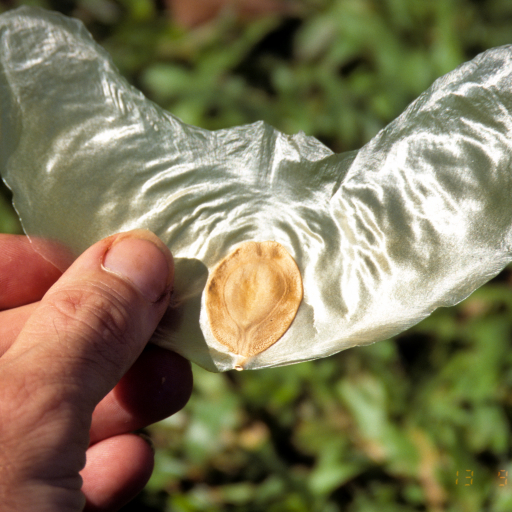
The Javan Cucumber isn't your typical salad ingredient; it is nature’s master of aeronautics. Hailing from the dense rainforests of Southeast Asia, this tropical vine produces massive, woody gourds that release thousands of paper-thin "gliders." These shimmering, translucent seeds are famous for their ability to soar across the forest canopy, even in still air.
🔍 How to Identify
- 🍃 The Foliage: A vigorous climbing vine with glossy, dark green, heart-shaped leaves that can quickly carpet a trellis or a neighboring tree.
- 🏈 The Fruit: It produces remarkable, pendulous woody pods about the size of a football. When ripe, the bottom of the pod falls away to release the seeds.
- ✈️ The Seeds: The most iconic feature—each seed is encased in a butterfly-like, translucent wing spanning up to 5 inches (13cm), designed for long-distance gliding.
🏡 In Your Garden
- 🧗 Space Requirements: As a tropical liana, this plant is a "sky-high" climber. It requires a very sturdy support system or a large, established tree to reach its full potential, as it naturally wants to reach the sunlight above the canopy.
- 💧 Tropical Needs: It thrives in high humidity and consistently moist, well-draining soil. It is rarely kept as a traditional "houseplant" due to its massive size, but it is a prized specimen for large conservatories or tropical botanical collections.
⚠️ Safety & Toxicity
- 🟢 Status: Generally non-toxic.
- 🚫 Details: While not known to be poisonous to touch, the Javan Cucumber is not an edible gourd. Neither the fruit nor the seeds are considered food for humans or pets.
✨ Fun Fact
The aerodynamic "delta wing" shape of the Alsomitra macrocarpa seed was the direct inspiration for early pioneers of aviation. Engineers like Igo Etrich studied these seeds to design the first stable, tailless gliders and aircraft wings in the early 1900s!

Detailed Care Instructions
To grow Alsomitra Macrocarpa, also known as the "Javan cucumber" or "winged gourd," follow these steps:
- Obtain seeds: Look for seeds from a reliable supplier or try to find them locally. You may need to search specialty nurseries or online seed banks.
- Germination: Soak the seeds in warm water overnight to help with germination. This softens the tough outer coating and encourages quicker sprouting.
- Planting: Fill small pots or seed trays with a well-draining potting mix. Sow the seeds about 1/4 inch deep and cover with soil. Water the soil gently to keep it moist but not waterlogged.
- Light and temperature: Place the pots or trays in a warm and bright location, such as a sunny windowsill or greenhouse. A temperature range of 70-85°F (21-29°C) is ideal for germination and initial growth.
- Watering: Keep the soil consistently moist during the germination and early growth stages. Do not let the soil dry out completely. Provide water as needed, usually a couple of times per week.
- Transplanting: When the seedlings have developed their first set of true leaves, they are ready to be transplanted into larger pots or containers. Use a rich, well-draining potting mix and ensure that the container has drainage holes.
- Support structure: Alsomitra Macrocarpa is a climbing vine, so it requires a support structure to grow vertically. Install a trellis, fence, or similar structure to provide support for the plant as it grows.
- Sunlight and positioning: Once the seedlings are transplanted, place them in a sunny location. Alsomitra Macrocarpa thrives in full sun but can tolerate partial shade. Position the plant near the support structure to encourage climbing.
- Watering and fertilizing: Water the plant regularly, aiming to keep the soil evenly moist. Do not overwater, as that can lead to root rot. Apply a balanced liquid fertilizer every two weeks during the growing season to encourage healthy growth.
- Pruning: Regularly prune any dead or damaged leaves and vines. Pruning can help maintain the plant's shape, control its size, and promote better air circulation.
- Harvesting: The winged gourds are ready to harvest when the skin turns yellowish-brown and feels slightly rough. Cut the fruit from the vine, leaving a short stem. Allow the gourds to dry further in a cool, dry spot before storing or using them.
Remember, Alsomitra Macrocarpa is a tropical plant that requires warm temperatures and a long growing season. It may not survive in colder climates, so consider growing it as an annual or in a greenhouse if you live in a colder region.
To water this plant, it is important to ensure that the soil is evenly moist but not waterlogged. One way to check if the soil needs water is to stick your finger about an inch into the soil and see if it feels dry. If it does, it's time to water. When watering, make sure to water the soil directly around the plant and the roots, avoiding getting water on the leaves or stems. This plant prefers to be kept consistently moist, so watering every few days is often necessary. However, it's important not to overwater, as this can lead to root rot and other problems. One tip is to let the top layer of soil dry out slightly before watering again, to ensure that the plant is getting enough oxygen and not sitting in water constantly.
To fertilize this plant, use a balanced fertilizer with equal ratios of nitrogen, phosphorus, and potassium. Apply the fertilizer in early spring before new growth emerges and then again in midsummer. Make sure to dilute the fertilizer to half strength before applying it to avoid burning the roots. Water the plant before and after fertilizing to help the nutrients reach the roots. Do not over-fertilize as it can lead to excessive growth and reduced flowering.
Alsomitra Macrocarpa is a type of plant that requires a well-draining soil mix that is able to retain moisture without becoming waterlogged. The ideal soil mix should be rich in nutrients and organic matter, with a slightly acidic to neutral pH level. It is advisable to use a mixture of peat moss, perlite, and vermiculite in a 1:1:1 ratio. This soil mix will provide the necessary drainage, aeration and retain the moisture required to facilitate optimal growth for the plant and reduces the chances of root rot. The soil should be kept moderately moist, but not overly saturated to prevent mold and other soil-borne diseases. It is also advisable to fertilize the plant with a balanced fertilizer to promote healthy and vigorous growth. In general, the soil should be well prepared and kept clean to ensure optimal plant health and prevent any pest or disease problems.
Alsomitra Macrocarpa is a plant that can be propagated through the use of seeds. To do so, one should first gather seeds from a mature plant and ensure that they are fresh. Next, the seeds should be soaked in warm water for approximately 24 hours to help soften their hard outer shells. After soaking, the seeds should be sown in moist soil, with each seed being covered by a thin layer of soil. The soil should be kept moist and the plants should be kept in a warm, sunny location. Within a few weeks, the seeds should germinate and begin to grow, eventually producing mature plants. It is also possible to propagate this plant by taking cuttings from mature plants and propagating them in a similar manner.








