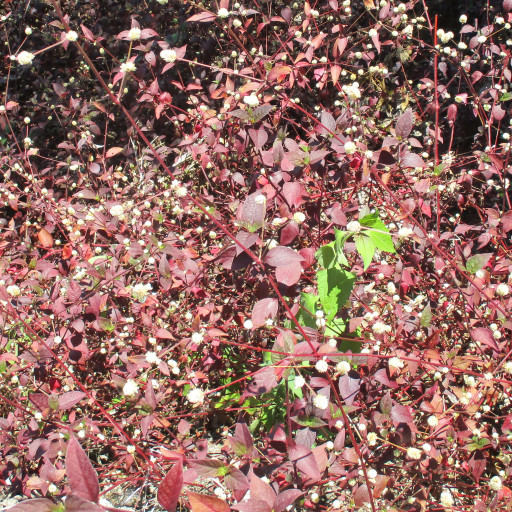
Plant Overview
Known as the Brazilian Joyweed or the Metal Leaf, this striking perennial is the "little black dress" of the botanical world. Originating from Central and South America, it is beloved for its deep, metallic-purple foliage that provides a dramatic backdrop for brighter flowers. It is the ultimate "drama queen"—not because it’s hard to grow, but because of its theatrical colors and its habit of wilting visibly when it wants a drink.
🔍 How to Identify
- 💜 The Foliage: Leaves are lance-shaped or oval, boasting a rich burgundy to nearly black-purple hue. The color intensifies the more sun the plant receives.
- ⚪ The Flowers: Small, papery, pom-pom-like clusters of creamy white or yellowish flowers appear on long stalks, contrasting sharply against the dark leaves.
- 🌿 Growth Habit: It grows in an upright, mounding fashion, typically reaching 18 to 36 inches tall, though it can spread wider in warm climates.
🏡 In Your Garden
- ☀️ Light for Color: To maintain that "metallic" sheen, this plant requires high light. If placed in too much shade, it will "revert" to a muddy green color as it hunts for more energy.
- 💧 The "Fainting" Act: This plant is an excellent indicator of soil moisture. It will wilt dramatically when thirsty, but don't panic—it usually bounces back within an hour of being watered.
- ✂️ Pruning Nuance: It can become "leggy" or spindly if left alone. Pinching back the stems regularly encourages a bushier, more compact shape and more frequent blooms.
⚠️ Safety & Toxicity
- ✅ Status: Generally considered non-toxic to humans and common household pets.
- 🧤 Skin Sensitivity: While not poisonous, the sap can occasionally cause mild skin irritation for those with sensitive skin. It is always a good idea to wear gloves when doing heavy pruning.
✨ Fun Fact
In its native Brazil, Alternanthera brasiliana isn't just a pretty face; it has a long history in traditional medicine, where it is used in leaf infusions for its reported anti-inflammatory and analgesic properties!

Detailed Care Instructions
To grow Alternanthera Brasiliana, also known as Brazilian Joyweed, follow these steps:
- Choose a suitable location: Select a spot with full sun to partial shade. This plant can tolerate a wide range of soil types but prefers well-draining soil.
- Prepare the soil: Before planting, prepare the soil by loosening it with a garden fork or tiller. Remove any weeds or rocks that could hinder growth.
- Planting: Dig a hole slightly larger than the plant's root ball. Place the plant in the hole and backfill with soil, gently firming it around the base of the plant. Water thoroughly after planting to help settle the soil.
- Watering: Keep the soil evenly moist but not waterlogged. Water deeply when the top inch of soil feels dry. Avoid overwatering as this can lead to root rot.
- Fertilization: Apply a balanced, slow-release fertilizer in early spring and midsummer. Follow the package instructions for proper application rates. Alternanthera Brasiliana is not a heavy feeder, so be cautious not to over-fertilize.
- Pruning: Trim back the plant as needed to maintain its desired shape or size. This plant responds well to pruning and can be shaped into hedges or topiaries.
- Mulching: Apply a layer of organic mulch around the base of the plant to help conserve moisture, suppress weed growth, and moderate soil temperature.
- Pests and diseases: Monitor the plant regularly for any signs of pests or diseases. Common issues include aphids, spider mites, and powdery mildew. Treat infestations promptly using appropriate organic or chemical methods.
- Winter care: In regions with frost or freezing temperatures, the plant may die back during winter. To protect it, apply a layer of mulch around the base and consider covering it with a frost cloth or moving it indoors if possible.
- Propagation: Alternanthera Brasiliana can be propagated by stem cuttings. Take 4-6 inch cuttings from healthy, established plants just above a leaf node. Remove the lower leaves and dip the cut end in a rooting hormone. Plant the cutting in a well-draining potting mix and keep it in a warm, bright place until roots develop.
By following these guidelines, you can successfully grow Alternanthera Brasiliana and enjoy its vibrant foliage in your garden or container.

Place in a bright room that is sun drenched almost all day. Or directly in a south-facing window.

The plant should be watered regularly, but care should be taken not to overwater it as it can lead to root rot. The soil should be allowed to dry slightly between waterings. When watering, the soil should be thoroughly saturated so that water reaches the roots. Care should also be taken to water the plant at the base, avoiding getting water on the leaves as this can promote fungal growth. In periods of high humidity, the plant may require less frequent watering.
To fertilize this plant, provide it with a balanced fertilizer with equal amounts of nitrogen, phosphorus, and potassium. Apply the fertilizer once a month during the growing season. Be sure to water the plant thoroughly before and after fertilizing to avoid fertilizer burn. Avoid over-fertilizing, as it can cause the plant to become leggy and less vibrant.
When planting the Alternanthera Brasiliana plant, it is recommended to use a well-draining soil that is rich in organic matter. The soil should be slightly acidic with a pH level between 5.5 and 6.5. It is important to use a soil that is not too heavy as this can lead to poor drainage and root rot. A sandy loam or loamy soil mix is preferred for this plant. Adding perlite or fine gravel to the soil mixture can also improve drainage. It is important to keep the soil moist but not waterlogged and to ensure proper drainage to prevent the growth of harmful bacteria and fungi. The plant may benefit from regular fertilization with a balanced plant food.
Alternanthera Brasiliana is a plant that can be propagated through stem cuttings. To do this, you will need to select a healthy stem that has at least one or two nodes (the part of the stem where leaves grow from). Make a clean cut just below a node using a sharp, sterilized knife or scissors.
Remove any leaves that are below the node(s) on the stem and dip the cut end of the stem into rooting hormone powder. Place the stem into a small pot or container filled with a well-draining soil mix, such as a mixture of peat moss and perlite.
Water the cutting lightly, taking care not to overwater it, as this can cause it to rot. Keep the cutting in a warm, humid place with bright, indirect sunlight. A humidity dome or plastic bag can be placed over the pot to increase the humidity around the cutting.
After a few weeks, the cutting should begin to root and new growth will appear on the stem. Once the new plant has established a strong root system, it can be transplanted into a larger pot with regular potting soil.








